Stéphanie d'Hauteville
Stéphanie d’Hauteville is a French perfumer associated with the creation of the fragrance house that bears her name. Her career places her at the intersection of composition, artistic direction and entrepreneurial independence, a comparatively rare path within a profession often defined by work inside larger fragrance companies. Publicly available details about her formal training and early career remain limited, so her background is best understood through the sensibility of her own compositions. D’Hauteville presents perfume as a personal art form, one shaped by instinct, close attention to raw materials and the desire to make scent feel intimate rather than decorative. Her name carries a distinctly Parisian elegance, but her work appears grounded in a more tactile idea of luxury: fragrance as atmosphere, memory and an encounter with the skin.
The hits
Notable creations
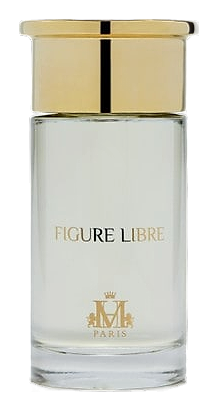

The signature
How Stéphanie composes
D’Hauteville’s perfumery is marked by a refined, contemporary sensibility rooted in the French tradition of composition. Her palette favors clarity and balance, with the likely emphasis falling on carefully selected floral, woody and aromatic materials that can stand close to the skin. Rather than chasing obvious impact, she appears interested in controlled contrast, using texture, diffusion and the slow evolution of a scent to create intimacy. The compositions associated with her own house often read as personal, polished and distinctly Parisian. Because detailed ingredient lists and technical notes are not consistently available, specific material preferences should be treated with caution. Still, her signature lies in the meeting of classical structure and freer expression, producing fragrances that reward attention without losing their sense of ease.
Philosophy
What drives Stéphanie
For Stéphanie d’Hauteville, fragrance seems to begin with emotion rather than a fixed formula. Her approach places creative freedom at the center, allowing each composition to develop its own rhythm and identity. The house name functions as an extension of that belief, giving her a singular authorial platform in which perfumer, concept and brand occupy the same space. Her work suggests that elegance need not depend on excess. A carefully judged accord can feel more expressive than a crowded composition, while an unexpected material can introduce tension without disturbing the overall sense of refinement. The precise scope of her method is not fully documented, yet the guiding principle appears clear: fragrance should leave an impression of personality, not merely a decorative signature.
The houses