Mohamed Alkawa
Mohamed Alkawa is a perfumer whose public profile remains deliberately compact. No confirmed fragrance, house affiliation, or landmark release appears in the available record, which leaves his work defined more by potential than by a catalogue of recognisable names. That makes him a figure to watch rather than a legacy to measure. The title of perfumer carries its own demanding history: years of chemical study, technical refinement, and repeated exposure to raw materials sit behind every finished composition. For Alkawa, those foundations matter in an industry often drawn to instant spectacle. His appeal lies in the question of what he will choose to make when the brief is not yet familiar and the references are still open. With no established creations attached to his name, his biography reads like a blank page rather than a completed story.
The hits
Notable creations
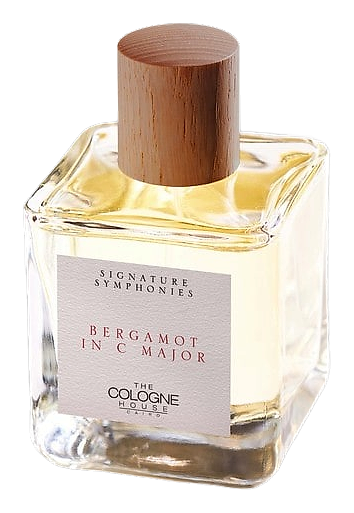
The signature
How Mohamed composes
The available material does not establish Alkawa’s preferred ingredients, extraction methods, or signature techniques, so any specific attribution would be invention. What can be said is that his emerging profile belongs to the contemporary perfumer’s exacting craft: composing many raw materials into one convincing idea, testing how each changes over time, and recognising when a formula needs subtraction rather than addition. His palette remains open. That openness is notable in a profession built around highly codified families, from luminous florals to dense woods, fresh citruses, smoked resins, and polished ambers. Alkawa’s style may therefore be best judged through the quality of his accords, the ease with which they develop on skin, and the precision with which they avoid commonplace gestures. Until a confirmed fragrance appears, those measures offer the fairest guide to his work.
Philosophy
What drives Mohamed
Alkawa’s creative position can best be described as patient and unresolved. With no verified releases to frame his taste, the emphasis falls on the perfumer’s core task: building a composition that feels coherent, expressive, and worth wearing. Rather than chase novelty for its own sake, he appears suited to a disciplined reading of scent, where contrast, texture, and memory carry as much weight as striking top notes. The absence of a house style or a signature line of commercial fragrances gives him room to explore without an inherited vocabulary. His work invites attention to the parts of perfumery that resist immediate explanation: the drydown, the softened edge of a material, the point at which an accord becomes recognisable on skin. It is an approach that places character before marketing and continuity before fashion.
The houses
Maisons Mohamed composes for
In the same league