Maiada El Khalifa
Maiada El Khalifa traded a corner office in Qatar's oil and gas sector for a perfumer's organ, and the perfume world is richer for it. The first Franco-Sudanese perfumer to build a house of her own, she walked away from a senior corporate post in 2021 to pursue what she calls her calculated rebellion. Her creative life began much earlier, though, with a childhood spent sketching and drawing, a practice she later carried into painting from 2010 onward. That visual instinct informs every composition she bottles. She is self-taught on both counts, an autodidact who never enrolled in a formal perfumery school yet trained her nose with the same rigor she once applied to quarterly reports. Today she leads Tayshaba Paris, a brand she founded to channel Sudanese heritage into scent. She describes herself, simply and without false modesty, as a pure creator of emotions, and the description fits. Her work reads less like product development and more like portraiture in olfactory form.
The hits
Notable creations
The signature
How Maiada composes
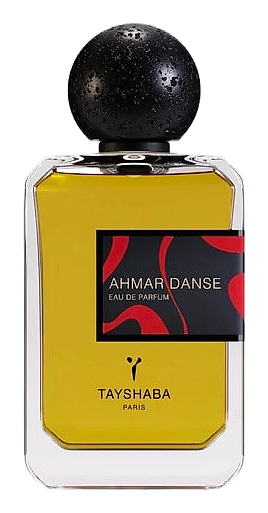
Maiada's approach leans on the painter's eye for color and contrast, with compositions that tend to read as vivid rather than restrained. Her visual training shows in how she layers ingredients, treating top, heart, and base like passages of pigment rather than a pyramid to be climbed. She gravitates toward statements that read clearly on skin, fragrances that announce themselves without shouting. Ahmar Dance carries the kinetic energy implied by its name, a fragrance built to move, to evoke the swirl of fabric and music rather than a static portrait. She works without the classical perfumery credentialing that gates many of her peers, which gives her compositions an unstudied confidence. The Sudanese references in her work lend spice, resin, and floral warmth that anchor her style firmly outside the European mainstream while remaining unmistakably wearable.
Philosophy
What drives Maiada
Maiada builds each fragrance around a personal anchor, a place, a memory, a moment she refuses to let go. In her own words, she wanted each one to hold something personal rather than chase a trend or a market segment. Her homeland, Sudan, runs through the work like a current: the beauty of a country she calls lost, the textures of its landscapes, the warmth of its people. She treats perfumery as an extension of her visual art, a way of bottling images and emotions that painting alone could not hold. There is also a stated sense of purpose behind the brand, a hashtag she coined, Fragrance With Purpose, that signals her belief that a scent can carry meaning beyond the aesthetic. She resists the idea of perfume as mere accessory, insisting instead on its capacity to preserve feeling.
The houses