László Lengyel
Born in Budapest in 1889, László Lengyel grew up amid the city’s cafés and the scent of fresh pastries. He apprenticed with a local chemist at sixteen, learning to extract essential oils from raw botanicals. The outbreak of World War I interrupted his studies, but the experience of field hospitals sparked a fascination with how scent can calm nerves. After the war he moved to Paris, where he joined a fledgling perfume house as an assistant. By 1925 he earned his first independent commission, crafting a floral-citrus blend for a Viennese salon. The breakthrough arrived in 1930 with Eau de la Reine de Hungary, a unisex fragrance that captured the elegance of interwar Europe and secured his reputation across the continent. Over the next two decades he consulted for several boutique houses, mentoring younger noses and refining his technique. Though records of his later work are sparse, his influence persists in the subtle balance of bright top notes and restrained heart accords that define classic Central European perfumery.
The hits
Notable creations
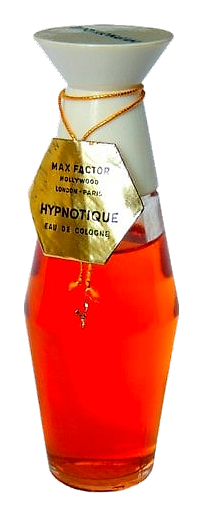
The signature
How László composes
Lengyel favors natural absolutes harvested in the early hours of dawn, when volatile compounds are at their peak. He extracts rose from the Hungarian plains, pairs it with Hungarian lavender and a hint of Hungarian oakmoss, creating a regional signature. His technique relies on cold-press distillation for citrus, preserving bright acidity, and on slow maceration of woods to develop depth. He avoids synthetic musks, preferring the soft animalic warmth of civet tincture in minute doses. Throughout his career he returns to a modest trio—citrus, floral, and forest—recombining them in new proportions to keep each composition fresh.
Philosophy
What drives László
Lengyel treats perfume as a conversation between memory and material. He believes a scent must evoke a specific moment without overwhelming the wearer. He starts each brief by recalling a personal anecdote—a sunrise over the Danube, the aroma of a market stall—and translates that image into a palette of ingredients. He respects the chemistry of each molecule, allowing it to speak before layering. Discipline and intuition guide his decisions; he never adds a note merely to fill space. For him, the ultimate reward is the quiet smile of someone who recognizes a fragment of their own story in the perfume.
The houses
Maisons László composes for
In the same league