Joseph Erwin
Joseph Erwin grew up the way certain scent memories begin: barefoot on a quarterhorse and cattle farm in the Arkansas countryside, where the air carried cut hay, cedar smoke, and whatever the kitchen was putting up that morning. After joining the U.S. Army, he carried that sensory archive into a career arc that eventually led him to Chattanooga, Tennessee, where he founded Onycha Fragrance Company, an artisanal, small-batch house built on a do-it-yourself ethos few indie perfumers attempt. Much of Onycha's raw material library is produced in-house, an uncommon commitment that means Erwin controls the chain from tincture to finished bottle. His encyclopedic footprint is still modest (eight compositions tracked across the major perfume references, plus a small but growing catalog on Onycha's own shelves), but each release reads as a quiet statement of intent rather than a market move.
The hits
Notable creations
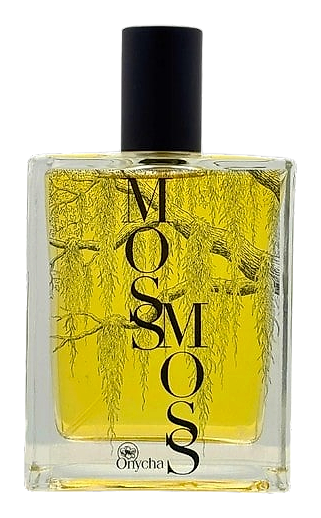
The signature
How Joseph composes
Erwin works in a gear-grinder register, favoring compositions that feel hand-shaped rather than machined. His signature move is in-house extraction: building his own absolutes, concretes, and infusions so that accords carry a particular raw, slightly irregular warmth. Expect grounded, earthy architectures with resinous underpinnings (onycha, the biblical shell-derived ingredient his house takes its name from, anchors several formulas), softened by Southern agrarian touches like hay, tobacco leaf, warm woods, and the occasional smoked or leather-leaning note. Florals appear sparingly and tend to read sun-warmed rather than bouquet-fresh. The overall effect is closer to artisan spirits than designer cologne, dimensional, textural, and unapologetically slow.
Philosophy
What drives Joseph
Erwin treats perfumery less like product development and more like stewardship, tending to raw materials with the patience of someone who once raised livestock and tended land. His driving belief is that a fragrance begins long before the bottle, in the quality and provenance of the botanical, resin, or animalic tincture sitting on his workbench. He leans into small-batch logic because it lets him respond to what a particular harvest smells like this season rather than what a formula sheet dictates. The Onycha aesthetic prizes transparency over theatrics, letting individual notes speak clearly rather than blurring them into spectacle. There is also a distinctly American self-reliance in his approach, the kind that assumes mastery comes from repetition, curiosity, and the willingness to extract your own materials when no one else will.
The houses