Cherry Cheng
Cherry Cheng came to perfumery through books. A childhood spent moving between countries sharpened her appetite for stories, and she later channeled that hunger into a creative direction career in London. During lockdown, curiosity tipped into commitment: she enrolled at the Grasse Institute of Perfumery, the storied French school that has trained generations of noses. What began as a private experiment became Jouissance Parfums, her independent house dedicated to translating erotic literature into scent. Cheng wears several hats at once: founder, creative director, theorist, and multidisciplinary artist. She has described Jouissance as both a celebration of feminine desire and a refusal of the polite registers perfume usually adopts. The brand quickly attracted a cult following among readers, writers, and collectors drawn to its literary provocations and refusal to separate intellect from the senses. Cheng continues to split her time between London and creative projects that blur the line between fragrance, criticism, and visual art.
The hits
Notable creations
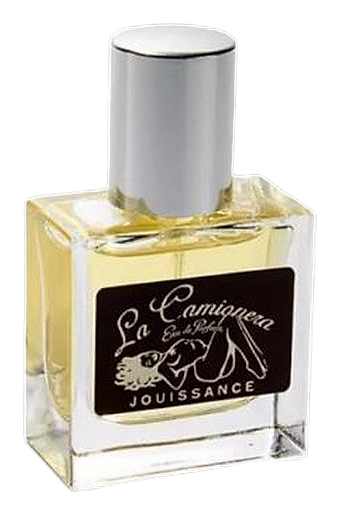
The signature
How Cherry composes
Cheng composes in tight, suggestive gestures rather than broad strokes. Her signatures tend toward skin-warm bases, indolic florals, lactonic softness, and dark woods that read like ink on paper. She gravitates toward materials with texture: orris, suede, smoke, animalic musks, and the slightly sour edge of ripe fruit. Her training at Grasse shows up in structure and in a respect for classical accords, which she then bends toward something more intimate, sometimes unsettling. The compositions rarely announce themselves loudly. They open quietly, then shift, the way a sentence changes meaning when you re-read it. Packaging and concept work in tandem with the juice: each release reads as a chapter in an ongoing argument about what perfume is allowed to say.
Philosophy
What drives Cherry
Cheng builds fragrances the way a critic builds an essay: from close reading. Each Jouissance composition starts with a text, an erotic passage she returns to until the right notes surface. She treats perfume as a feminist act, a way to claim pleasure that historically belonged to the male gaze and return it to the bodies writing and reading it. Beauty, for her, is more interesting when it carries something illicit or unresolved. She rejects the split between clean and provocative, smart and sensual, literary and commercial. Her goal is not to illustrate a book but to produce a second text, one the wearer adds by choosing to smell a certain way at a certain hour. Cheng often frames scent as an absence that nonetheless structures a room, a thought, a memory. The work is cerebral, but never cold.
The houses