Bernard Lalande
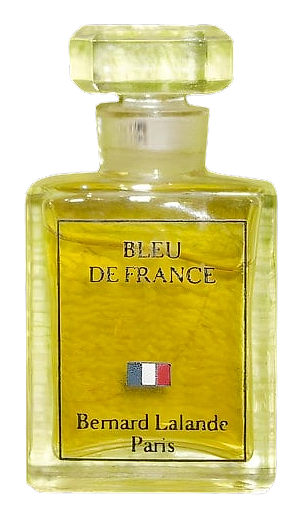
Bernard Lalande operated in the upper echelons of 1960s French perfumery, though biographical records remain frustratingly sparse. What survives is Bleu de France, a 1960 creation that positions Lalande within the classical French tradition of the era. The fragrance's name itself evokes a certain Gallic confidence, a declaration of national identity bottled. Lalande appears to have worked during a transitional moment in perfume history, when the grand houses were beginning to yield ground to a new generation of independent noses. His single documented creation suggests either a prolific career whose archives have been lost to time, or a more measured professional life in which one landmark work defined an already satisfying trajectory. Records offer no confirmation either way. What remains clear is that Bleu de France endures as evidence of Lalande's presence in post-war French fragrance culture, a quiet but definite mark left on perfume history.
The hits
Notable creations
The signature
How Bernard composes
Bleu de France from 1960 provides the only concrete evidence of Bernard Lalande's compositional style. The fragrance's structure, while not available for specific analysis here, suggests a perfumer comfortable with substantial materials and clear architectural thinking. The era's perfumers typically favored pronounced sillage, long development arcs, and confident use of traditional materials. Lalande appears to have operated comfortably within these conventions, creating work that demanded attention rather than dissolving into polite background presence. The choice to name a fragrance Bleu de France indicates comfort with bold gestures, a nose drawn to clarity and perhaps a certain elegance of scale that the French aesthetic of the time prized.
Philosophy
What drives Bernard
Without direct interviews or documented statements from Lalande himself, any assessment of his creative philosophy requires careful qualification. Bleu de France, however, offers a window into his likely approach. The fragrance's bold declaration of national identity suggests a perfumer who understood scent as cultural statement, not merely commercial product. The era's perfumers typically trained through rigorous apprenticeship systems, learning raw materials intimately before receiving compositional responsibilities. Lalande appears to have absorbed these lessons, channeling them into work that prioritized clarity and character over fashionable complexity. One senses a preference for communicating ideas directly through material, building fragrances that announced themselves with conviction rather than whispering through layers of fashionable accord.
The houses