Heritage
A house, in its own words
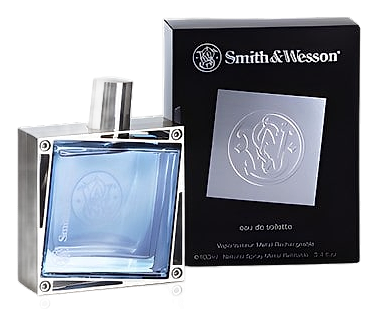
The story of Smith & Wesson begins in 1852 when Horace Smith and Daniel B. Wesson partnered to develop a revolutionary firearm design. Both men were based in Springfield, Massachusetts, a city that would become synonymous with American precision manufacturing. Smith, a machinist, and Wesson, who came from a family involved in firearms development, worked together on an improved rear-loading revolver mechanism that would eventually form the basis of their business. The partnership was formalized in 1856 when the two men established the Smith & Wesson Revolver Company, making it one of the oldest continuously operating firearms manufacturers in the world. Their first major success came with the Model 1, introduced in 1857 as the first American-made rimfire firearm. This product established the company's reputation for innovation and quality that would define its identity for generations. The Civil War period proved pivotal for the young company. Union forces purchased Smith & Wesson revolvers, and the military contracts helped the company grow substantially. Daniel B. Wesson reportedly organized a promotional effort offering free revolvers to Union soldiers, a marketing strategy that built customer loyalty and spread the brand's reputation across the military. By the time the Model 3 was introduced in 1869, the company had secured contracts with the U.S. military, including a notable endorsement from General William Tecumseh Sherman. The company weathered the transition to the 20th century, surviving Prohibition, two World Wars, and the post-war consumer boom. Throughout these periods, Smith & Wesson maintained its presence in Springfield, eventually expanding its product lines beyond traditional revolvers to include pistols, long guns, and accessories. The company weathered ownership changes over the decades while keeping its original name and Massachusetts roots. Smith & Wesson's approach to business has always centered on precision engineering and American manufacturing heritage. The company built its reputation on reliable products crafted with tight tolerances and durable materials, values that trace directly to the original partnership between Smith and Wesson. This emphasis on mechanical precision and functional excellence represents the core philosophy that has guided the company since the mid-19th century. The decision to release a fragrance in 2007 represented an extension of the Smith & Wesson brand into lifestyle territory. Rather than developing a completely new identity, the company adapted its established brand values for a different product category. The fragrance was positioned as a natural extension for consumers who associated the Smith & Wesson name with American heritage, reliability, and craftsmanship. This approach allowed the company to reach customers who might be interested in the brand's story without requiring them to purchase firearms. The philosophy underlying such brand extensions typically involves leveraging accumulated brand equity across multiple product categories. For Smith & Wesson, the fragrance represented an opportunity to translate intangible brand attributes like strength, tradition, and American manufacturing into a sensory experience. The company approached the fragrance market with the same pragmatic sensibility that characterized its firearms business, creating a product that aligned with the existing brand identity rather than attempting to reinvent the company's image.