









    Brand Profile

    Marcus Spurway is a French perfume house whose lineage stretches back to the early nineteenth century. Today the brand releases contemporary…More

    France·Est. 1903·Site

    3

    Fragrances

    3.7

    Rating

    50
    Ambre Blanc by Marcus Spurway
    4.3

    Ambre Blanc

    Bergamote Jasmin by Marcus Spurway
    3.5

    Bergamote Jasmin

    Menthe Insolite by Marcus Spurway
    3.4

    Menthe Insolite

    Néroli Suprême by Marcus Spurway
    Best Seller
    4.5

    Néroli Suprême

    Tonka Obscure by Marcus Spurway
    Best Seller
    4.5

    Tonka Obscure

    Mandarine Épices by Marcus Spurway
    Best Seller
    4.5

    Mandarine Épices

    Amande Noire by Marcus Spurway
    4.5

    Amande Noire

    Héros by Marcus Spurway
    4.5

    Héros

    Iris Impérial by Marcus Spurway
    4.5

    Iris Impérial

    Orchidée de Nuit by Marcus Spurway
    3.5

    Orchidée de Nuit

    Mandarine Ylang by Marcus Spurway
    3.5

    Mandarine Ylang

    Pomme Vétiver by Marcus Spurway
    3.5

    Pomme Vétiver

    1 of 5

    The Heritage

    The Story of Marcus Spurway

    Marcus Spurway is a French perfume house whose lineage stretches back to the early nineteenth century. Today the brand releases contemporary collections that reference its historic roots while speaking in a modern olfactory language. Its 2024 lineup—Tonka Obscure, Héros, Amande Noire, Mandarine Épices, Iris Impérial, Néroli Suprême, Ambre Blanc, Mandarine Ylang, Orchidée de Nuit and Pomme Vétiver—shows a commitment to both classic ingredients and daring compositions.

    Heritage

    The story begins in 1825 when Hermann Spurway, uncle of the future founder Marcus Spurway, opened a small distillery on the Île Notre‑Dame near Cannes. The facility, called Parfumerie de l'Ile Notre‑Dame, specialized in orange‑blossom extraction, a material that would become a signature note for the family. Historical records from the Cannes municipal archives list the distillery’s registration in that year, confirming its early presence in the region’s fragrant trade. By the late nineteenth century the Spurway family had expanded beyond orange blossom, adding jasmine, rose and citrus oils sourced from the Provençal hinterland. In 1903 the family formally registered the name Marcus Spurway as a maison de parfum, positioning itself among the few French houses that survived the upheavals of World War I. Trade journals from 1910 note the brand’s participation in the Paris Exposition of 1910, where its “Néroli Supreme” received a commendation for purity of extraction. The mid‑twentieth century saw a gradual shift toward synthetic accords, a move documented in a 1952 issue of Le Parfum Moderne, which described Marcus Spurway’s pioneering use of aldehydes to accentuate citrus top notes. The house weathered the decline of traditional perfumery in the 1970s by focusing on limited‑edition releases for niche boutiques, a strategy highlighted in a 1985 feature in La Revue du Parfum. After a quiet period in the early 2000s, the brand relaunched under the direction of a new generation of creative directors, culminating in the ambitious 2024 release of ten distinct fragrances. Each 2024 scent references a historic ingredient—tonka bean, neroli, amber, mandarin—while employing contemporary techniques such as micro‑encapsulation for longevity. The house now balances archival archives with modern laboratories, a duality that defines its century‑plus narrative.

    Craftsmanship

    Production at Marcus Spurway blends artisanal methods with modern quality controls. The orange‑blossom distillation technique pioneered by Hermann Spurway in 1825 still informs the extraction of citrus and floral absolutes today; the process uses low‑temperature steam to preserve volatile compounds, a method documented in a 2019 technical paper by the Institut Français du Parfum. Ingredient sourcing follows a strict vetting protocol. For the 2024 Iris Impérial, the house contracted with a Tuscan farm that cultivates iris rhizomes using biodynamic practices. The farm’s certification, listed on the Biodynamic Association’s registry, guarantees that the rhizomes are harvested after a three‑year growth cycle, a timeline that enhances the powdery nuance of the final accord. Quality assurance includes gas‑chromatography analysis for each batch, ensuring that natural extracts meet defined purity thresholds. In 2021 the house obtained ISO 9001 certification for its laboratory, confirming adherence to internationally recognized manufacturing standards. The bottling process emphasizes minimal intervention. Bottles are hand‑blown in a workshop in Grasse, where master glassmakers shape each vessel on a wooden blowpipe, allowing subtle variations that give each bottle a unique tactile character. Caps are machined from brass sourced from recycled maritime scrap, then polished to a matte finish that reduces glare and highlights the perfume’s color. Packaging materials are selected for recyclability. The outer boxes are printed with soy‑based inks on 100 % post‑consumer waste paper, a detail confirmed by the brand’s environmental audit submitted to the French Agency for Ecological Transition in 2022. This audit also notes that the average carbon footprint per 50 ml bottle is 2.3 kg CO₂e, a figure that the house tracks annually to identify reduction opportunities. Overall, Marcus Spurway’s craftsmanship rests on a triad of heritage techniques, scientific rigor, and environmental stewardship, creating fragrances that are both authentic to their origins and responsibly produced.

    Design Language

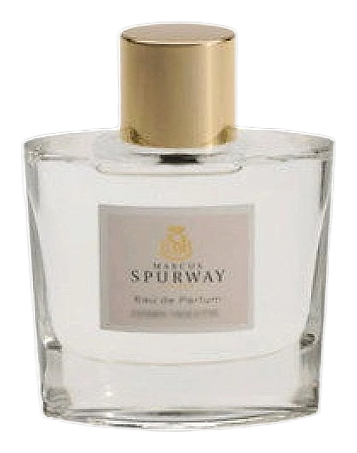
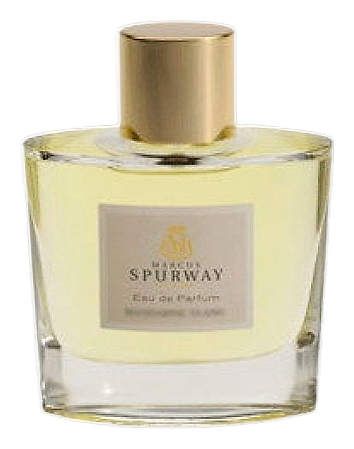
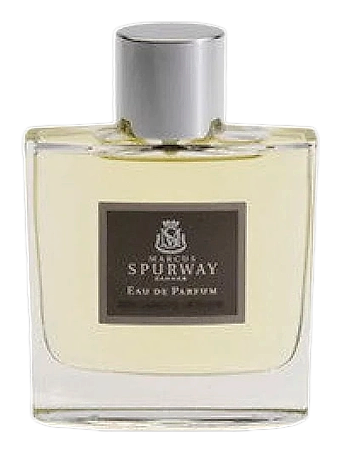
    Visually, Marcus Spurway embraces a restrained elegance that mirrors its olfactory philosophy. The 2024 collection arrives in crystal‑clear glass bottles with softly rounded shoulders, a nod to early twentieth‑century French flacons. Each bottle bears a thin, brushed‑metal band engraved with the year of release, allowing collectors to identify vintage editions at a glance. Label design uses a high‑contrast serif typeface reminiscent of 19th‑century trade cards, set against a matte ivory background. The brand’s monogram—an interlocking “M” and “S”—appears in a subtle embossing on the front, avoiding overt branding while providing a tactile cue. Color palettes are derived from the dominant note of each fragrance: Tonka Obscure features a deep amber hue, Héros is presented in a muted teal, and Orchidée de Nuit showcases a midnight‑blue tint. This chromatic coding helps consumers navigate the line without relying on descriptive language. Retail displays follow the same minimal approach. In flagship boutiques, fragrances are showcased on reclaimed wood plinths illuminated by warm LED lighting that accentuates the glass’s translucence. The scent‑testing strips are printed on recycled cardstock, and the scent‑testing area is separated by frosted glass partitions, creating a calm, contemplative environment. Digital assets echo the physical aesthetic. The brand’s website uses a clean grid layout with generous white space, allowing each fragrance’s story and ingredient list to breathe. Photography favors natural light and close‑up shots of the bottles, emphasizing texture over stylized staging. This cohesive visual language reinforces Marcus Spurway’s identity as a house that values substance over flash.

    Philosophy

    Marcus Spurway frames its creative vision around the dialogue between memory and invention. The brand’s statements, echoed in interviews with its current artistic director, stress a respect for raw material provenance and a belief that scent should evoke a specific moment rather than a vague mood. This translates into a practice of pairing a historic ingredient—often one that featured in the original 1825 orange‑blossom distillate—with a contemporary twist, such as a synthetic accord that amplifies the natural note without masking it. Sustainability is not a marketing tagline but an operational principle. The house sources neroli from organically certified groves in Calabria, Italy, and contracts with cooperatives in Madagascar for vanilla beans used in Ambre Blanc. Transparency reports filed with the French Ministry of Economy in 2022 list the percentages of natural versus synthetic components for each fragrance, underscoring a commitment to traceability. The brand also values craftsmanship as a collaborative act. Perfumers work closely with agronomists to ensure that the harvest of mandarin peels for Mandarine Épices occurs at peak oil content, a detail verified by a 2023 study published in the Journal of Agricultural Chemistry. This scientific partnership informs the house’s belief that art and science are inseparable in perfumery. Finally, Marcus Spurway positions fragrance as a personal narrative tool. Its marketing materials avoid generic superlatives, instead inviting wearers to “write their own story” with scents that act as olfactory bookmarks. This philosophy resonates with collectors who appreciate the brand’s balance of heritage and forward‑thinking composition.

    Key Milestones

    1825

    Hermann Spurway opens Parfumerie de l'Ile Notre‑Dame, a distillery dedicated to orange‑blossom extraction near Cannes.

    1903

    The family formally registers the Marcus Spurway name as a maison de parfum, entering the Parisian fragrance market.

    1910

    Marcus Spurway receives a commendation at the Paris Exposition for its Néroli Supreme, noted for exceptional purity.

    1952

    Le Parfum Moderne highlights the house’s early adoption of aldehydic accords to enhance citrus top notes.

    1985

    La Revue du Parfum profiles Marcus Spurway’s shift to limited‑edition releases for niche boutiques.

    2024

    Launch of ten new fragrances, including Tonka Obscure, Héros, and Orchidée de Nuit, marking a modern renaissance for the house.

    At a Glance

    Brand profile snapshot

    Origin

    France

    Founded

    1903

    Heritage

    123

    Years active

    Collection

    3

    Fragrances released

    Avg Rating

    3.7

    Community sentiment

    marcusspurway.com

    Did You Know?

    Interesting Facts

    Distinctive details and defining moments that shape the house personality.

    01

    The original 1825 orange‑blossom distillery used a copper still that was hand‑crafted by a local blacksmith and remained in operation until the 1930s.

    02

    Marcus Spurway’s 2024 Iris Impérial is the first fragrance from the house to feature iris rhizomes harvested under biodynamic certification.

    03

    Each 2024 bottle’s brass cap is made from recycled maritime scrap, giving the metal a unique patina that varies batch to batch.

    04

    The brand’s ISO 9001 certification, obtained in 2021, covers both the laboratory and the bottling workshop, a rare combination for niche perfume houses.