


The Heritage
The Story of Marc Weiss
Marc Weiss entered the niche perfume scene in 2018 with a concise portfolio of four scents—Evasion, Podium, Couler and Chapter 5. The brand positions itself as a laboratory for modern olfactory ideas, offering unisex compositions that balance synthetic precision with natural nuance. Each launch arrived in a clear glass vial capped in matte black, a visual cue that the focus lies on the scent rather than on decorative excess. Though the line is small, the fragrances have attracted attention from independent reviewers for their clean structures and the way they invite personal interpretation.
Heritage
Marc Weiss, a perfumer who spent the early 2010s developing fragrances for larger houses in New York, decided to create his own label after a series of collaborations with boutique retailers. In 2016 he began experimenting with a limited set of raw materials in a modest studio on the Lower East Side, documenting each trial in a notebook that later became the blueprint for his debut collection. By early 2018 the brand announced its first four releases, all arriving within the same calendar year. Evasion opened the line with a bright citrus‑green accord, followed by Podium’s woody‑spicy heart, Couler’s muted ambergris‑leaning finish, and Chapter 5’s aromatic‑herbal narrative. The simultaneous launch was unusual for a newcomer, but it reflected Weiss’s belief that a cohesive set could define a signature aesthetic. In 2019 the brand introduced limited‑edition re‑fills, allowing early adopters to sustain their favorite scents without purchasing new bottles. The following year, Marc Weiss partnered with the fragrance community platform Redolessence to host a series of tasting events in Chicago, expanding the brand’s reach beyond its New York base. 2021 marked a shift toward sustainability: the company sourced glass from a recycled supplier and switched to soy‑based inks for its packaging. In 2022 the brand opened a small flagship space on Orchard Street, where visitors could experience the four fragrances side by side and learn about the formulation process. By 2023 Marc Weiss had secured placement in a curated selection of independent boutiques across the United States, confirming that a focused, quality‑first approach could thrive without the marketing budgets typical of larger houses. Throughout its development, the brand has remained privately held, with Marc Weiss retaining creative control and overseeing each batch from raw material selection to final bottling.
Craftsmanship
Production at Marc Weiss follows a small‑batch model that blends laboratory precision with artisanal care. Raw materials arrive from a network of European and North‑American suppliers; citrus oils are sourced from Sicily, sandalwood from India, and ambergris‑type synthetics from French laboratories that meet REACH standards. Each ingredient is weighed on a calibrated scale, and the blending process occurs in a climate‑controlled studio where temperature and humidity are monitored to ensure consistency. Weiss personally oversees the maceration period, which typically lasts four to six weeks, allowing the components to integrate fully. After maceration, the perfume is filtered through a stainless‑steel mesh to remove any particulate matter. Bottling takes place on a hand‑operated line: glass vials are rinsed with ethanol, dried, and then filled using a piston dispenser that delivers the exact volume required for each batch. The caps are affixed by a technician who checks torque to guarantee a tight seal. Quality control includes blind olfactory testing by a panel of three independent noses; each must confirm that the scent matches the reference profile before the batch proceeds to packaging. The brand also conducts stability testing, storing samples at varying temperatures for three months to verify that the fragrance maintains its intended character. Finished bottles are boxed in recycled cardboard, printed with soy‑based inks, and sealed with a biodegradable sticker. This end‑to‑end oversight ensures that every bottle that leaves the studio reflects the same level of precision and care that went into its creation.
Design Language
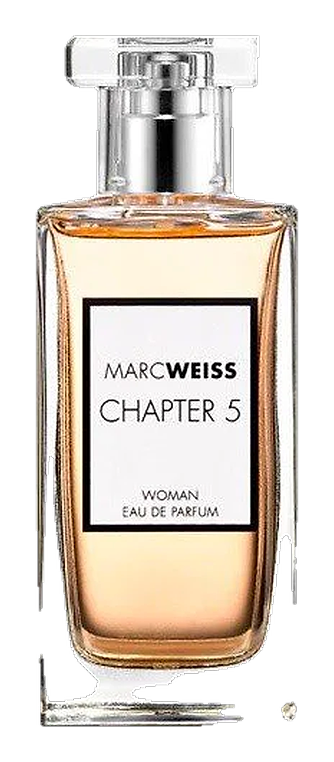
Visually, Marc Weiss adopts a minimalist language that mirrors its olfactory approach. The bottles are clear, cylindrical glass with a uniform volume of 50 ml, allowing the perfume’s natural hue to be seen without distraction. A matte black cap provides a subtle contrast, while the label consists of a thin white band bearing the fragrance name in a sans‑serif typeface. No ornate embossing or metallic foiling appears; the design relies on clean lines and negative space to convey elegance. The brand’s website continues this aesthetic, featuring a white background, high‑resolution product photography, and concise copy that avoids flowery adjectives. In retail settings, the fragrances are displayed on simple wooden trays, each accompanied by a single sheet of paper that lists the top, middle and base notes in alphabetical order. This restrained visual identity reinforces the idea that the scent itself is the focal point, not the packaging. Seasonal campaigns, when they occur, use monochrome photography that highlights the interplay of light on the glass, further emphasizing the brand’s commitment to understated sophistication.
Philosophy
The creative vision behind Marc Weiss rests on the idea that a fragrance should act as a personal canvas rather than a prescribed statement. Weiss describes his work as an effort to strip away unnecessary layers, allowing the core ingredients to speak directly to the wearer’s skin chemistry. He favors compositions that evolve over time, beginning with a clear opening, moving through a defined heart, and settling into a subtle dry‑down that does not dominate a space. The brand values transparency; ingredient lists are published on the website, and sourcing locations are disclosed whenever possible. Sustainability informs the philosophy as well: the team selects suppliers who practice responsible harvesting, and it prioritises materials that can be regenerated or that have a low environmental impact. Collaboration is another pillar; Weiss often invites fellow perfumers or artisans to contribute a single note or a packaging element, believing that fresh perspectives keep the line from becoming static. The brand’s communication style mirrors this ethos, using straightforward language and avoiding hyperbole, inviting the consumer to form their own judgment rather than being told what to feel.
Key Milestones
2016
Marc Weiss begins private fragrance experiments in a New York studio, documenting formulations in a personal notebook.
2018
Official launch of the Marc Weiss brand with four inaugural scents: Evasion, Podium, Couler and Chapter 5.
2019
Introduction of limited‑edition refill packs, allowing customers to reuse original bottles.
2021
Transition to recycled glass bottles and soy‑based inks for all packaging components.
2022
Opening of a flagship tasting space on Orchard Street, New York, offering guided scent experiences.
2023
Placement of Marc Weiss fragrances in curated independent boutiques across the United States.
At a Glance
Brand profile snapshot
Origin
United States
Founded
2018
Heritage
8
Years active
Collection
1
Fragrances released
Avg Rating
3.5
Community sentiment


