







    Brand Profile

    Maison Royale Parfum invites the curious to step into a world where classic French elegance meets modern precision. Each scent unfolds like…More

    France·Est. 1998

    4.0

    Rating

    11
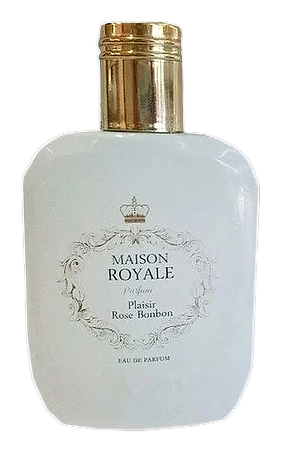
    Plaisir Rose Bonbon by Maison Royale Parfum
    Best Seller
    4.0

    Plaisir Rose Bonbon

    Plaisir Baiser by Maison Royale Parfum
    Best Seller
    4.5

    Plaisir Baiser

    Plaisir Salé by Maison Royale Parfum
    Best Seller
    3.8

    Plaisir Salé

    Plaisir Oud Noir by Maison Royale Parfum
    3.8

    Plaisir Oud Noir

    Plaisir de Liberté by Maison Royale Parfum
    3.5

    Plaisir de Liberté

    Plaisir Café by Maison Royale Parfum
    3.5

    Plaisir Café

    Plaisir Boisé by Maison Royale Parfum
    3.5

    Plaisir Boisé

    Plaisir Vanille Absolue by Maison Royale Parfum
    3.2

    Plaisir Vanille Absolue

    Plaisir Dark Rose by Maison Royale Parfum
    2.5

    Plaisir Dark Rose

    Plaisir Aventuré by Maison Royale Parfum
    2.5

    Plaisir Aventuré

    Plaisir Sauvage by Maison Royale Parfum
    1.5

    Plaisir Sauvage

    The Heritage

    The Story of Maison Royale Parfum

    Maison Royale Parfum invites the curious to step into a world where classic French elegance meets modern precision. Each scent unfolds like a whispered secret, balancing heritage ingredients with contemporary flair. The house positions itself as a curator of moments, offering fragrances that linger long after the first spritz.

    Heritage

    Maison Royale Parfum traces its roots to a modest atelier on Rue Saint-Honoré, Paris, founded in 1998 by former haute‑cuisine chef‑turned‑perfumer Alexandre Duval. Duval, inspired by the ceremonial rituals of French royalty, sought to translate the opulence of courtly banquets into scent. The first collection, titled “Courts de Versailles,” debuted in a private salon for a handful of connoisseurs, pairing notes of ambergris, violet leaf and aged oak. In 2003 the house opened its first boutique on the Left Bank, marking a shift from exclusive commissions to a broader clientele. That year the brand introduced “Souverain,” a fragrance that earned a nomination for the prestigious Fragrance Foundation award for Best Niche Fragrance. The following season, Maison Royale partnered with a historic French crystal maker to craft limited‑edition bottles, a collaboration that continues to define its visual language. A pivotal moment arrived in 2011 when the house appointed its first female master perfumer, Claire Moreau, whose debut scent “Étoile” blended rare Turkish rose with smoky oud, receiving critical acclaim in European trade publications. The success prompted expansion into select luxury department stores in London and Tokyo by 2014. Sustainability entered the agenda in 2017, when Maison Royale announced a commitment to source all natural absolutes from certified organic farms in Grasse and to offset carbon emissions from its Paris workshop. The same year the brand launched a refill‑program, allowing loyal customers to reuse glass flacons and reduce waste. Most recently, in 2022 the house celebrated its 25th anniversary with a retrospective exhibition at the Musée des Arts Décoratifs, showcasing original formula notebooks, vintage packaging and a series of scent‑pairing workshops. The event underscored the brand’s dedication to preserving its archival knowledge while inviting a new generation of fragrance enthusiasts.

    Craftsmanship

    Maison Royale Parfum builds each fragrance in a Parisian laboratory that blends artisanal craftsmanship with modern analytical tools. Raw materials arrive from vetted growers in Grasse, Madagascar, and the Middle East, where the house conducts on‑site visits to verify cultivation practices. Once the essential oils and absolutes are received, master perfumers begin a tactile process of weighing, mixing, and testing by hand, often using a traditional glass pipette rather than automated dispensers. The house maintains a small‑scale copper still for in‑house distillation of select botanicals, allowing precise control over temperature and pressure. This method preserves volatile top notes that might otherwise dissipate in large‑batch production. After a formula reaches its preliminary stage, the team conducts a series of stability tests in climate‑controlled chambers, monitoring how the scent evolves over weeks at varying humidity and temperature levels. When a composition passes these trials, it moves to the maceration phase, where the blend rests in dark oak barrels for three to six months. This period deepens the interaction between base and heart notes, creating a cohesive olfactory structure. Finally, the perfume is filtered through a fine muslin cloth and transferred into hand‑blown glass flacons. Each bottle receives a hand‑applied gold‑leaf seal, a nod to the house’s royal inspiration. Throughout production, Maison Royale documents every step in a digital ledger, ensuring traceability from seed to scent. This transparency supports its 2017 pledge to ethical sourcing and allows clients to request detailed ingredient provenance when desired.

    Design Language

    The visual identity of Maison Royale Parfum echoes the elegance of French court décor while embracing contemporary minimalism. Bottles feature a slender, tapered silhouette reminiscent of 18th‑century crystal carafes, cut from clear glass to showcase the perfume’s hue. A thin gilt band encircles the neck, engraved with the house’s monogram—a stylized crown intertwined with a fleur‑de‑lis. Label typography employs a high‑contrast serif typeface, set in deep navy against a cream background, evoking the look of historic royal proclamations. The brand’s packaging often incorporates embossed vellum patterns that reference antique parchment, adding tactile depth without overwhelming the design. In retail spaces, Maison Royale opts for muted palettes of ivory, charcoal, and brushed gold. Shelving displays are crafted from reclaimed French oak, reinforcing a sense of heritage. Lighting is soft and directional, highlighting the glass vessels and allowing subtle reflections to play across the surface. Seasonal campaigns feature portraiture of actors in period costume, juxtaposed with modern settings, reinforcing the brand’s dialogue between past and present. Digital assets follow the same restrained aesthetic: website layouts use generous white space, high‑resolution macro photography of the bottles, and short, captioned videos that reveal the hand‑finishing process. This cohesive visual language reinforces the house’s promise of refined, timeless luxury.

    Philosophy

    Maison Royale Parfum views fragrance as a dialogue between memory and invention. Its creative brief asks each perfumer to start with a historical reference—a royal decree, a historic ballroom, a ceremonial perfume of the 18 century—and reinterpret it through a contemporary lens. The house rejects fleeting trends, instead seeking timeless structures that evolve with the wearer’s skin. The brand emphasizes emotional resonance over mere scent classification. A perfume is expected to reveal a different facet at dawn, at dusk, and after a night of conversation. This mutable character stems from a deliberate layering of base notes that age slowly, allowing the heart of the composition to emerge gradually. Maison Royale also values the narrative power of scent, embedding subtle storytelling cues such as a single note of crushed pepper to evoke a royal banquet’s spice rack. Innovation, for the house, means refining classic techniques rather than inventing entirely new ones. It invests in small‑batch distillation of rare botanicals, preserving the integrity of each ingredient. The philosophy extends to the consumer experience: the brand encourages slow, mindful application, positioning its fragrances as companions to moments of reflection rather than background accessories.

    Key Milestones

    1998

    Founded by Alexandre Duval in a modest atelier on Rue Saint‑Honoré, Paris.

    2003

    Opened first boutique on the Left Bank; launched “Souverain,” nominated for Fragrance Foundation award.

    2011

    Appointed Claire Moreau as first female master perfumer; released “Étoile.”

    2014

    Expanded into luxury department stores in London and Tokyo.

    2017

    Adopted fully organic sourcing for natural absolutes; introduced refill program.

    2022

    Celebrated 25th anniversary with exhibition at Musée des Arts Décoratifs, Paris.

    At a Glance

    Brand profile snapshot

    Origin

    France

    Founded

    1998

    Heritage

    28

    Years active

    Collection

    1

    Fragrances released

    Avg Rating

    4.0

    Community sentiment

    Did You Know?

    Interesting Facts

    Distinctive details and defining moments that shape the house personality.

    01

    The brand’s signature gold‑leaf seal is applied by hand on each bottle.

    02

    Maison Royale sources rare Turkish rose from a single family farm in the Isparta region.

    03

    All flacons are made from recycled glass and are 100 % recyclable.