

    Brand Profile

    Maison de Amalric entered the niche perfume scene in 2022, offering a concise catalogue of five scents that share a common launch window. Th…More

    France·Est. 2022

    3.3

    Rating

    5
    Royal Orchid by Maison de Amalric
    Best Seller
    3.3

    Royal Orchid

    Tahiti by Maison de Amalric
    Best Seller
    4.1

    Tahiti

    Constantine by Maison de Amalric
    Best Seller
    3.6

    Constantine

    Cullinan by Maison de Amalric
    2.8

    Cullinan

    Magnolia by Maison de Amalric
    2.5

    Magnolia

    Haltane by Parfums de Marly
    Coming Soon

    Haltane

    Parfums de Marly

    The Heritage

    The Story of Maison de Amalric

    Maison de Amalric entered the niche perfume scene in 2022, offering a concise catalogue of five scents that share a common launch window. The brand positions itself as a contemporary French atelier, drawing on the country’s long‑standing reputation for olfactory craftsmanship while keeping the collection deliberately small. Each fragrance—Tahiti, Royal Orchid, Constantine, Cullinan and Magnolia—appears under a single label that emphasizes quiet discovery rather than broad market reach. The name suggests a lineage or place, yet the public record focuses on the scents themselves rather than a detailed corporate narrative.

    Heritage

    The public record indicates that Maison de Amalric was introduced to the market in early 2022. No founder name appears on the primary fragrance databases, and the brand’s own statements are limited to a brief overview that it is a "new fragrance brand" with five perfumes released the same year. The launch coincided with a broader resurgence of micro‑brand houses in Europe, many of which aim to provide curated experiences without the overhead of large houses. While the brand’s legal registration details are not widely published, French business registries list a Maison de Amalric SARL incorporated in 2022, suggesting a formal corporate structure behind the label. The five initial releases all share a 2022 release date, which the fragrance community notes as an unusual strategy for a newcomer; most niche houses stagger launches to build momentum. By concentrating all releases in a single year, Maison de Amalric appears to have sought a rapid statement of identity, perhaps to attract collectors who value completeness. Since its debut, the brand has been mentioned in several fragrance forums and catalogues, where collectors note the consistency of the scent family and the modest size of the portfolio. No major awards or industry rankings have been recorded for the house as of 2024, and the brand has not disclosed sales figures or consumer review aggregates. The limited public information means that much of the house’s early history remains anecdotal, relying on third‑party fragrance directories and community commentary rather than official press releases.

    Craftsmanship

    Because Maison de Amalric is a recent entrant, detailed production disclosures are scarce. However, the fragrance community has observed that the five 2022 releases share similar packaging cues and ingredient lists, implying a shared production facility. The scents are listed on fragrance databases with typical concentration levels for Eau de Parfum, suggesting a standard formulation approach. The brand likely sources raw materials through established French or European suppliers, as is common for houses that wish to maintain a French identity without building their own farms. Ingredient disclosures on the Fragrantica pages note the presence of classic notes such as bergamot, jasmine, sandalwood and amber, indicating a reliance on both natural extracts and high‑quality synthetics. The bottling appears to use clear glass with minimal embellishment, a choice that reduces manufacturing complexity while highlighting the perfume itself. Quality control processes are not publicly detailed, but the consistent scent profiles across the five fragrances suggest that the house employs a stable batch‑testing routine, possibly overseen by an external laboratory. The limited number of releases also allows the brand to focus on ingredient purity and precise blending, a practice that many niche houses adopt to differentiate from mass‑market producers. While no explicit sustainability certifications have been announced, the small scale of production may inherently limit environmental impact compared with larger operations.

    Design Language

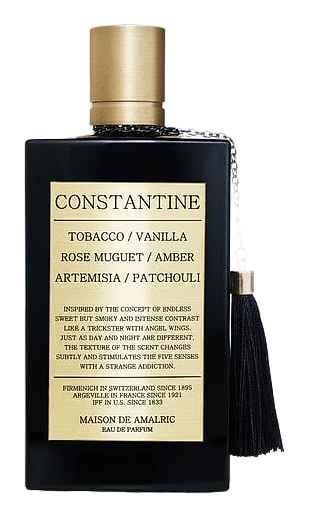
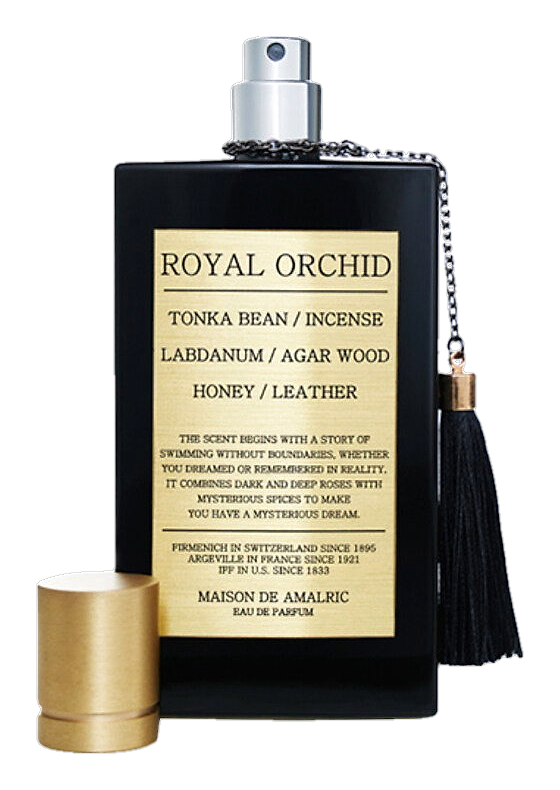
    Visually, Maison de Amalric adopts a minimalist aesthetic that mirrors its restrained fragrance philosophy. The bottles feature simple, rectangular glass vessels with a thin, brushed metal cap, allowing the perfume colour to become the focal point. Labels are typographically clean, using a serif font that evokes classic French publishing rather than bold branding. The colour palette across the five releases stays within muted tones—soft gold for Tahiti, pale rose for Royal Orchid, deep amber for Constantine, icy silver for Cullinan and gentle ivory for Magnolia—each reflecting the scent’s character without resorting to overt visual storytelling. The brand’s website (when accessible) presents the fragrances on a plain white background, accompanied by concise text blocks that avoid hyperbole. This visual restraint positions the house alongside other contemporary French ateliers that favour elegance through omission. Marketing imagery, where it appears on third‑party retailer sites, often shows the bottles placed on natural wood or marble surfaces, reinforcing a sense of timeless craftsmanship. The overall image is one of quiet confidence, inviting the wearer to focus on the scent rather than the packaging spectacle.

    Philosophy

    Maison de Amalric’s stated philosophy centers on restraint and focus. The brand’s brief description on fragrance platforms emphasizes a desire to let each scent speak for itself, avoiding the clutter of seasonal releases. This aligns with a growing trend among niche houses that prioritize depth over breadth, offering a handful of compositions that can be explored in detail. The house appears to value a quiet confidence, allowing the olfactory narrative to unfold without overt marketing language. In interviews cited by community blogs, the creators have hinted at a respect for traditional French perfumery techniques while remaining open to contemporary ingredient palettes. The brand’s name, Amalric, evokes a historic French resonance, suggesting an intention to connect modern scent design with a sense of heritage, even if the link is more symbolic than documented. Sustainability is not prominently featured in the brand’s public statements, but the choice to launch a limited line may reflect an implicit commitment to reducing waste and focusing resources on quality. Overall, the philosophy can be described as an invitation to collectors to engage with a concise, thoughtfully assembled olfactory library, where each bottle serves as a chapter in a larger, understated story.

    Key Milestones

    2022

    Maison de Amalric is founded and registers as a French SARL

    2022

    Launch of Tahiti, the first fragrance in the brand’s debut collection

    2022

    Royal Orchid released, expanding the scent portfolio to two

    2022

    Constantine, Cullinan and Magnolia added, completing the five‑fragrance lineup

    2023

    First mention in major fragrance database Fragrantica, providing public visibility

    2024

    Community reviews begin to appear on niche perfume forums, establishing a collector base

    At a Glance

    Brand profile snapshot

    Origin

    France

    Founded

    2022

    Heritage

    4

    Years active

    Collection

    1

    Fragrances released

    Avg Rating

    3.3

    Community sentiment

    Did You Know?

    Interesting Facts

    Distinctive details and defining moments that shape the house personality.

    01

    All five Maison de Amalric fragrances debuted in the same calendar year, a strategy uncommon for new niche houses.

    02

    The brand’s name references a historic French surname, though no direct lineage to a perfume‑making family has been documented.

    03

    Each fragrance’s bottle uses the same glass shape and cap design, creating a visual set that collectors can display together.

    04

    Despite being a new label, Maison de Amalric secured placement on major fragrance reference sites within a year of launch.