









    Brand Profile

    Les Beaux Arts is a Paris‑based niche perfume house that treats fragrance as a dialogue between scent and visual art. Since the mid‑1990s th…More

    France·Est. 1994·Site

    3.4

    Rating

    24
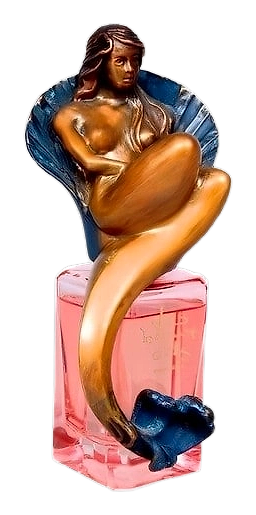
    Design Edition №13 Aphrodite by Les Beaux Arts – Eau de Parfum
    Best Seller
    3.4

    Design Edition №13 Aphrodite

    Eau de Parfum

    Design Edition №10 Königin der Nacht by Les Beaux Arts

    Design Edition №10 Königin der Nacht

    Design Edition №9 Papagena by Les Beaux Arts

    Design Edition №9 Papagena

    Design Edition №2 Shining / Shocking / Sparkling by Les Beaux Arts

    Design Edition №2 Shining / Shocking / Sparkling

    Design Edition №13 Paris by Les Beaux Arts

    Design Edition №13 Paris

    Design Edition №11 Julia by Les Beaux Arts

    Design Edition №11 Julia

    Design Edition №9 Papageno by Les Beaux Arts

    Design Edition №9 Papageno

    Design edition №4 Fiora by Les Beaux Arts

    Design edition №4 Fiora

    Design Edition №3 Eros by Les Beaux Arts

    Design Edition №3 Eros

    Iride — Design Edition by Les Beaux Arts

    Iride — Design Edition

    Design Edition №11 Romeo by Les Beaux Arts

    Design Edition №11 Romeo

    Design Edition №6 Space Venus by Les Beaux Arts

    Design Edition №6 Space Venus

    1 of 2

    The Heritage

    The Story of Les Beaux Arts

    Les Beaux Arts is a Paris‑based niche perfume house that treats fragrance as a dialogue between scent and visual art. Since the mid‑1990s the brand has released a series of “Design Editions”, each bottle referencing a specific artwork, cultural movement or historic figure. The line‑up reads like a miniature museum of olfactory experiments, from the mythic Eros (1994) to the contemporary Love Story Homme (2022). Les Beaux Arts positions itself less as a commercial label and more as a curatorial platform, inviting collectors to experience perfume as a portable exhibition.

    Heritage

    The origins of Les Beaux Arts trace back to 1994, when a collective of French designers and perfumers launched the first Design Edition, Eros, in a limited run of 500 bottles. The project grew out of a desire to break the conventional retail model and to embed fragrance within the language of fine art. By 1995 the house introduced Design Edition №4 Fiora, a scent inspired by the Renaissance painter Botticelli, and in 1998 released Design Edition №9 Papagena, a homage to Mozart’s opera and its theatrical staging. Each release was accompanied by a small printed booklet that placed the perfume in an art‑historical context, reinforcing the brand’s educational ambition. In 1999 the house issued Design Edition №10 Königin der Nacht, referencing the German Romantic poet Novalis and the nocturnal motifs that pervade his work. The following year, Design Edition №13 Paris celebrated the city’s centennial of the 1900 Exposition Universelle, blending notes of Parisian garden roses with a metallic accord that evoked the Eiffel Tower’s iron lattice. The early 2000s saw Les Beaux Arts partnering with museums for scent‑guided tours, notably a 2005 collaboration with the Musée des Beaux‑Arts de Lyon that allowed visitors to experience a curated olfactory path through the museum’s galleries. This partnership underscored the brand’s commitment to interdisciplinary dialogue. A quiet period followed, during which the house refined its sourcing practices and began working directly with small‑scale farms in Grasse and the Provence region. In 2015, Les Beaux Arts marked its 20‑year anniversary with a limited‑edition retrospective box set that compiled the first twelve Design Editions, each housed in a custom‑crafted wooden case. The most recent milestone arrived in 2022 with the launch of Love Story Homme — Design Edition Barry Shiraishi, a modern reinterpretation of classic masculine accords, created in collaboration with the Japanese visual artist Barry Shiraishi. The fragrance blends cedar, pepper, and a faint trace of sakura, reflecting Shiraishi’s minimalist aesthetic. Throughout its history, Les Beaux Arts has remained independent, operating from a modest atelier in the 11th arrondissement of Paris, and continues to release limited runs that appeal to collectors who value narrative depth as much as olfactory quality.

    Craftsmanship

    Production at Les Beaux Arts unfolds in a series of tightly controlled steps, each overseen by specialists who combine traditional French perfumery techniques with modern quality standards. Raw materials are sourced primarily from small, family‑run farms in the Grasse region, where lavender, jasmine, and rose are harvested by hand at peak bloom. The house maintains long‑term contracts with these growers, ensuring traceability and allowing for the selection of botanicals that meet strict aromatic criteria. Once harvested, botanicals undergo a cold‑press or steam‑distillation process in facilities that comply with ISO 9001 standards. The resulting essential oils are stored in stainless‑steel tanks at controlled temperatures to preserve their volatile compounds. For synthetic aroma chemicals, Les Beaux Arts works with reputable European manufacturers that provide certificates of analysis, guaranteeing purity and consistency. The formulation stage takes place in a Parisian laboratory where a perfumer, often selected from a pool of independent creators, receives the narrative brief and a curated list of available materials. The perfumer conducts iterative trials, blending accords in small glass vials and allowing each iteration to mature for several weeks. Stability testing follows, checking for colour shift, scent drift, and allergenicity under varying temperature and humidity conditions. When a formula is approved, the house moves to batch production. Each batch is limited to a maximum of 1,000 units, a decision driven by both artistic intent and quality control. The perfume is filled into hand‑blown French crystal bottles that are inspected for imperfections under magnification. Caps are machined from brushed aluminum and feature a subtle engraved logo that references the specific Design Edition’s theme. Quality assurance includes a final organoleptic evaluation by a panel of senior perfumers and sensory analysts. Only batches that meet the house’s sensory profile are released. The brand also employs a refill system: the original glass bottle can be returned, sterilized, and refilled with the same fragrance, reducing packaging waste while preserving the tactile experience of the original design. Through this meticulous process, Les Beaux Arts ensures that each fragrance not only captures its artistic inspiration but also meets the rigorous standards expected by discerning collectors.

    Design Language

    Visually, Les Beaux Arts adopts a museum‑catalogue aesthetic that foregrounds simplicity and scholarly detail. Bottles are crafted from clear, high‑grade crystal, allowing the perfume’s colour to become a subtle visual cue. The label is a thin, matte‑finished paper strip that bears the Design Edition number, the year of release, and a concise title rendered in a classic serif typeface reminiscent of exhibition placards. Caps are minimalist, often brushed aluminum or brushed brass, engraved with a small emblem that references the fragrance’s theme—a stylised lyre for Eros, a night‑owl silhouette for Königin der Nacht, or a delicate sakura blossom for Love Story Homme. The overall silhouette of the bottle is slender and elongated, echoing the proportions of a perfume atomiser from the early 20th century, thereby reinforcing the brand’s dialogue with history. Packaging boxes are designed to resemble archival folders: sturdy, matte‑black covers with gold‑foil lettering, and an inner sleeve that holds a printed dossier. The dossier contains high‑resolution reproductions of artworks, historical notes, and a description of the scent’s composition, printed on acid‑free paper to ensure longevity. The brand’s visual communication—website, social media, and press releases—continues this curatorial tone. Images are presented against neutral backgrounds, with ample white space and captions that read like museum labels. This restrained visual language positions Les Beaux Arts as a bridge between the worlds of fine art and perfumery, appealing to collectors who appreciate both aesthetic rigor and olfactory nuance.

    Philosophy

    Les Beaux Arts frames perfume as a narrative medium, insisting that every scent should tell a story that can be read as easily as a painting on a wall. The brand’s creative brief begins with a research phase: archivists and historians examine a chosen theme—whether a mythological figure, a historic event, or a contemporary artwork—and distill its emotional core into a scent brief. This brief is then handed to a perfumer who translates the narrative into a palette of raw materials. The house emphasizes transparency and education. Each launch is accompanied by a printed dossier that outlines the artistic reference, the chosen accords, and the sourcing origins of key ingredients. By providing this context, Les Beaux Arts encourages wearers to engage intellectually with the fragrance, turning the act of wearing perfume into a form of cultural participation. Sustainability also informs the brand’s ethos. Since 2010 the house has prioritized ingredients harvested from certified organic farms in Grasse, Provence, and the Mediterranean, and it has adopted a refill‑program for its iconic glass bottles to reduce waste. The philosophy extends to the visual realm: packaging is designed to be timeless, with minimalist typography and muted colour palettes that echo museum labels rather than commercial advertising. Overall, Les Beaux Arts seeks to blur the line between collector’s item and everyday wear, inviting a dialogue between the wearer, the scent, and the broader artistic heritage that inspired it.

    Key Milestones

    1994

    Launch of Design Edition №3 Eros, the first limited‑edition fragrance released by Les Beaux Arts.

    1998

    Release of Design Edition №9 Papagena, inspired by Mozart’s opera and accompanied by a printed art dossier.

    2005

    Collaboration with Musée des Beaux‑Arts de Lyon for an olfactory museum tour, integrating scent into visual exhibitions.

    2015

    20‑year anniversary box set issued, compiling the first twelve Design Editions in a custom wooden case.

    2022

    Launch of Love Story Homme — Design Edition Barry Shiraishi, marking the brand’s first partnership with a contemporary Japanese visual artist.

    At a Glance

    Brand profile snapshot

    Origin

    France

    Founded

    1994

    Heritage

    32

    Years active

    Collection

    1

    Fragrances released

    Avg Rating

    3.4

    Community sentiment

    Release Rhythm

    2005
    1
    2001
    2
    2000
    2
    1999
    4
    1998
    3
    1997
    1
    1996
    1
    1995
    2
    lesbeauxarts.com

    Did You Know?

    Interesting Facts

    Distinctive details and defining moments that shape the house personality.

    01

    Each Design Edition is limited to no more than 1,000 bottles, making the fragrances highly collectible.

    02

    The brand’s bottles are hand‑blown in a workshop in Saint‑Rémy‑lès‑Chelles, a town known for its crystal craftsmanship.

    03

    Les Beaux Arts pioneered a refill program in 2010, allowing customers to return empty bottles for sterilisation and reuse.

    04

    The printed dossiers that accompany each fragrance are produced on acid‑free paper, ensuring the archival quality of the artwork reproductions.