



    Brand Profile

    L'Antichambre is a Belgian fragrance house that builds scents as intimate stories rather than mass‑market products. Founded by graphic artis…More

    Belgium·Est. 2005·Site

    4.3

    Rating

    12
    La Lecon de Musique by L'Antichambre – Parfum
    4.3

    La Lecon de Musique

    Parfum

    La Raison Pure by L'Antichambre
    Best Seller
    4.5

    La Raison Pure

    Le Chocolat Ambre by L'Antichambre
    Best Seller
    4.5

    Le Chocolat Ambre

    Le Message Oublie by L'Antichambre
    Best Seller
    4.3

    Le Message Oublie

    Le Speculoos by L'Antichambre
    4.2

    Le Speculoos

    La Memoire Retrouvee by L'Antichambre
    4.2

    La Memoire Retrouvee

    Le Voyageur Indiscret by L'Antichambre
    4.2

    Le Voyageur Indiscret

    Le Tabac by L'Antichambre
    4.1

    Le Tabac

    Le Sourire de Diable by L'Antichambre
    4.1

    Le Sourire de Diable

    L'Ombre Cachee by L'Antichambre
    4.0

    L'Ombre Cachee

    Coup de Coeur by L'Antichambre
    3.8

    Coup de Coeur

    Le Poivre Rose by L'Antichambre
    3.2

    Le Poivre Rose

    The Heritage

    The Story of L'Antichambre

    L'Antichambre is a Belgian fragrance house that builds scents as intimate stories rather than mass‑market products. Founded by graphic artist‑turned‑nose Anne‑Pascale Mathy‑Devalck, the brand operates from a modest boutique in Brussels and offers both ready‑to‑wear perfumes and highly concentrated soliflores. Its catalogue, launched publicly in 2013, includes a series of 2013 releases such as La Raison Pure, Le Chocolat Ambre and Le Tabac, each presented as a personal vignette that invites the wearer to linger in a private waiting room of memory.

    Heritage

    The seed of L'Antichambre was planted in 2005 when Anne‑Pascale Mathy‑Devalck, then working as a graphic artist and photographer, discovered a 1905 perfume manuscript in a second‑hand bookshop. The volume, written by a historic creator of fragrance, sparked her curiosity about scent as a visual medium. Over the next few years she experimented in a home studio, creating bespoke oils for friends and local collectors. By 2013 she formalised the venture, releasing a first public line of parfums and extraits that included Le Chocolat, La Raison Pure and Le Tabac. The launch was accompanied by a small boutique on Rue du Marché in Brussels, a space described in photographs as warm, intimate and lined with the founder's own graphic work. The brand quickly attracted attention from niche retailers, most notably the online fragrance boutique Luckyscent, which began stocking L'Antichambre in the same year. Throughout the 2010s the house expanded its catalogue, adding soliflores—a highly concentrated oil format that allows users to tailor intensity—and collaborating with artists for limited‑edition vessels. In 2025 the brand announced a partnership with Haitian‑born visual artist Jean‑Luc Moerman, resulting in a series of bottles inspired by Caribbean landscapes. Each milestone reflects a steady commitment to personal storytelling and artisanal production rather than rapid expansion.

    Craftsmanship

    Production at L'Antichambre follows a small‑batch model that blends natural extracts, absolutes and select synthetics in hand‑crafted batches. The founder works directly with a handful of perfumers, guiding them through the narrative brief for each scent. Ingredients are sourced from European farms and reputable overseas growers; for example, the amber notes in Le Chocolat Ambre reportedly come from a French ambergris substitute, while the tobacco accord in Le Tabac is built on Virginia leaf extracts. Once a formula is approved, the blend is aged in glass containers for several weeks to allow integration, a step the brand describes as essential for depth. The final product is filtered and transferred into either a glass perfume bottle or a dark amber vial for soliflores, both sealed with a simple metal cap. Quality control includes sensory evaluation by the founder and a senior perfumer before each batch leaves the studio. Packaging is intentionally minimal, using recyclable glass and paper, reflecting the house’s commitment to reduce waste while preserving the tactile pleasure of opening a new scent.

    Design Language

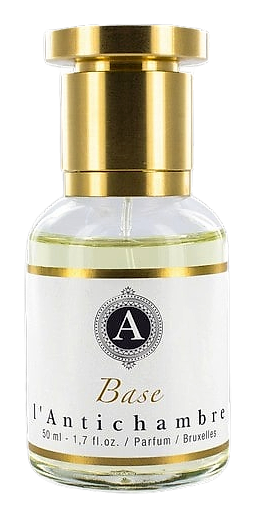
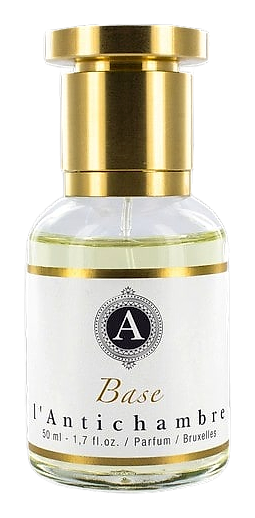
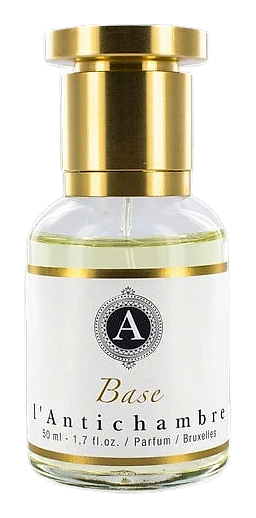
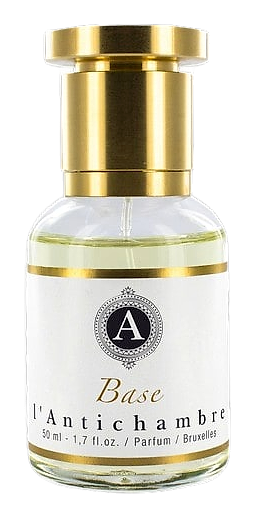
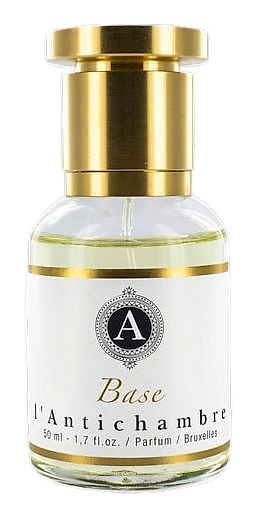
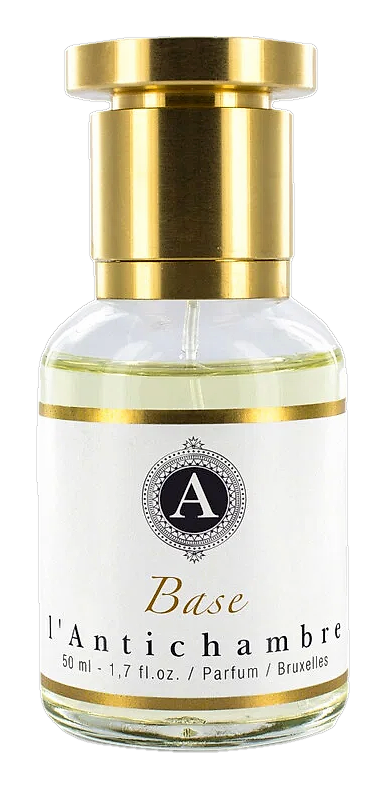
    The visual identity of L'Antichambre mirrors its founder’s graphic background. The brand logo features a clean serif typeface with a subtle underline that suggests a waiting line, echoing the name’s literal meaning of "the waiting room." Store interiors are painted in muted tones, with wooden shelving that displays bottles like art objects. Bottles themselves are understated: clear or amber glass, a thin neck, and a brushed metal or wooden cap that feels weighty in the hand. Limited‑edition releases, such as the 2025 collaboration with Jean‑Luc Moerman, showcase custom‑etched glass and hand‑drawn labels that reference Caribbean topography. Promotional imagery often pairs the perfume with monochrome photographs taken by Mathy‑Devalck, reinforcing the idea that scent and visual composition are inseparable. The overall aesthetic is quiet, inviting the viewer to pause and consider each detail before the fragrance is experienced.

    Philosophy

    L'Antichambre treats fragrance as a private dialogue between scent and memory. The founder’s background in visual arts informs a philosophy that each composition should read like a sketch, leaving space for the wearer to fill in details. The house emphasizes narrative over trend, encouraging customers to explore a scent’s evolution over time rather than seeking an instant impression. It offers both complete perfumes and soliflores, the latter giving users control over concentration and longevity. Collaboration with artists and writers is a recurring practice, reinforcing the idea that scent, image and word can coexist in a single experience. Sustainability appears in the brand’s choice to work with small‑batch suppliers and to limit production runs, ensuring each bottle remains a personal artifact rather than a commodity. Transparency about ingredient origins and a preference for natural extracts whenever possible underline a respect for the material world that the fragrances aim to evoke.

    Key Milestones

    2005

    Anne‑Pascale Mathy‑Devalck discovers a 1905 perfume manuscript, inspiring her to explore scent as a visual medium.

    2013

    Public launch of L'Antichambre's first line of parfums and extraits, including La Raison Pure, Le Chocolat Ambre and Le Tabac.

    2013

    Opening of the Brussels boutique on Rue du Marché, providing a dedicated space for bespoke consultations.

    2015

    Luckyscent adds L'Antichambre to its online catalogue, expanding the brand’s reach to an international niche audience.

    2020

    Introduction of soliflores, highly concentrated oil formats that allow users to adjust fragrance intensity.

    2025

    Collaboration with Haitian artist Jean‑Luc Moerman results in a limited‑edition bottle series inspired by Caribbean landscapes.

    At a Glance

    Brand profile snapshot

    Origin

    Belgium

    Founded

    2005

    Heritage

    21

    Years active

    Collection

    1

    Fragrances released

    Avg Rating

    4.3

    Community sentiment

    lantichambre.com

    Did You Know?

    Interesting Facts

    Distinctive details and defining moments that shape the house personality.

    01

    The founder’s original profession was graphic design; she still creates the brand’s visual assets herself.

    02

    L'Antichambre’s name translates to "the waiting room," reflecting the brand’s focus on moments of pause and reflection.

    03

    The house offers soliflores, a format that is uncommon among European niche brands and lets wearers customize scent strength.

    04

    A 1905 perfume manuscript discovered by Mathy‑Devalck is said to have guided the structure of the early fragrances.

    05

    In 2025 the brand partnered with Haitian‑born artist Jean‑Luc Moerman, whose childhood memories of Caribbean mountains inspired the bottle design.