
Heritage
A house, in its own words
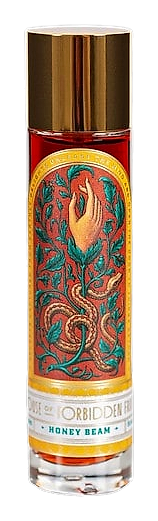
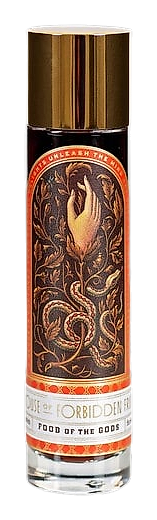
The House of Forbidden Fruit traces its origins to the creative impulses of Megan Terpening, a perfumer who established the brand on Vancouver Island in 2021. Unlike many fragrance houses that emerge from long family lineages or established perfume capitals like Grasse or New York, House of Forbidden Fruit grew organically from a personal vision rooted in the specific geography and ecology of Canada's western coast. The earliest fragrance in the collection appeared in 2021, marking the beginning of what has become a carefully considered body of work rather than a rapid expansion into mass-market territory. Terpening's background and training are not extensively documented in available sources, but the brand's output suggests a perfumer with deep botanical knowledge and an interest in the olfactory potential of locally sourced and unusual ingredients. The choice to establish an artisan perfumery on Vancouver Island reflects a broader philosophy: the region's wild landscapes, fog-shrouded forests, and Pacific climate provide both inspiration and material for the house's work. House of Forbidden Fruit operates as a small-batch producer, a distinction that shapes every aspect of how its fragrances are made, presented, and sold. Rather than pursuing distribution through mainstream department stores, the brand has cultivated relationships with specialty retailers and collectors who seek out independent perfumers. The house does not appear to have pursued traditional industry awards or rankings, focusing instead on building a coherent artistic identity through its numbered releases and limited editions. The philosophy of House of Forbidden Fruit centers on the belief that fragrance should function as a living encounter with botanical reality rather than a polished abstraction of nature. The brand's name itself signals an interest in the provocative, slightly dangerous dimension of natural scent. Where commercial perfumery often sanitizes and stabilizes natural materials into something pleasant and predictable, House of Forbidden Fruit appears drawn to compositions that retain rawness, complexity, and an element of surprise. The house's fragrances frequently layer botanical essences in ways that create dense, almost overgrown scent structures, rather than the clean linear progressions typical of mainstream design. Terpening has spoken (in limited available interviews) about the importance of working with ingredients that carry their own histories and seasonal variations, suggesting that the house's compositions shift subtly depending on the harvest and growing conditions of its botanical sources. This approach places House of Forbidden Fruit within a tradition of perfumers who view their materials not as interchangeable components but as specific, irreplaceable substances with their own characters. The brand's commitment to botanical intensity also implies a certain independence from the synthetic aromachemistry that dominates much of contemporary perfumery. While the house almost certainly uses some synthetics in its formulations (as nearly all modern perfumes do), the emphasis on distillations and extractions of natural materials signals a creative priority that distinguishes it from houses that foreground synthetic innovation as their core identity.