






The Heritage
The Story of Cupid Perfumes
Cupid Perfumes is a French niche house that frames fragrance as a love story. The brand positions each scent as a chapter in a romance, inviting wearers to experience a personal affair with scent. Its catalogue, launched in the mid‑2010s, mixes high‑concentration oils with raw ingredients sourced worldwide, and it has expanded from early eau de parfums to a series of Parfum releases in 2023. The house remains small‑scale, emphasizing artisanal creation over mass production, and it communicates through intimate storytelling rather than broad advertising.
Heritage
The origins of Cupid Perfumes trace back to the early 2010s, when master perfumer Christian Provenzano began experimenting with high‑concentration blends that could convey narrative depth. By 2014 the brand introduced its first offering, the MI fragrance, signaling a commitment to bold, romance‑driven concepts. The following year saw the release of No.6 and No.7, both of which quickly gathered a niche following among collectors who appreciated the house’s focus on raw materials and emotional resonance. Over the next several years, Cupid maintained a steady output, adding the Black series (numbers 1177, 1597, and 1623) and a range of numbered scents that each referenced a different facet of love. In 2023 the house marked a milestone with a wave of Parfum‑strength launches—No.6 Parfum, Amo Parfum, No.5 Parfum, and the Black 1623 Parfum—demonstrating an evolution toward richer, longer‑lasting compositions. Throughout its development, the brand has remained anchored in France, operating from a modest atelier that allows direct oversight of formulation and bottling. While exact founding documentation is scarce, the consistent release schedule from 2014 onward suggests a launch around that time, with Christian Provenzano as the creative lead from the start.
Craftsmanship
Production at Cupid Perfumes follows an artisanal workflow that blends traditional techniques with selective modern refinements. Formulations begin in Provenzano’s private lab, where raw essential oils, absolutes, and high‑purity aroma chemicals are measured by weight rather than volume to ensure exact concentration. The house sources many ingredients from established growers in Grasse, Madagascar, and the Middle East, prioritizing suppliers that can provide traceability certificates. Once a blend reaches its target balance, it undergoes a maturation period in dark glass containers, allowing volatile components to integrate fully. Quality control includes gas‑chromatography analysis to verify the presence and proportion of key accords, a step that many niche houses reserve for flagship releases. Bottling takes place in a small French facility where each bottle is hand‑filled, capped, and inspected for consistency. The brand opts for simple, recyclable glass vessels that highlight the perfume’s colour and texture rather than ornate decoration. Labels are printed on matte paper with minimal branding, reinforcing the focus on scent over visual flash. Throughout the process, the team maintains a low batch size, which enables close monitoring of each step and rapid adjustments should a formulation drift from its intended profile.
Design Language
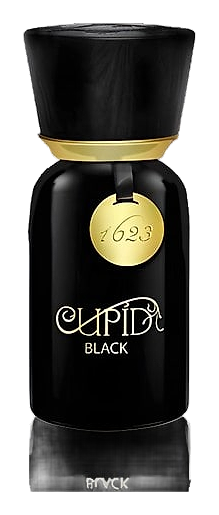
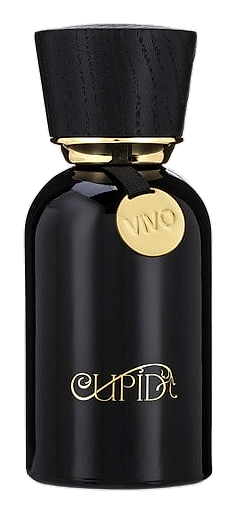
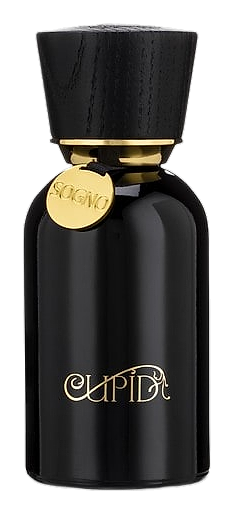
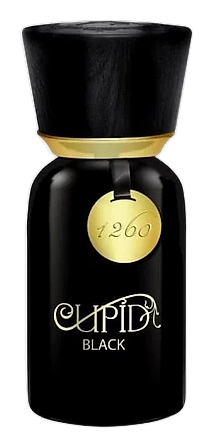
Visually, Cupid Perfumes embraces a restrained elegance that mirrors its romantic narrative. Bottles are typically clear or lightly tinted glass, allowing the perfume’s hue to become part of the story—deep amber for Black series, soft rose for Amo, and crisp ivory for No.5. Caps are smooth, matte metal or brushed aluminum, chosen for tactile comfort rather than ostentation. Labels feature a clean serif typeface with the brand name and fragrance number centered, accompanied by a subtle heart motif that hints at the love‑themed concept without overwhelming the design. Packaging boxes use textured matte paper in neutral tones, often accented with a single foil‑stamped line or a muted pastel band that differentiates each release. Marketing imagery relies on intimate, low‑key photography: close‑ups of the bottle, hands holding the glass, and soft‑focused backgrounds that evoke a private moment. The overall visual language conveys confidence through simplicity, inviting the consumer to focus on the olfactory experience rather than flashy branding.
Philosophy
Cupid Perfumes frames perfumery as an intimate dialogue between scent and sentiment. The house’s creative vision centers on the idea that fragrance can act as a love letter, each note representing a whispered promise or a fleeting memory. This narrative approach guides every decision, from ingredient selection to naming conventions that reference numbered chapters and emotional states. The brand values transparency in sourcing, preferring raw ingredients that carry a clear geographic or botanical story. It also embraces the principle of concentration, offering many creations in Parfum form to ensure longevity and depth, which aligns with the desire for a lasting emotional impact. Rather than chasing trends, Cupid seeks to capture timeless romantic motifs, allowing wearers to craft their own stories around the scent. The philosophy extends to its communication style: the brand speaks directly to enthusiasts through personal anecdotes and modest visual storytelling, avoiding grandiose claims in favor of authentic connection.
Key Milestones
2014
Launch of the first Cupid fragrance, MI, establishing the brand’s high‑concentration approach.
2015
Release of No.6 and No.7, expanding the numbered series and gaining attention among niche collectors.
2017
Introduction of the Black series (numbers 1177 and 1597), highlighting darker, more intense accords.
2023
Major Parfum rollout including No.6 Parfum, Amo Parfum, No.5 Parfum, and Black 1623 Parfum, marking a shift toward richer, longer‑lasting compositions.
At a Glance
Brand profile snapshot
Origin
France
Collection
1
Fragrances released
Avg Rating
2.3
Community sentiment
Release Rhythm


