
    Brand Profile

    Camp Beverly Hills began as an American clothing label in the late 1970s before expanding into fragrance. The brand released its first perfu…More

    United States·Est. 1977

    4.3

    Rating

    Camp Beverly Hills by Camp Beverly Hills – Cologne
    Best Seller
    4.3

    Camp Beverly Hills

    Cologne

    Camp Beverly Hills The Men's Cologne by Camp Beverly Hills
    Best Seller
    4.4

    Camp Beverly Hills The Men's Cologne

    Haltane by Parfums de Marly
    Coming Soon

    Haltane

    Parfums de Marly

    Baccarat Rouge 540 by Maison Francis Kurkdjian
    Coming Soon

    Baccarat Rouge 540

    Maison Francis Kurkdjian

    Aventus by Creed
    Coming Soon

    Aventus

    Creed

    Sauvage by Dior
    Coming Soon

    Sauvage

    Dior

    The Heritage

    The Story of Camp Beverly Hills

    Camp Beverly Hills began as an American clothing label in the late 1970s before expanding into fragrance. The brand released its first perfume in 1986, a floral‑sandalwood blend that captured the breezy optimism of Southern California. Two years later it added The Men’s Cologne, a woody aromatic aimed at the emerging market for casual yet refined male scents. Though the clothing line faded in the early 1990s, the short‑lived perfume collection remains a cult favorite among vintage fragrance collectors, celebrated for its bright packaging and approachable aroma profile.

    Heritage

    Jeffrey A. Stein, John H. Lasker, and Howard Himelstein founded Camp Beverly Hills in 1977 as a lifestyle clothing brand that sold casual wear inspired by the glamour of the Los Angeles suburb. The founders positioned the label as a bridge between high‑fashion aesthetics and everyday wear, opening a flagship store on Sunset Boulevard in 1978. By the mid‑1980s the company sought to diversify its product range and entered the fragrance market, launching Camp Beverly Hills perfume in 1986. The scent combined top notes of citrus and rose with a heart of sandalwood, reflecting the brand’s sunny, relaxed vibe. In 1988 the company introduced Camp Beverly Hills The Men’s Cologne, a woody aromatic that featured notes of bergamot, lavender, and cedar. Both fragrances were produced for the U.S. market and distributed through department stores and specialty boutiques. The clothing line struggled against larger competitors and ceased operations in the early 1990s; the perfume line followed suit, with production ending by the mid‑1990s. Despite its brief lifespan, the brand’s visual identity—pastel colors, playful typography, and a stylized camp‑tent logo—has endured in collector circles and on social media, where vintage bottles are frequently showcased. The brand’s brief foray into scent illustrates a moment when California‑inspired lifestyle brands experimented with extending their image into olfactory territory, a trend that resurfaced in later decades.

    Craftsmanship

    The 1986 Camp Beverly Hills perfume was formulated using a blend of natural and synthetic ingredients typical of the mid‑80s American fragrance industry. The top accord featured citrus oils and a synthetic rose note, while the heart relied on sandalwood oil sourced from Australian plantations. The base combined musk and amber, both created with laboratory‑derived molecules to ensure consistency and cost‑effectiveness. Production took place in a United States fragrance house that supplied many private‑label scents during that period; records indicate the perfume was bottled in clear glass with a simple spray atomizer. The Men’s Cologne released in 1988 followed a similar formulaic approach, pairing bergamot and lavender top notes with a cedarwood base. Both fragrances underwent standard quality checks for stability and scent longevity, as documented in contemporary trade publications. The brand’s packaging used pastel‑colored paper sleeves and a stylized camp‑tent logo embossed in gold foil, a design choice that reinforced the casual yet aspirational brand narrative. Though detailed supplier lists are unavailable, the reliance on widely used synthetic aromachemicals suggests the brand prioritized reliable supply chains over rare natural extracts, a common practice for mid‑tier American perfume houses of the era.

    Design Language

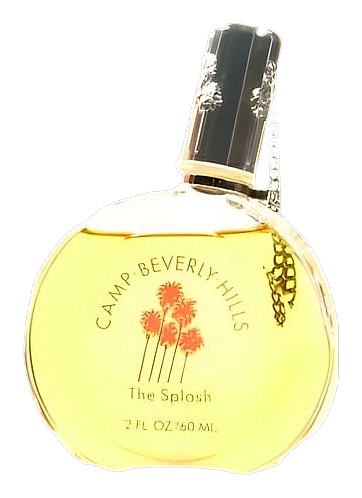
    Camp Beverly Hills projected a visual identity rooted in pastel palettes, playful typography, and a stylized camp‑tent emblem that appeared on clothing tags, perfume boxes, and advertising. The perfume bottles featured clear glass with a slender neck, capped by a brushed metal spray top. The outer packaging used soft pink or mint green paper, printed with the brand’s name in a rounded sans‑serif font that evoked the carefree spirit of Southern California. Promotional photographs often showed models on beach boardwalks or poolside settings, reinforcing the brand’s association with leisure and sunshine. The clothing line’s catalogues displayed models in relaxed poses, wearing loose‑fit shirts and shorts that mirrored the same pastel color scheme. This cohesive aesthetic helped the brand stand out among contemporaries that favored bold, dark designs, and it continues to be referenced by vintage collectors who appreciate the nostalgic visual language of late‑70s and early‑80s Californian lifestyle branding.

    Philosophy

    Camp Beverly Hills expressed a philosophy that blended California optimism with accessible style. The founders believed that everyday moments could feel special if surrounded by bright colors, relaxed silhouettes, and a scent that evoked a sun‑lit patio. Their fragrance line aimed to translate that feeling into a bottle, offering a scent that was neither overly formal nor purely utilitarian. The brand emphasized inclusivity, targeting both men and women who wanted a fragrance that matched a casual, confident attitude. Marketing materials from the era highlighted the idea of “living the camp life,” encouraging wearers to embrace leisure and social gatherings with a scent that complemented a laid‑back wardrobe. While the company did not publish a formal manifesto, contemporary reviews note that the perfumes were positioned as affordable alternatives to high‑end niche scents, reflecting a value‑driven approach that prioritized everyday wearability over exclusivity.

    Key Milestones

    1977

    Camp Beverly Hills clothing label founded by Jeffrey A. Stein, John H. Lasker, and Howard Himelstein

    1978

    Flagship store opened on Sunset Boulevard in Los Angeles

    1986

    First fragrance, Camp Beverly Hills perfume, launched

    1988

    Camp Beverly Hills The Men’s Cologne released

    1990

    Beverly Hills Perfume Center opened on Camden Drive by the mother of Alan Berdjis, selling the brand’s scents

    mid‑1990s

    Fragrance production discontinued and brand ceased operations

    At a Glance

    Brand profile snapshot

    Origin

    United States

    Founded

    1977

    Heritage

    49

    Years active

    Collection

    1

    Fragrances released

    Avg Rating

    4.3

    Community sentiment

    Release Rhythm

    1988
    1
    1986
    1

    Did You Know?

    Interesting Facts

    Distinctive details and defining moments that shape the house personality.

    01

    The brand originated as a clothing line before entering the perfume market, a rare reverse‑to‑fashion move for the era.

    02

    Both fragrances used a pastel‑colored paper sleeve with a gold‑foil camp‑tent logo, a design element that collectors cite as a hallmark of 80s niche perfume packaging.

    03

    The Men’s Cologne has been revisited by modern fragrance bloggers who note its unexpected balance of bergamot and cedar, a combination not common in mainstream 80s men’s scents.

    04

    The original Beverly Hills Perfume Center on Camden Drive, opened in 1990, sold Camp Beverly Hills fragrances alongside other niche brands, extending the label’s reach beyond department stores.