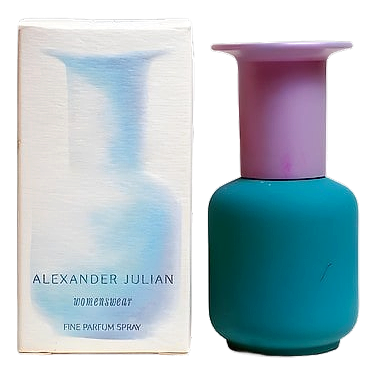


Heritage
A house, in its own words
Alexander Julian entered the world on February 8, 1948, in Chapel Hill, North Carolina. His introduction to fashion retail came early and ran deep. Julian worked in his father's menswear store from an early age, reportedly beginning there in 1942 when his father founded Julian's. The shop would become notable as the first American clothing store operated by his family, with the young Julian absorbing the mechanics of the business from the ground up. By 1969, Julian opened his own establishment called Alexander's Ambition in Chapel Hill, marking his first independent venture as a designer and retailer. This boutique represented his first step toward building the broader brand that would eventually bear his name. In 1975, Julian officially established the Alexander Julian brand, launching into a fashion landscape that was beginning to embrace more adventurous approaches to menswear. What distinguished Julian from many contemporaries was his decision to design his own clothing fabrics, a highly unusual practice among American designers that gave him unprecedented control over the visual language of his collections. His Colours line, which emerged as his signature achievement in fashion, broke from conventional menswear wisdom by incorporating patterns and hues traditionally associated with women's clothing. The approach proved transformative for the industry and cemented Julian's reputation as a colorist and innovator. His expansion beyond clothing into home goods and fragrances represented a natural evolution of his design sensibility, allowing him to create a complete aesthetic universe for his customers. By the early 1990s, when he introduced his fragrance collection, Julian had established himself as a designer who applied artistic principles across multiple disciplines, from textiles to interiors to scent. Alexander Julian approaches fragrance as an extension of his broader artistic vision rather than a commercial afterthought. Having built his fashion reputation on the transformative power of color, Julian translated that sensibility into scent creation, treating each fragrance as a wearable expression of hue and mood. His philosophy rejects the traditional separation between fashion and fragrance, instead viewing them as complementary languages within a unified aesthetic. The three fragrances that comprise his collection each correspond to different aspects of his design universe, with names that directly reference his clothing lines. Julian's approach to fragrance composition reflects his background as a designer who creates fabric, not merely selects it. Just as he developed his own textiles to achieve precise visual effects, his fragrances aim for a particular sensory coherence with his clothing designs. The decision to name a fragrance Womenswear rather than inventing an abstract perfume name suggests a designer confident in his brand identity and uninterested in the pretense common to the fragrance industry. Rather than describing his scents in conventional fragrance-family terms, the collection invites wearers to consider how a scent might complement or complete an outfit, treating fragrance as an accessory with the same deliberateness as a tie or pocket square.