William Penhaligon
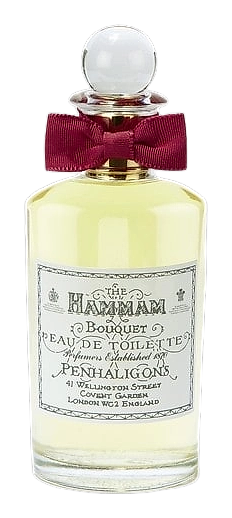
William Henry Penhaligon was born in 1837 in Penzance, Cornwall, and arrived in London as a young man during the 1860s. He began his career working as a barber on Jermyn Street, a thoroughfare synonymous with gentlemen's grooming. The shop's proximity to a Victorian hammam introduced him to aromatic traditions that would shape his future. Rather than simply grooming men, Penhaligon began crafting his own fragrances to accompany his services, treating scent as integral to the complete gentleman's presentation. In 1870, he founded his own establishment on Jermyn Street, establishing both a barbershop and perfume house under one roof. His first creation announced him as a creative craftsman and progressive pioneer in British perfumery. The venture flourished, and he eventually earned the title of Court Barber and Perfumer, supplying fragrance to Victorian England's elite. William Penhaligon died on April 13, 1901, aged 66, leaving behind a legacy that would endure for over a century and a half as one of Britain's oldest perfume houses.
The hits
Notable creations
The signature
How William composes
William Penhaligon's style emerged from the barbershop tradition, reflecting the aromatic and herbal character typical of late Victorian men's fragrance. His background as a barber shaped an approach to scent that was complementary rather than dominant, meant to enhance a well-groomed man rather than announce him. Little documentation survives of his specific techniques, but his era favored natural materials: citrus, herbs, and aromatic resins that conveyed freshness and respectability. His fragrances were composed to function within a broader grooming routine, creating a cohesive sensory identity rather than a single statement. This barbershop foundation gave his house a signature refinement that outlasted the Victorian era, establishing a template for British men's fragrance that persists today.
Philosophy
What drives William
William Penhaligon viewed fragrance as a craft serving a purpose rather than a purely artistic pursuit. He built his reputation serving the Victorian gentleman for whom grooming was a complete discipline, encompassing haircut, shave, and signature scent. Rather than chasing novelty, he focused on creating reliable, refined fragrances that complemented a man's daily ritual and public presentation. His approach was practical and client-focused: a gentleman's scent needed to be distinctive without being conspicuous, appropriate for the drawing room as much as the street. This commercial artistry produced fragrances that were made to be worn, not merely admired. Penhaligon treated perfumery as a gentleman's trade, equal parts commerce and craft, and his philosophy centered on serving the complete man rather than the perfume collector.
The houses
Maisons William composes for
In the same league