Wilhelm Muelhens
Wilhelm Mülhens built something that would outlast him by nearly two centuries. Born in Germany in 1762, he entered the perfume world at a time when Cologne was becoming synonymous with a particular kind of citrus brightness. The pivotal moment arrived in 1792 when, as a wedding gift, he received a closely guarded recipe. He transformed that formula into 4711, a fragrance that would become so embedded in the cultural vocabulary of perfumery that its four numbers carry more recognition than most brand names. He established his company in Cologne and spent decades refining his craft and building a business that survived world wars and corporate transitions. His approach proved timeless: 4711 remains in production today, essentially unchanged from the original. Such longevity is rare in an industry that prizes reinvention. Mülhens understood that perfection need not mean complexity. His business acumen matched his creative instincts. He sold the fragrance first in Cologne, and the city's name itself became part of the fragrance lexicon. When Mülhens died in 1841, he left behind not just a company but a template for what a fragrance could be.
The hits
Notable creations
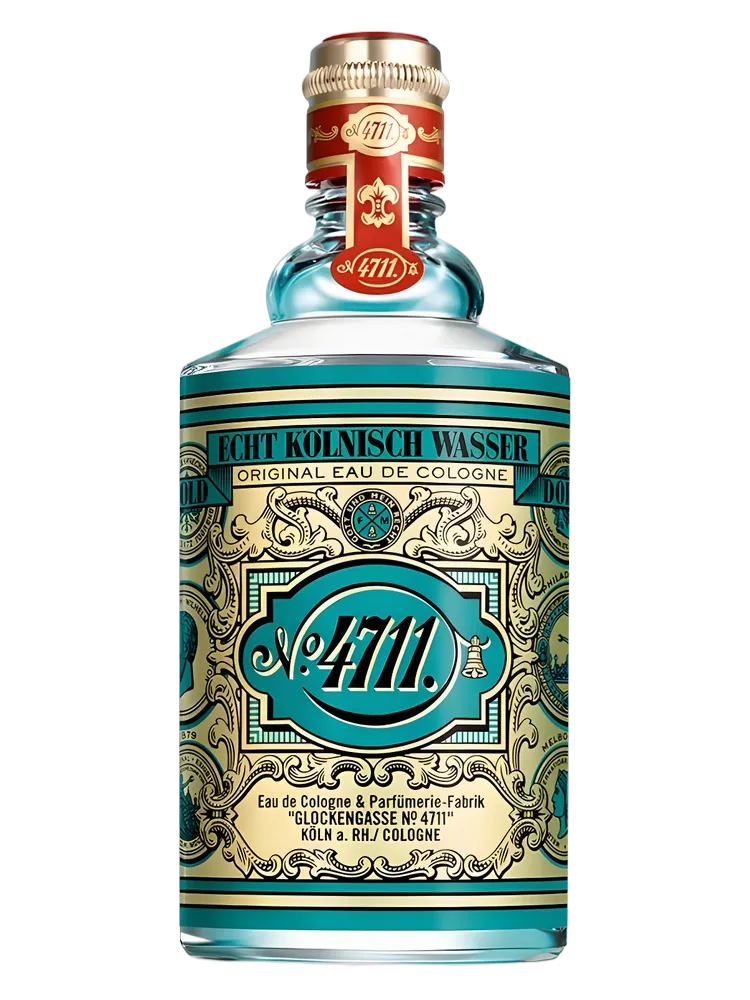
The signature
How Wilhelm composes
Mülhens worked within the classical Cologne tradition. His style relied on citrus oils, particularly bergamot, as the structural foundation. He balanced brightness with restraint, creating something that felt clean and refreshing rather than ostentatious. His formulas used quality materials in clear proportions, avoiding the temptation to overcomplicate. This approach produced a style marked by crispness, reliability, and immediate recognizability. The fragrance he created became so definitive that it spawned a category, with "4711" becoming shorthand for a particular kind of citrus freshness. His technique emphasized the interplay between top-note brightness and enduring clarity, a balance that many have attempted but few have matched.
Philosophy
What drives Wilhelm
Mülhens believed in directness and purity. While other perfumers layered complexity, he pursued clarity. His approach centered on the idea that a fragrance could be both simple and lasting, that citrus could carry weight without heaviness. He viewed perfumery as service rather than spectacle, providing something people would return to not because it was fashionable but because it reliably worked. This pragmatic philosophy shaped his entire operation, from formula to production. He understood that restraint could be its own form of mastery, and that a single excellent product could outshine a hundred mediocre ones.
The houses
Maisons Wilhelm composes for
In the same league