Pavel Ivanov
Pavel Ivanov was born in the Soviet Union in 1958 into a world where perfume was both an art form and a state-controlled enterprise. He trained under Auguste Michel, the legendary French-born perfumer who had made Russia his home and whose rigorous methodology shaped an entire generation of Soviet fragrance makers. Ivanov cut his teeth at Novaya Zarya, the historic Moscow perfume house where he authored numerous fragrances throughout the 1970s and beyond. While the Soviet system offered limited creative freedom, it demanded technical precision and forced chemists to work with domestic botanical resources and whatever materials they could source. This constraint became a defining feature of Ivanov's approach. He learned to coax depth and character from ingredients that Western perfumers might have dismissed, building compositions with the structural clarity of Russian architecture. His work remained relatively unknown outside the Eastern Bloc during his active years, but collectors of vintage Soviet fragrances have since recognized the sophistication embedded in his formulas.
The hits
Notable creations
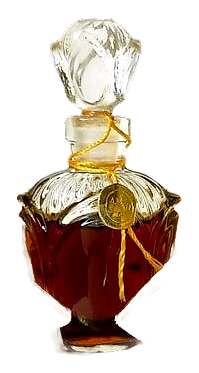
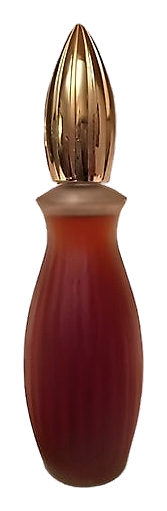
The signature
How Pavel composes
Ivanov worked primarily within the chypre and floral families, though he was known for pushing Russian florals into darker, more resinous territory than their Western counterparts. He favored rich animalic notes and warm balsams, often anchoring his compositions with oakmoss and labdanum. His aldehydic work showed a particular affinity for powdery, skin-close textures that lingered rather than announced. Despite working with Soviet-era materials, his best pieces achieved a velvety warmth that collectors often describe as distinctly Eastern European, neither as sharp as French classicism nor as sweet as Middle Eastern styles.
Philosophy
What drives Pavel
Ivanov's philosophy emerged from limitation. Where Western perfumers had access to a world of materials, he learned to find sufficiency in constraint, building fragrance architecture with economy and purpose. He viewed perfume as something functional before it was beautiful, though he never sacrificed beauty to achieve function. His mentor Michel emphasized that a perfumer must first learn to smell before learning to create, and Ivanov carried this reverence for raw materials throughout his career. He believed that understanding the soil, climate, and human context behind an ingredient mattered as much as the ingredient itself.
The houses