Lacrimalus
Lacrimalus arrived at perfumery through an unexpected door: a degree in art history, followed by years spent cataloguing Renaissance manuscripts in Florence. The connection seemed tenuous until a late-night experiment in a friend's formulation lab revealed something the classical training had actually been preparing all along. Scent, like art, operates through allusion and restraint. Both require the artist to understand what the viewer or wearer will project onto the work. The training that followed lasted nearly a decade. Lacrimalus worked under three different mentors across Grasse and Paris, each demanding a different kind of discipline. One insisted on memorizing raw materials by smell alone for months before touching a formulation bench. Another assigned the same brief repeatedly until the solution arrived from instinct rather than calculation. By 2011, Lacrimalus had developed a reputation for compositions that resist easy categorization, neither fully classical nor aggressively modern. The breakthrough came quietly. A private collection of five fragrances, shared only with a small circle of industry insiders, caught the attention of editors and buyers during a discreet Paris presentation. Each scent explored a different emotional register: longing, composure, grief, anticipation. There were no celebrity endorsements, no viral marketing campaigns. Just the work, presented without embellishment. The industry noticed.
The hits
Notable creations
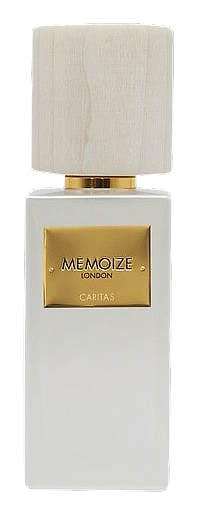
The signature
How Lacrimalus composes
The signature technique involves what Lacrimalus calls "layered transparency": building compositions that reveal different facets as they develop, so the wearer experiences a narrative rather than a static impression. This often requires working with lower concentrations of expensive materials rather than relying on volume to create presence. Preferred ingredients skew toward natural materials with strong associative properties. Iris and violet leaf appear frequently, valued for their powdery, almost abstract quality. Animalic notes like castoreum and beeswax provide grounding without heaviness. For contrast, Lacrimalus incorporates unexpected vegetable and mineral elements: carrot seed, immortelle, volcanic salt. These challenge expectations and anchor each fragrance in specificity rather than generality. The overall effect tends toward the intimate rather than the room-filling. These are perfumes for close quarters, for the person sitting beside you rather than the one who just left the room.
Philosophy
What drives Lacrimalus
Lacrimalus describes the creative process as "listening to materials rather than commanding them." This is not passive. It requires intense focus on how each ingredient behaves in the presence of others, how a base shifts when a top note enters or exits, how a composition breathes differently in cold weather versus warmth. The emotional dimension of fragrance drives everything. Lacrimalus believes perfume's primary function is not decoration but communication. A scent worn to a funeral says something different than one chosen for a first date, and understanding those semiotics shapes every formulation. The goal is not to impose emotion but to create the conditions for genuine feeling to emerge. Wearers complete the work through their own histories and associations. This philosophy manifests as an uncompromising stance on dilution. Lacrimalus resists pressure to increase longevity at the expense of nuance, arguing that longevity should arise from complexity, not concentration.
The houses