Inaba Tomoo
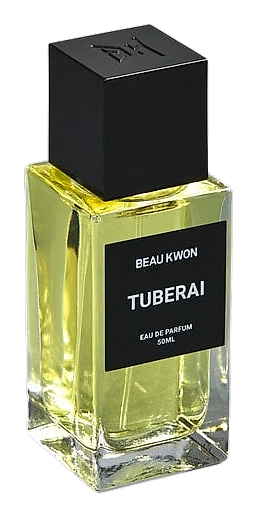
Tomoo Inaba never followed the conventional path into perfumery. In his twenties, he directed events and exhibitions, building a creative career far from fragrance. The shift happened gradually: he started writing fragrance reviews, found an audience, and in the mid-2000s founded a fragrance distribution company in Japan. He never attended a formal perfumery school. Instead, he built his craft through relentless hands-on study, reading, experimenting, and learning from the ingredients themselves. That independent trajectory gave him a perspective rarely found among trained perfumers, one rooted in curiosity rather than convention. His profile grew quietly through profice.jp, the Japanese fragrance portal he authored and built into the country's most-read independent fragrance resource. His work caught the attention of Canadian indie house Zoologist, leading to his first major perfume, Nightingale, in 2019. The success opened the door to commissions beyond Japan. A second creation, Tuberai, followed for California-based Beau Kwon. Inaba now moves between journalism and creation, each role feeding the other. He understands fragrance from both sides of the page and the formula, and that duality shapes everything he makes.
The hits
Notable creations

The signature
How Inaba composes
Inaba favors clean, architectural compositions. He gravitates toward floral and green materials, often with a translucent quality that lets air move through the structure. His work with Zoologist Nightingale demonstrated an ability to balance romantic floralcy with quiet restraint. For Moth, the approach turned darker, more textured, exploring abstraction within a recognizable framework. He has an affinity for ingredients that carry cultural memory: jasmine, green tea, yuzu, iris root. These are not used as shorthand for Japan but as specific materials with specific behaviors. He works frequently with synthetics not as substitutes for naturals but as architectural supports that allow natural materials to breathe without clashing. The result tends toward clarity without thinness, complexity without noise.
Philosophy
What drives Inaba
Inaba approaches fragrance as a writer approaches an essay: with structure, intention, and the willingness to revise. He does not chase trends or default to familiar materials. His philosophy centers on restraint and clarity. He is interested in how a single ingredient can carry different meanings depending on what surrounds it, and he treats each formulation as a study in context. The Japanese aesthetic of finding depth in simplicity runs through his work, though he resists being typecast by it. He creates for the wearer who notices the details, who wants a fragrance that rewards attention rather than announces itself. His dual life as journalist and perfumer keeps him honest: he tests ideas against what people actually smell, not what he wishes they would smell.
The houses