Haley Alexander Van Oosten
Haley Alexander van Oosten grew up where the Pacific meets the Santa Ana foothills, a contrast that still informs her work. After high school she traded the surf for a study of Japanese culture, a fascination that later guided her scent research across Asia and the Middle East. In 2005 she launched L’Oeil du Vert, an artisan house rooted in a modest beach‑side laboratory in Santa Monica. The label quickly earned a reputation for raw, unrefined materials that challenge the polished conventions of mainstream perfumery. Her first major collaboration arrived with The Row, where she spent four years extracting and refining sandalwood to anchor a minimalist collection. Alongside the lab, Haley earned an honorary ethnobotanist title, a nod to her fieldwork in remote ecosystems and her contributions to a Hong Kong art exhibition on Typhoon Mangkhut. Today she balances laboratory rigor with a wanderer’s curiosity, guiding a small team that treats each batch as a living document of place and memory.
The hits
Notable creations
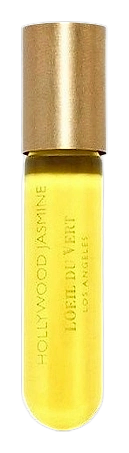
The signature
How Haley composes
Haley’s signature technique involves cold‑pressing and steam distillation of raw botanicals, preserving volatile nuances that many modern labs discard. She favors unrefined sandalwood, wild frankincense, and hand‑collected seaweed extracts, often pairing them with rare Middle Eastern oud and Japanese hinoki. Layering occurs through slow maceration, allowing the base to absorb fleeting top notes without aggressive blending. The result is a texture that feels both tactile and atmospheric, with a lingering mineral edge that hints at the coastline where she works. Her compositions rarely rely on synthetic fixatives, opting instead for natural ambergris substitutes and aged resins to achieve longevity.
Philosophy
What drives Haley
Haley believes fragrance should echo the terrain that birthed it, not mask it. She treats each ingredient as a voice rather than a decorative note, letting the natural character of woods, resins, and herbs dictate the composition. Her process begins with a field observation—whether a desert wind or a tide‑washed cliff—followed by a quiet period of extraction that respects the material’s integrity. She resists over‑synthetic shortcuts, preferring to let time reveal depth. For Haley, scent is a dialogue between the earth and the wearer, a reminder that authenticity resides in the unvarnished truth of a single leaf or a single grain of sand.
The houses