Ernesto Sanchez Bujanda
Born in Venezuela and trained as an Industrial Engineer in the United States, Ernesto Sanchez Bujanda arrived at perfumery through an unexpected door. His analytical mind discovered an unexpected kinship between the precision of engineering and the art of composition. Before finding fragrance, Bujanda pursued culinary arts at a vo-tech high school, a background that planted an early, deep appreciation for how ingredients interact and transform when combined. His mathematical training proved to be more than academic credentials; it offered a framework for understanding the structural relationships between materials, a perspective that would later define his unconventional approach to scent creation. Today, Bujanda brings that unique perspective to YeYe Parfums, where he works alongside Ryan York, pushing against conventional combinations to find unexpected harmonies. His journey from South America to American engineering classrooms to the world of niche perfumery reflects a creator who followed instinct over convention, building a practice on the belief that his true calling always lay elsewhere.
The hits
Notable creations


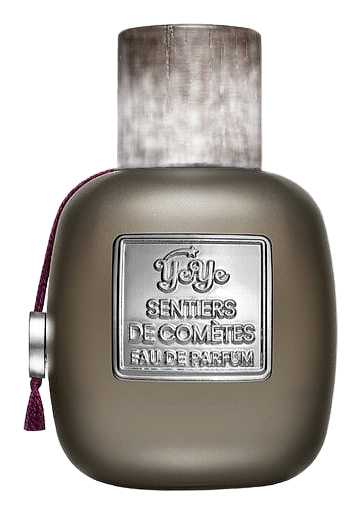
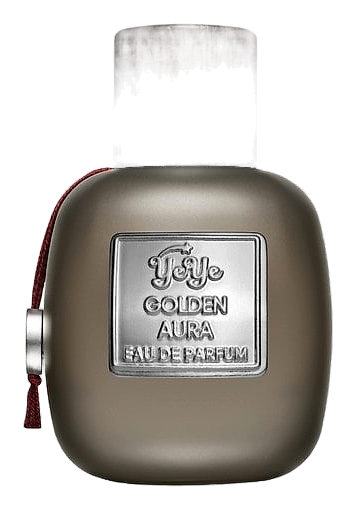
The signature
How Ernesto composes
His compositions resist easy categorization. Bujanda favors atypical combinations that challenge the wearer to reconsider familiar materials. Rather than relying on classic structures, he builds fragrances that reveal themselves gradually, with transitions that feel deliberate rather than accidental. He draws on his culinary background to think about ingredients as flavors as much as scents, considering how top notes should taste as much as smell, how bases should linger with savor rather than mere presence. This gustatory instinct sets his work apart, bringing an edible sensibility to abstract olfactory problems. His partnership with Ryan York at YeYe Parfums amplifies this experimental tendency, producing fragrances that reward attention over casual wear.
Philosophy
What drives Ernesto
Bujanda approaches fragrance as a problem of structure first, emotion second. His engineering background instilled a belief that every formula contains internal logic, a mathematical poetry that reveals itself when components interact in precise proportions. He does not chase trends or rely on familiar palettes. Instead, he seeks the friction point where expected materials meet unexpected ones, where a familiar ingredient appears in an unfamiliar context. This methodical curiosity drives him to test boundaries, to question why certain combinations work and others fail. For Bujanda, perfume is not decoration but architecture, each element bearing load and purpose.
The houses