Adolphe Saalfeld
Adolphe Saalfeld built his reputation as a chemist-turned-perfumer in Manchester during the late nineteenth century, establishing himself among the city's small but ambitious community of fragrance makers. Born in Germany, he crossed the Channel in the 1880s and put down roots in Britain, eventually marrying Gertrude Harris in 1888. The couple remained childless, channeling their energy instead into Adolphe's growing enterprise. He dreamed bigger than Manchester could offer, and in April 1912, he booked first-class passage on the RMS Titanic with a case of fragrance samples bound for the American market. The ship's sinking left Saalfeld among the survivors, though his precious cargo disappeared into the Atlantic. Sixty-two vials eventually surfaced from the wreckage, preserved in the deep cold, offering future generations a glimpse of what he carried. The story could have ended there, but Saalfeld rebuilt. He continued his work in Britain, though the full scope of his postwar career remains a quiet chapter waiting to be written. His name survives because of one terrible night at sea, yet his ambition was entirely terrestrial: to build something that would outlast him.
The hits
Notable creations
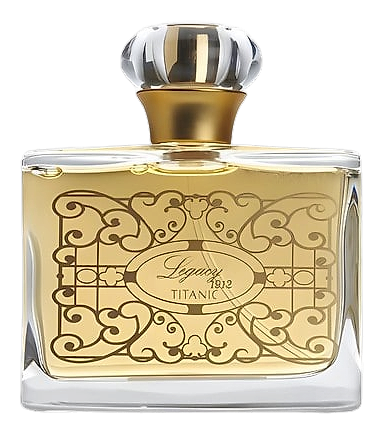
The signature
How Adolphe composes
Direct information about Saalfeld's personal style remains frustratingly sparse. What survives are the recovered vials and the chemical analysis performed on their contents years later, which allowed contemporary perfumers to reconstruct at least one of his Titanic-era formulations. Those recreations suggest a preference for the floral-aldehyde palette popular among Edwardian makers. He worked in the tradition of his time, blending natural materials with the emerging techniques of modern perfumery. Beyond that, the record quiets. His Manchester workshop, his supplier relationships, his creative process, his daily habits as a maker all lie beyond the reach of current research.
Philosophy
What drives Adolphe
Saalfeld belonged to an era when perfumers operated more like chemists than celebrities. His approach was methodical and commercial. He did not compose for art's sake; he developed scents with market intent, preparing samples for buyers in a new country. The tragedy of his Titanic passage reveals what drove him: ambition uncoupled from sentimentality. He packed his future into a suitcase and carried it across the Atlantic. The ocean took it anyway. What survived was not a philosophy written down but one revealed through action. Saalfeld believed in forward motion, in reaching markets beyond his immediate horizon. His story carries the particular courage of a man who treated commerce as a form of self-making.
The houses