The Artisan
The Story of Edmond Roudnitska
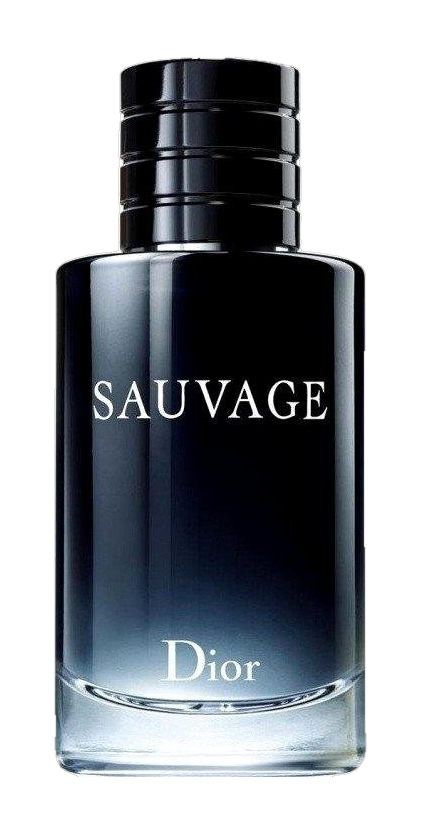
Edmond Roudnitska arrived in Grasse in 1926 and spent the next eight years learning the craft at Roure and Justin Dupont, the legendary house that had trained Guerlain himself. By the mid-1930s he was working at De Laire, the respected chemicals firm in Paris, where he would meet Thérèse Delveaux, a brilliant young chemical engineer who would become his wife and creative partner. He launched his independent career by creating Femme for Marcel Rochas in 1944, composed largely in secret during the German occupation, its plum-based Prunol accord proving that scarcity of materials was no obstacle to genius. With his wife, he founded Art et Parfum in 1946, later relocating the laboratory to Cabris in the Alpes-Maritimes, where he would spend the next four decades composing a tiny, immaculate body of work. The landmark commissions followed: Eau d'Hermès in 1951, Diorissimo in 1956, Eau Sauvage in 1966. He was the first major perfumer to argue publicly that perfumery was a fine art, that the composer deserved recognition alongside the painter and the composer.
Philosophy
Roudnitska drew a sharp line between fragrance and perfume. Scent was functional; perfume was aspirational, its purpose to elevate something within the wearer. He believed a perfume could move people as powerfully as any symphony or painting, and he built his theoretical work around that conviction. He released just seventeen perfumes in his lifetime, waiting until each felt finished rather than merely marketable. He refused to compromise on what he considered the necessary unity of a composition. When he spoke about his work, it was with the language of a philosopher and an artist, not a chemist.
Creative Approach
Roudnitska's great gift was solving problems nature presented but refused to solve herself. The lily-of-the-valley cannot be extracted; he built Diorissimo from scratch using hydroxycitronellal and allied chemicals, achieving something so convincing that generations of perfumers have copied the structure. Femme's Prunol accord, a plum molecule paired with suede leather, became one of perfumery's most-cited breakthroughs. He was drawn to chypre structures, to the interplay between bergamot and oakmoss, and to fruity top notes that announced themselves with precision rather than noise. His aesthetic was spare, architectural, and deeply French.
At a Glance
1926
100+ years of craft
2
Total career creations
2
Cross-house collaborations
4.2
Community sentiment
Signature Style
“Roudnitska's great gift was solving problems nature presented but refused to solve herself.”
Notable Creations
Femme
Moustache
La Rose
Eau d'Hermès
Diorama