




The Heritage
The Story of Scents of Wood
Scents of Wood is a Utah-based fragrance house built around a radical premise: the alcohol base should not merely carry a scent, but become part of it. Founded by former L'Oréal executive Fabrice Croisé, the brand ages organic cane alcohol in pre-used wooden barrels sourced from Scotland, Kentucky, Cognac, and beyond, infusing each fragrance with nuanced layers of whiskey, maple, and aged wood. Operating under three names across markets (Scents of Wood, L'Âme du Bois, Shinrin-yoku), the house presents itself as a love letter to forests and the olfactory world of trees. Top seller Plum in Cognac received the 2021 Fragrance Foundation Perfume Extraordinaire of the Year Award. Perfumer Mackenzie Reilly crafted the signature scent Sandalwood in Oak, released in 2020 alongside the brand's founding.
Heritage
The story of Scents of Wood begins in Provence, France, where founder Fabrice Croisé spent his formative years before building a career in luxury fragrance development at L'Oréal, where he worked on Lancôme fragrances. He later joined an agency specializing in the luxury sector before the entrepreneurial impulse took hold. In 2014, Croisé partnered with American florist Eric Buterbaugh to launch EB Florals, a perfume collection that eventually sold to Puig. This early success provided both capital and confidence for his next chapter. During the industry freeze of 2020, Croisé began writing his next story, one rooted in his surroundings: the forests and mountains of Park City, Utah, where he relocated to pursue skiing and hiking when not working. The move from mainstream luxury to niche perfumery marked a deliberate pivot toward craftsmanship over commercial scale. IFF (International Flavors & Fragrances) partnered with the emerging brand, with Nicolas Mirzayantz (then global president of IFF's Scent division) embracing the unconventional approach to base formulation.
Craftsmanship
The production process at Scents of Wood centers on the barrel-aging of organic cane alcohol before any fragrance compounds are added. The team sources wooden barrels from regions renowned for spirit production: Scotland (whisky), Kentucky (bourbon), Cognac, Calvados, and rye producers. Some barrels arrive steeped in decades of history from aging fine spirits, while others are newer but rich with forest origins. The alcohol macerates in these vessels for extended periods, absorbing compounds from the wood's cellular structure, its tannins, and residual spirit character. This transformed alcohol then serves as the base for perfumer Mackenzie Reilly's compositions. The result is a fragrance where the base itself carries notes of vanilla, caramel, smoke, or dried fruit before the primary accords are even considered. This methodology requires perfumers to work differently, accounting for the variable contribution of the aged alcohol to the final scent. The brand produces multiple浓度 levels (indicated by vintage years in some names) and offers formats including standard Eau de Parfum, candles, and limited-edition seasonal subscription boxes featuring 10ml vials paired with 10-hour candles.
Design Language
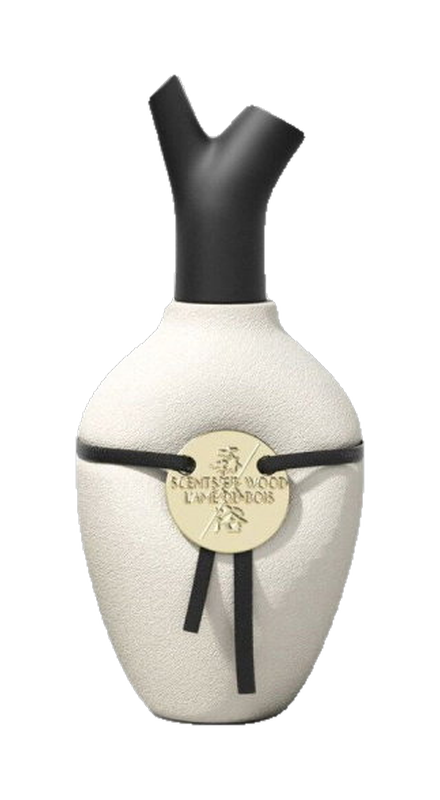
The visual identity of Scents of Wood reflects its forest origins and artisanal production. Bottles present clean, minimal silhouettes that let the liquid's color (ranging from pale gold to deep amber depending on the barrel) serve as the primary visual interest. Labels are understated, typically displaying the scent name and barrel origin in a refined typeface. The brand's three-market identity carries through to packaging: English, French, and Japanese executions each feature their respective names (Scents of Wood, L'Âme du Bois, Shinrin-yoku) with subtly different design treatments while maintaining a cohesive aesthetic family. Marketing materials emphasize the natural world: frost-covered fir forests, mountain landscapes, and the meditative practice of Shinrin-yoku (forest bathing). The brand avoids overly technical or chemical imagery in favor of organic, sensory language that positions each fragrance as an experience drawn from nature and transformed through craft. Seasonal releases and limited-edition subscription boxes arrive in collector-quality packaging that emphasizes the curated, discovery-driven nature of the brand.
Philosophy
Croisé questioned a convention that had stood for 125 years: the use of neutral ethanol as a fragrance base. His proposition was simple yet audacious. Could alcohol move beyond its role as solvent and carrier? Could it become an active ingredient, contributing depth and character? The answer arrived through wooden barrels. By aging organic cane alcohol in vessels previously used to mature fine spirits, the team discovered that the wood transformed the alcohol itself, infusing it with complexity, warmth, and irreplicable richness. This approach rejects the standardization of modern perfumery in favor of organic variation. Each barrel produces a slightly different result, meaning each batch of fragrance carries traces of its specific vessel's history. The philosophy extends to naming conventions, where each scent announces its primary note alongside its barrel origin (Sandalwood in Oak, Oud in Bourbon, Plum in Cognac), making the process transparent to the consumer. Woods, according to Croisé, speak to everyone; their names evoke stories that each wearer finds personally resonant.
Key Milestones
2014
Croisé launches EB Florals in collaboration with florist Eric Buterbaugh, creating a fragrance collection rooted in floral olfaction. The company would later sell to Puig.
2020
During the industry disruption caused by the global pandemic, Croisé develops and launches Scents of Wood, introducing the innovative barrel-aged alcohol methodology. Perfumer Mackenzie Reilly creates the debut collection, including Sandalwood in Oak.
2020
The brand releases a limited-edition subscription box series, which sells out quickly and prompts production of an additional 500 collector's boxes in early 2021.
2021
Plum in Cognac receives the Fragrance Foundation Award for Perfume Extraordinaire of the Year, bringing significant industry recognition to the young house.
2022
Croisé is interviewed by Ministry of Scent, discussing his journey from L'Oréal to niche perfumery and the philosophy behind Scents of Wood's distinctive approach.
2023
IFF and Scents of Wood deepen their partnership, with IFF highlighting the collaboration as an example of honoring wood in perfumery through innovative extraction and formulation approaches.
At a Glance
Brand profile snapshot
Origin
United States
Founded
2020
Heritage
6
Years active
Collection
1
Fragrances released
Avg Rating
3.0
Community sentiment