




The Heritage
The Story of Caron
Maison CARON is a Parisian haute parfumerie house founded in 1904 on a radical premise: that daring collisions between contrasting worlds produce beauty that defies convention. For over a century, its fragrances have embodied a free, revolutionary spirit, rejecting the predictable in favor of opulent intensity and singular character.
Heritage
Ernest Daltroff, born in 1867 to a Russian family settled in France, had no formal training as a perfumer. He trusted his exceptional olfactory memory and passion for raw materials instead. In 1903, he and his brother Raoul established a workshop in Asnières-sur-Seine before securing premises in the heart of Paris at 10 rue de la Paix the following year. The name came from a small perfumery shop at rue Rossini that Daltroff purchased in 1903; he chose CARON deliberately over his own foreign-sounding surname, knowing that France in the Dreyfus affair era demanded a more palatable brand identity for international ambition. In 1906, Daltroff met milliner Félicie Wanpouille, who would become his creative partner and muse. Together they launched Narcisse Noir in 1911, establishing a template for CARON's bold, dramatic style. By 1918, Daltroff had won a prize at the Bronx International Exposition in New York, opening the American market. Tabac Blond arrived in 1919, followed by other icons. In 1934, Daltroff released Pour Un Homme de CARON, the house's first men's fragrance, cementing a belief that perfume had no gender. Daltroff died in New York in 1941, but the house he built on confrontation and contrast endures.
Craftsmanship
CARON maintains its position as a Maison of High Perframery by treating each fragrance as an artistic statement rather than a commercial product. The house works with exceptional raw materials, often in substantial concentrations that give perfumes their characteristic intensity and longevity. Historically, Daltroff sourced bases from specialized houses including Naef and Fabriques de Laire, allowing him to build upon foundational expertise while adding his own creative vision. The house's signature combinations emerge from this layering of contrasts: tobacco and florals, animalic notes alongside crisp citrus, warm woods meeting cool spices. CARON's atelier approach means each fragrance receives individual attention rather than following mass production logic. The house continues to offer perfumes in generous concentrations, standing apart from industry trends toward dilution. Every creation requires time to reach its full expression, reflecting a commitment to quality over speed.
Design Language
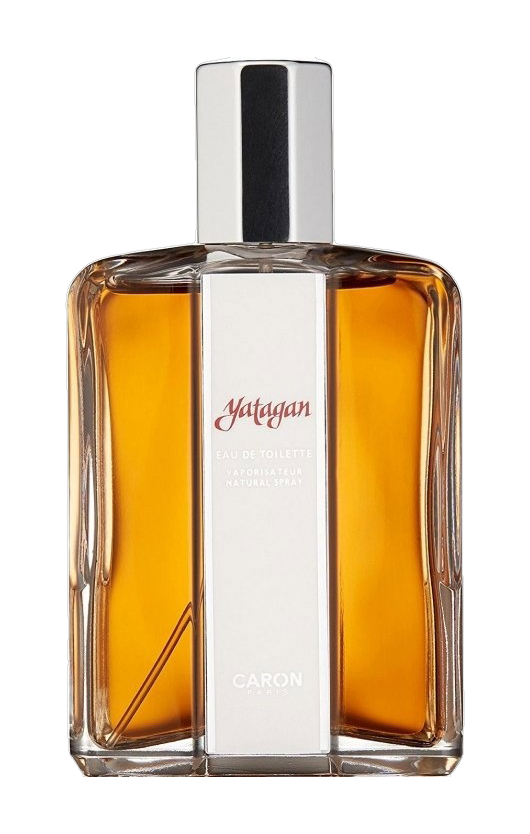
The visual identity of CARON reflects its olfactory philosophy of bold contrasts. Fragrance bottles bear design elements that balance classic elegance with avant-garde sensibility, much like the juices they contain. The house has long understood that packaging communicates the interior's character; Wanpouille herself designed early bottles, establishing an expectation that vessel and scent must speak the same language. CARON's boutiques, including the original Paris address and the historic Fifth Avenue location opened in 1923, reinforce an atmosphere of refined luxury without predictability. The brand's visual communications consistently emphasize the collision of worlds that defines its perfumes: classical typography meets contemporary layouts, heritage imagery sits alongside modern photography. This visual coherence reinforces what wearers experience when they open a bottle: a fragrance that refuses easy categorization.
Philosophy
CARON operates on the belief that perfume is not merely composed but orchestrated, with contrasting materials forced into confrontation to reveal hidden depths. The house rejects monotony and predictability as antithetical to its founding spirit. Daltroff and Wanpouille understood their era instinctively, producing work that was bold, unclassifiable, and revolutionary. This dual nature runs through everything: masculine and feminine elements coexist, classical materials meet unexpected accords, opulence sits alongside restraint. The house describes its approach as alchemy, where opposing forces generate something richer than either could achieve alone. This philosophy has guided every creation since 1904, remaining relevant as the house continues to reinterpret its heritage for contemporary wearers who seek fragrance with genuine character rather than safe conformity.
Key Milestones
1904
Ernest Daltroff founds Parfums Caron at 10 rue de la Paix, Paris, taking the name from a perfumery shop he purchased the previous year.
1906
Daltroff meets milliner Félicie Wanpouille, beginning their collaboration as creator and artistic director.
1911
Narcisse Noir launches, establishing CARON's signature bold, dramatic style.
1919
Tabac Blond debuts, a revolutionary scent combining tobacco with floral and animalic elements.
1934
Pour Un Homme de CARON becomes the house's first dedicated men's fragrance, cementing Daltroff's belief that perfume transcends gender.
At a Glance
Brand profile snapshot
Origin
France
Founded
1904
Heritage
122
Years active
Collection
1
Fragrances released
Avg Rating
4.2
Community sentiment