Umid Asadov
Umid Asadov arrived at perfumery through an unconventional path. He began studying the craft at fourteen, learning directly from working perfumers in Italy and France rather than through formal academic programs alone. This hands-on immersion gave him an understanding of fragrance creation that went beyond theory. By working alongside established noses in two of perfumery's most storied traditions, he absorbed different methodologies, learned to navigate raw material complexities, and developed an appreciation for the patience the craft demands. Asadov represents a generation of independent perfumers who chose apprenticeship over convention, building their knowledge through direct experience with ingredients, formulation, and the iterative process of bringing a scent to life. His early start set the foundation for a practice rooted in discipline and sensory curiosity.
The hits
Notable creations
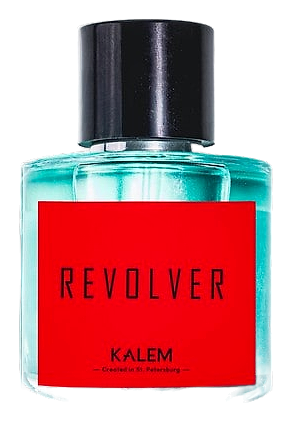
The signature
How Umid composes
His technique favors structural clarity and controlled dry-downs. Asadov tends to build fragrances around a clear backbone rather than layering multiple competing elements, which gives his work a sense of direction and coherence. He gravitates toward natural materials that offer complexity in their evolution, paying close attention to how top notes transition into heart and base. His finished compositions often display a certain directness upfront, with nuance revealing itself gradually. He has trained extensively with both French and Italian approaches, drawing from classical French construction while incorporating more contemporary Italian sensibilities toward immediacy and wearability.
Philosophy
What drives Umid
Asadov approaches fragrance as a form of problem-solving. He asks what a scent should communicate, who it serves, and what emotional or sensory experience it aims to create before touching a single ingredient. His process begins with intention rather than inspiration, treating each brief as a creative constraint that ultimately sharpens focus. He values restraint and clarity, often revisiting formulas to strip away excess and leave only what serves the composition. For Asadov, a fragrance succeeds when it feels inevitable, as though no ingredient could be added or removed without diminishing the whole.
The houses