Nour Ibrahim
Nour Ibrahim carries her origins like a secret accord. Born in Syria, raised in the cultural ferment of Paris, she spent her formative years absorbing the olfactory landscapes of two worlds. Her path into perfumery began not in a classical Parisian atelier but through product design studies at Drexel's Westphal College of Media Arts & Design, where she developed The Synesthetic Lab as a thesis project. That work, rooted in the idea that smell unlocks deeper sensory perception, became the foundation of everything she built afterward. Bleu Nour emerged from her conviction that fragrance should serve memory, not merely decorate it. Her background in fashion and years teaching Arabic gave her a rare vocabulary for cultural translation. Ibrahim spent time working on humanitarian projects in Romania, an experience that deepened her understanding of scent as a bridge between lived experience and imagination. She now operates from Sedona, Arizona, where she continues developing her self-taught practice while pushing against every convention the industry takes for granted.
The hits
Notable creations
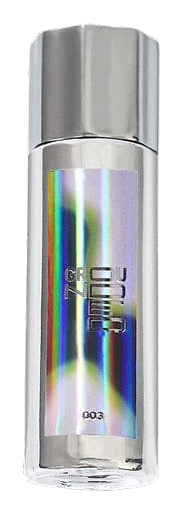
The signature
How Nour composes
Ibrahim draws from the aromatic traditions of the MENA region without treating them as exotic imports. Her compositions tend toward the fresh and the green, yet they carry unexpected structural complexity beneath their surfaces. She has described Herbes Troublantes as capturing the feeling of a sunlit garden after spring rain, and that description points to her signature: an elegance that feels found rather than constructed. She works with natural materials but does not fetishize them. Her cannabis-forward work at Bleu Nour reveals a willingness to subvert expectations about what belongs in high-end fragrance, a quality that has earned her recognition as a deliberately unconventional voice in the space.
Philosophy
What drives Nour
Ibrahim believes smell remains the most overlooked of the senses, and she has made it her quiet mission to change that. She designs from the premise that fragrance belongs to everyone, not just to those who can afford to learn its language. Her approach treats scent as a form of communication, something that carries meaning before it carries pleasure. She rejects the mystification that often surrounds perfumery, preferring instead to build compositions that feel immediately legible, even as they reward deeper attention. Her work asks: what does a memory smell like? And more specifically, whose memories get to be encoded in luxury?
The houses
Maisons Nour composes for
In the same league