Character
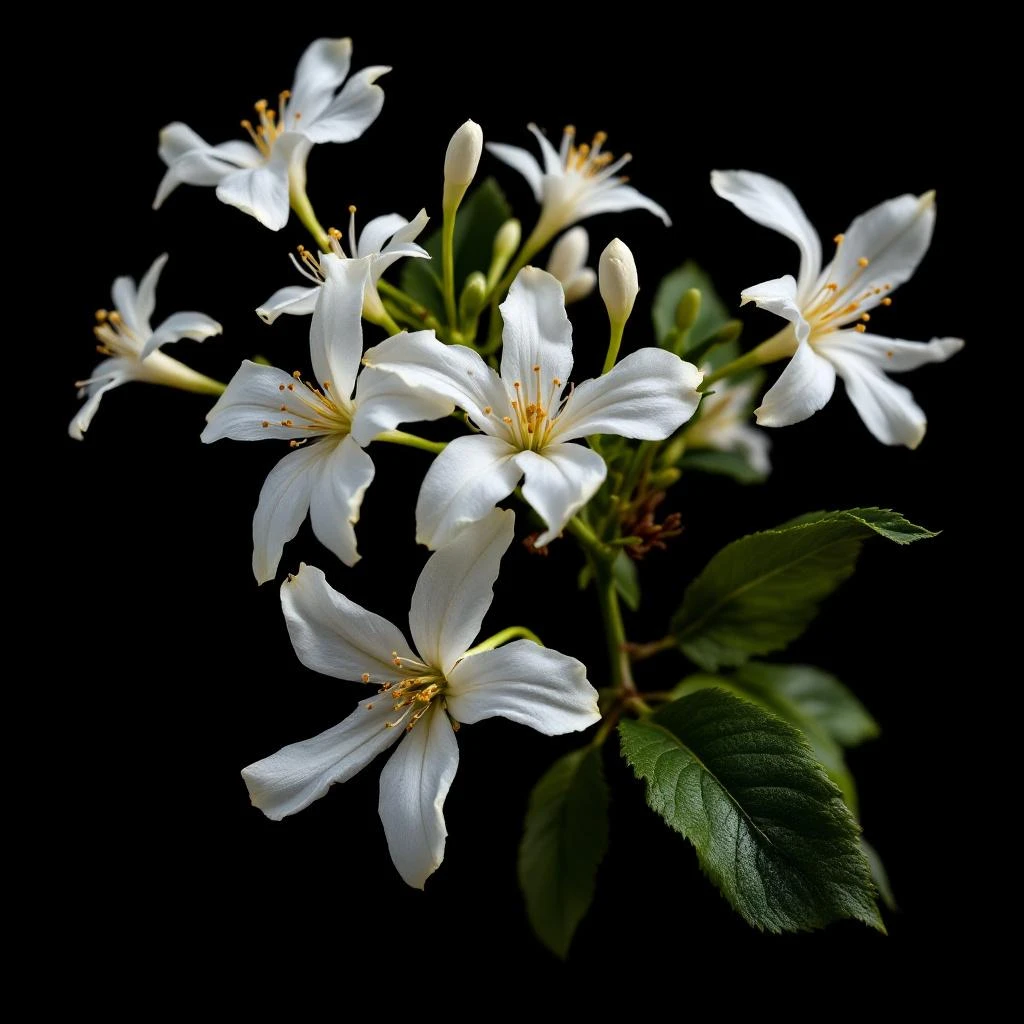
The Story of Wild Jasmine
Wild Jasmine bursts with luminous, honey‑kissed petals, offering a bright, slightly indolic heart that lifts any composition. Its fresh green edge and warm amber depth make it a cornerstone of natural perfumery.
Heritage
Jasmine traces its roots to the Indian subcontinent, where wild species have scented gardens for millennia. In the 1600s, Moorish traders carried cultivated jasmine across the Strait of Gibraltar, introducing it to Spain. The scent quickly spread to Italy and France, where Grasse embraced the flower in the 1850s, establishing the first large‑scale absolute production. French houses refined extraction techniques, while the Robertet group later expanded cultivation to Morocco, Egypt, and the Indian states of Gujarat and Karnataka. By the early 20th century, jasmine had become a symbol of luxury in haute couture fragrances, its presence marking the transition from simple floral accords to complex, multi‑layered compositions. Today, jasmine remains a benchmark of natural perfumery, linking historic gardens with modern laboratories.
At a Glance
2
Feature this note
India
Primary source region
Ingredient Details
Solvent extraction (hexane)
Flower petals
Did You Know
"Jasmine flowers open only after dusk, releasing scent to guide night pollinators; a single hectare of Indian jasmine can produce roughly 200 L of absolute each season."