Character
The Story of White lily
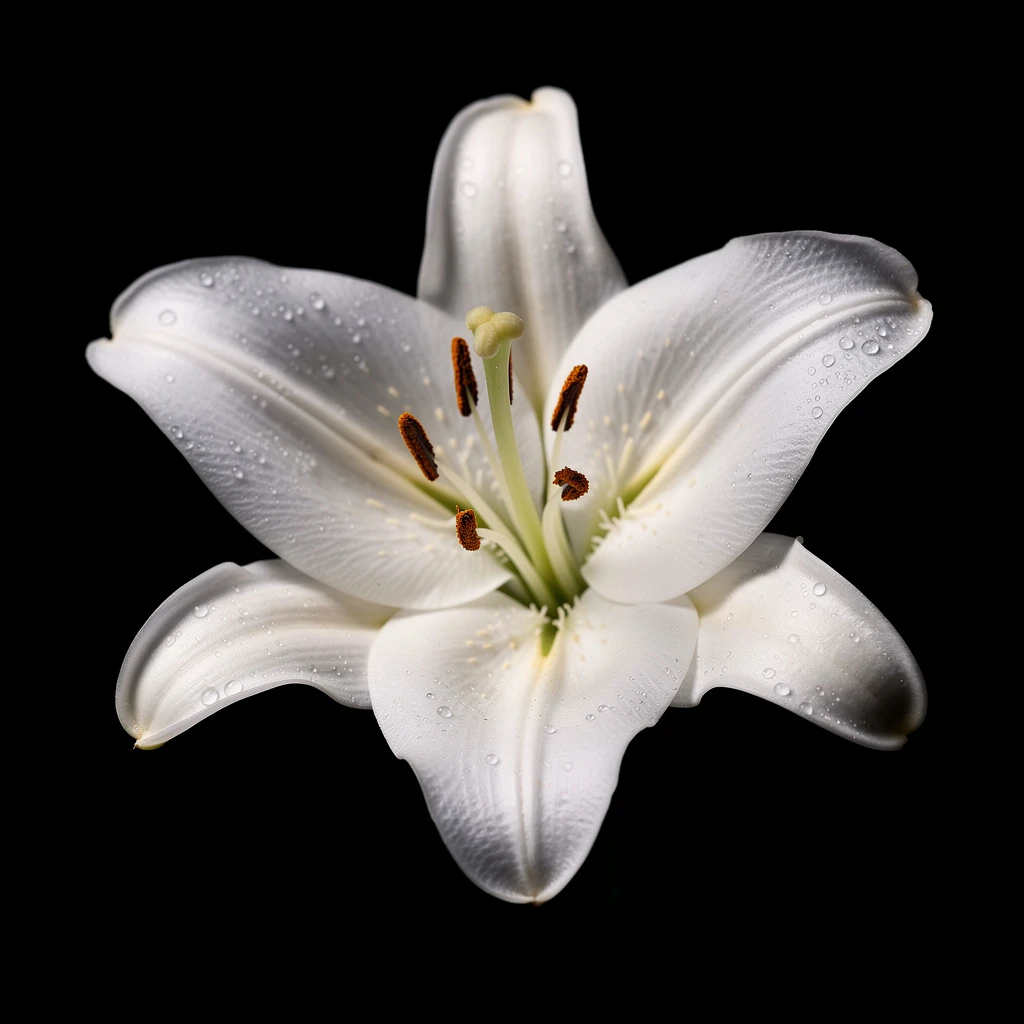
White lily offers a crisp, green‑fresh aroma that hints at watery petals and subtle earth. In perfumery it appears as a clean, slightly metallic accent, often paired with citrus or soft woods to add a luminous lift.
Heritage
White lily has been revered in East Asian art and ritual for centuries, symbolizing purity and renewal. Ancient Chinese texts record the use of lily petals in incense offerings as early as the Han dynasty. By the 19th century, European perfumers began experimenting with lily extracts, though they struggled with the flower's mute nature. French maisons introduced the first lily‑inspired accords in the 1860s, relying on aromatic compounds from related species. The breakthrough arrived in 1972 when International Flavors & Fragrances launched Lilial, a synthetic lily aldehyde that captured the bright, green facet of white lily. This invention opened the door for modern white lily accords, allowing the note to appear in everything from classic fougère colognes to contemporary niche fragrances. Today, the note stands as a bridge between natural heritage and modern chemistry, reflecting a lineage that spans temples, royal courts, and laboratory benches.
At a Glance
5
Feature this note
China
Primary source region
Ingredient Details
Solvent extraction and synthetic replication
Flower petals
Did You Know
"White lily is classified as a mute flower, meaning its fragrance cannot be captured by traditional steam distillation; most modern white lily accords are created through synthetic chemistry or specialized solvent extraction."
Pyramid Presence