Character
The Story of Vetiver Root
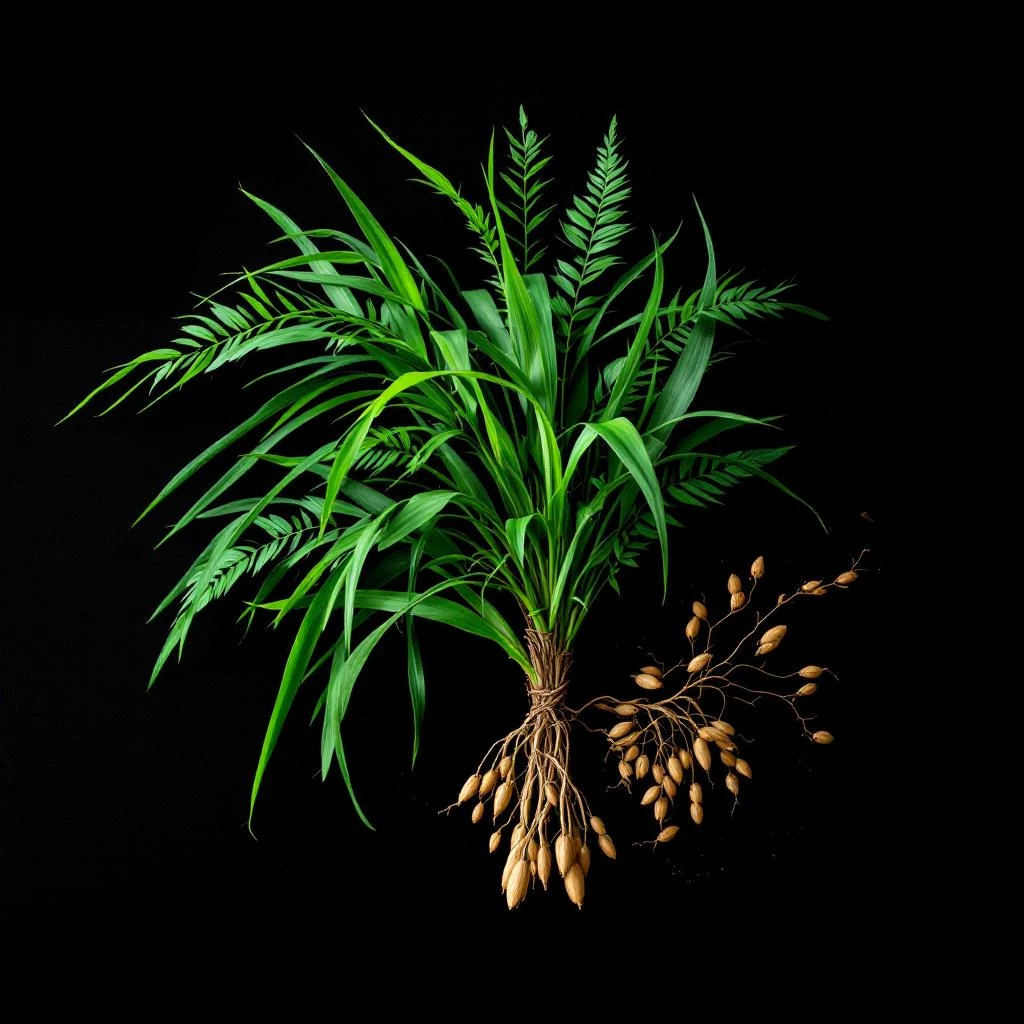
Vetiver root anchors a fragrance with deep, smoky woods and a cool, earthy pulse, offering a grounding note that steadies bright accords and adds lasting depth.
Heritage
Vetiver originated in the foothills of the Western Ghats, India, where ancient texts describe its use in rituals and as a cooling floor covering. By the Babylonian era (c. 1790 BCE) the plant’s roots were distilled for a resinous oil prized for its calming effect. French colonists introduced vetiver to the Caribbean in the 18th century, establishing plantations on Réunion Island. The island’s “Bourbon vetiver” quickly earned a reputation for superior oil quality, thanks to its volcanic soil and meticulous root selection. In the 19th century the oil reached Europe, where perfumers began blending it into masculine colognes and later into unisex compositions. Iconic 20th‑century fragrances such as Guerlain’s Vetiver (1959) cemented its status as a cornerstone of modern perfumery, while contemporary creators still rely on its grounding power to balance bright synthetics.
At a Glance
1
Feature this note
India
Primary source region
Ingredient Details
Steam distillation
Mature roots
Did You Know
"A single vetiver plant can produce up to 30 kg of roots over its lifetime, yet only about 0.5 % of that mass is extracted as essential oil, making each drop a true rarity."