Character
The Story of Savory
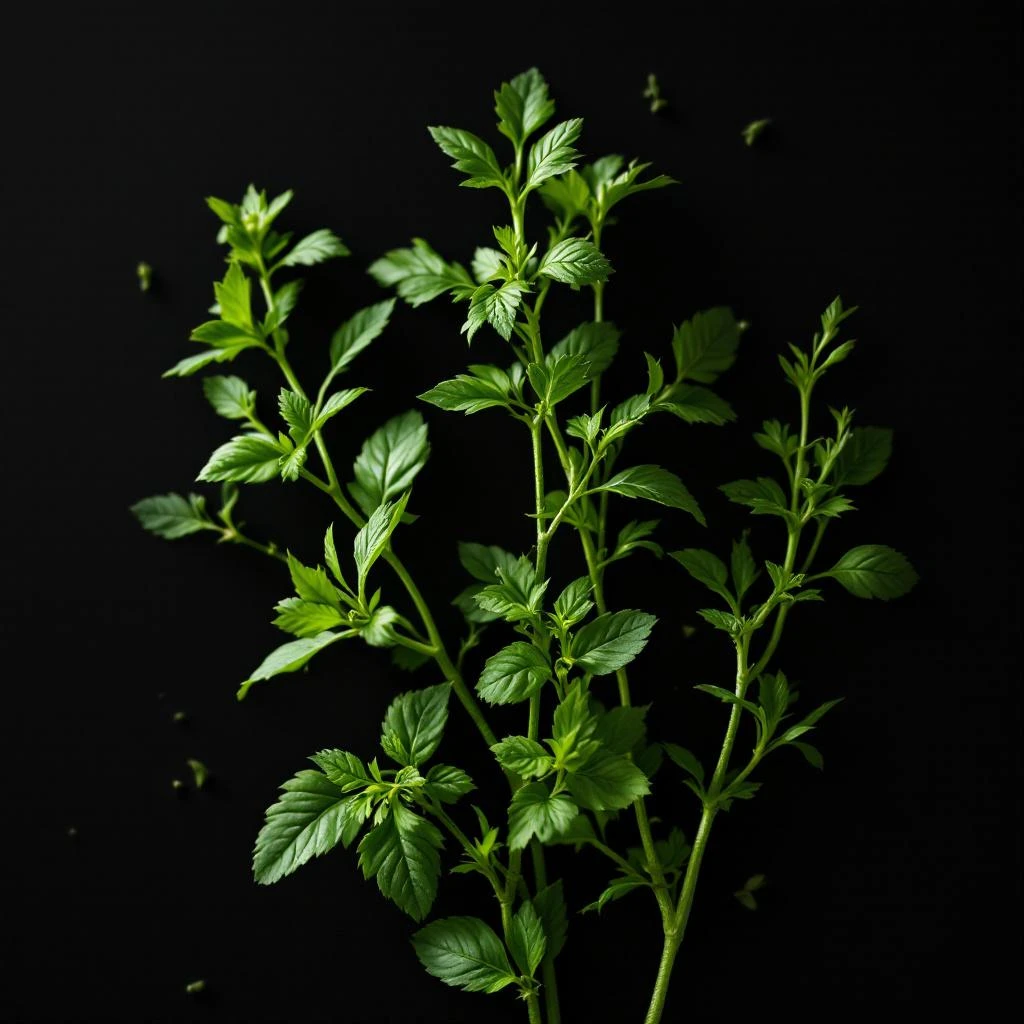
Savory offers a green, herbaceous scent with a peppery edge, echoing the fresh cut fields of the Mediterranean. Its crisp profile adds depth to modern compositions.
Heritage
Ancient Egyptians infused savory leaves into balms, believing the herb protected against decay. Greek physicians recorded savory as a remedy for digestive ailments and used its scent in temple rites. Romans exported dried savory to Gaul, where it flavored both food and personal fragrance mixtures. During the Middle Ages, Arab alchemists refined steam‑distillation techniques that captured savory's volatile notes for use in incense. By the 16th century, European apothecaries listed savory oil alongside rosemary and thyme in perfumery manuals. The 19th‑century rise of organic synthesis introduced a synthetic analogue of thujone, allowing perfumers to replicate savory's peppery nuance without seasonal harvest constraints. Today, niche houses still favor natural savory oil for its authentic herbaceous character, while large‑scale brands often blend it with synthetics to achieve consistent scent profiles.
At a Glance
1
Feature this note
Greece
Primary source region
Ingredient Details
Steam distillation
Fresh leaves
Did You Know
"Savory oil contains up to 70% thujone, a compound ancient farmers used as a natural insect repellent on grain stores."