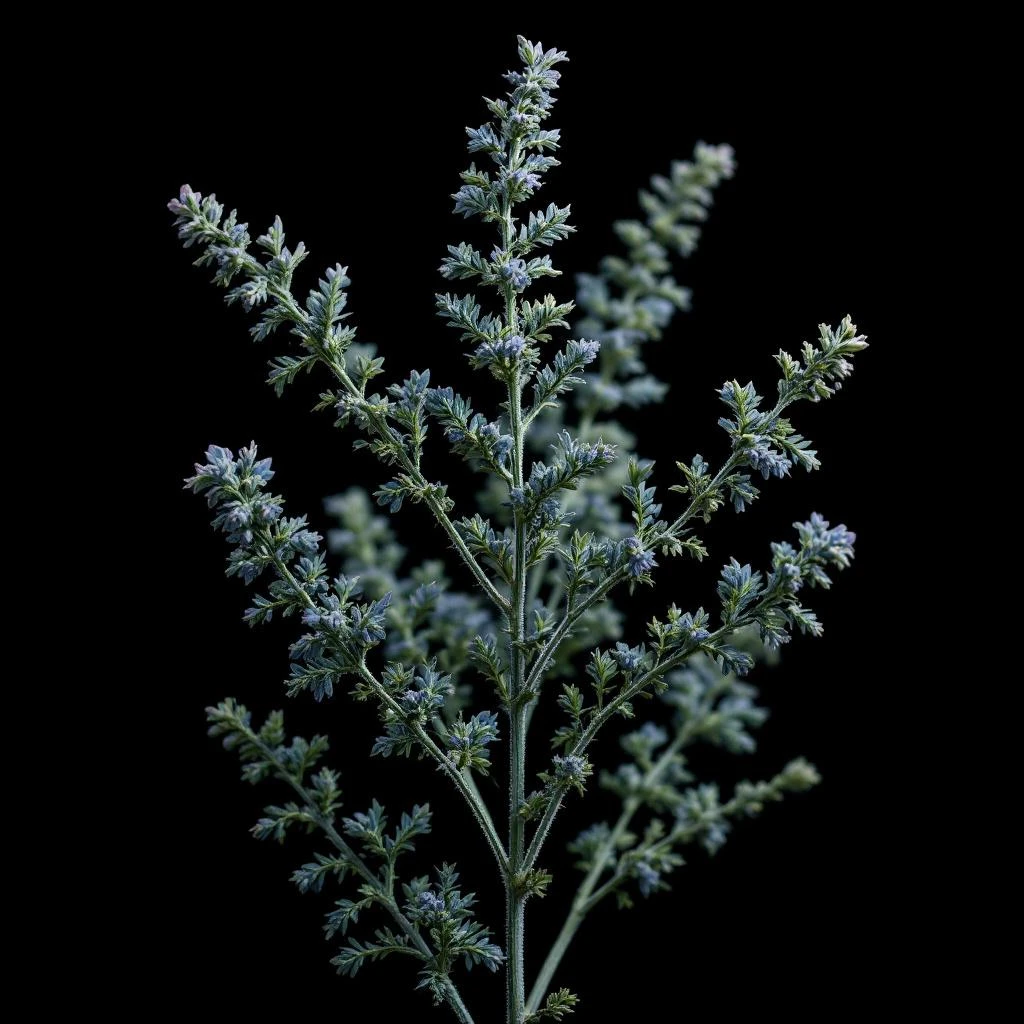

Character
The Story of Russian sage
Russian sage offers a crisp, herbaceous aroma with a hint of honeyed spice, delivering a clean, aromatic lift that brightens both fresh and woody compositions.
Heritage
Russian sage grew in the steppes of Central Asia long before it entered the perfume laboratory. 19th‑century Russian botanists recorded its use in folk medicine for respiratory relief, noting its sharp, invigorating scent. By the early 1900s, French perfumers began importing the herb, attracted by its bright, camphorous note that cut through heavy oriental bases. During the Soviet era, state farms cultivated the shrub on a planned‑economy scale, supplying both domestic aromatherapy markets and export contracts to Europe. The post‑Cold War revival saw boutique houses re‑introducing Russian sage oil, celebrating its ability to add clarity to modern minimalist fragrances. Today, the note appears in niche scents that seek a crisp, natural edge, echoing its historic role as a bridge between rustic tradition and refined composition.
At a Glance
1
Feature this note
Russia
Primary source region
Ingredient Details
Steam distillation
Aerial parts (leaves and stems)
Did You Know
"The essential oil of Russian sage contains up to 30 % camphor, a compound that once helped preserve wooden barrels in Siberian villages."