Character
The Story of Resins
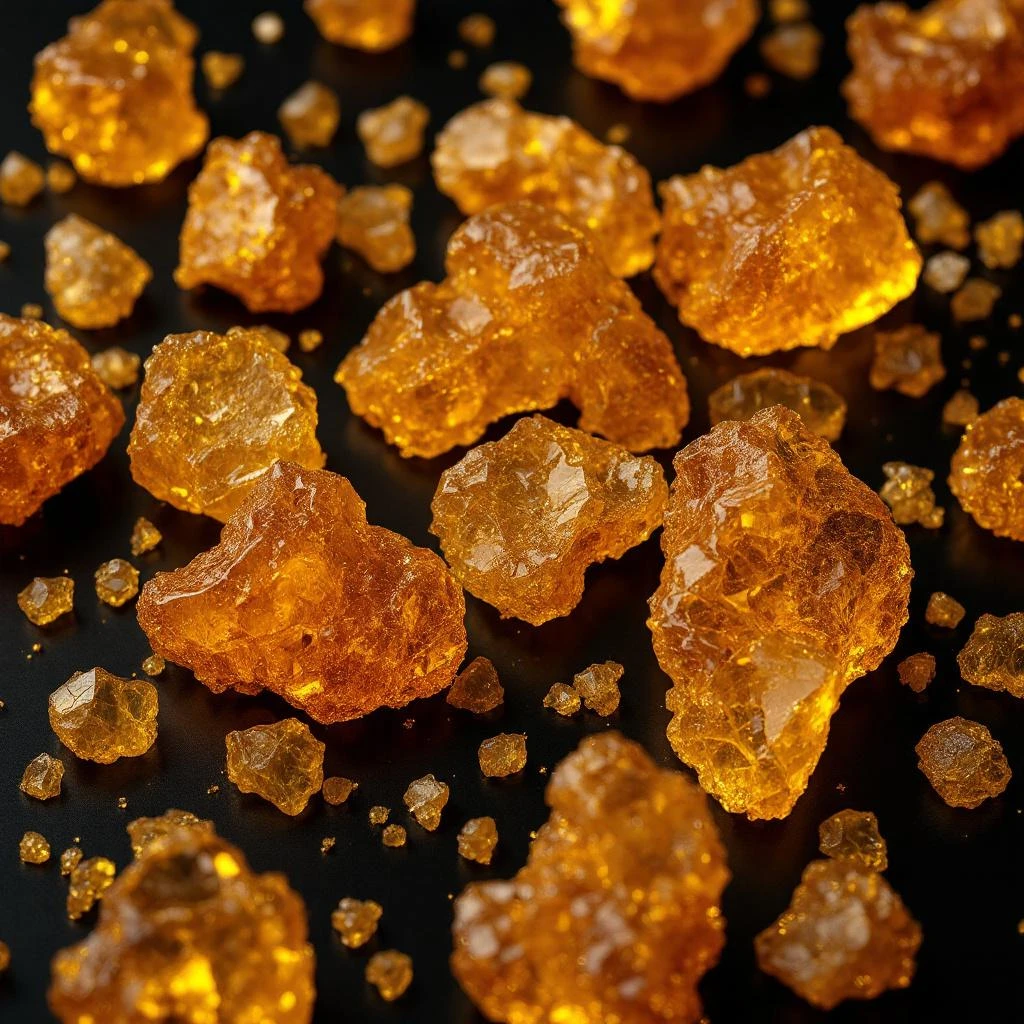
Resins are natural fragrant substances that plants and trees produce as a protective immune response, hardening at wound sites to form aromatic tears prized since ancient Egyptian civilization and beyond. These complex materials offer woody, smoky, medicinal, and sweetly balsamic characteristics that form the soul of countless perfumes.
Heritage
Resins occupy one of the oldest chapters in human fragrance history. Ancient Egyptians began using them as early as 3000 BCE, burning fragrant resins in religious ceremonies and incorporating them into embalming practices. The word 'perfume' itself derives from the Latin 'per fumus,' meaning 'through smoke,' a direct reference to this ancient ritual of burning resinous materials. During the Black Death in 14th-century Europe, resins like camphor served as fumigants believed to ward off infection. The world's first recorded chemist, Tapputi, working in Babylonian Mesopotamia around 1200 BCE, pioneered solvent extraction techniques that laid the foundation for modern perfumery, likely working with resinous materials. Frankincense, myrrh, and other resins formed the currency of ancient trade routes connecting Arabia and the Horn of Africa to Mediterranean civilizations, appearing in biblical accounts as precious gifts fit for royalty.
At a Glance
2
Feature this note
Egypt
Primary source region
Ingredient Details
Solvent extraction and alcohol dissolution
Pathological resin from wounded bark surfaces
Did You Know
"The ancient Cypriot perfume factory discovered in 2004 covered over 0.4 hectares and operated 4,000 years ago during the Bronze Age."
Pyramid Presence