Character
The Story of Red blossoms
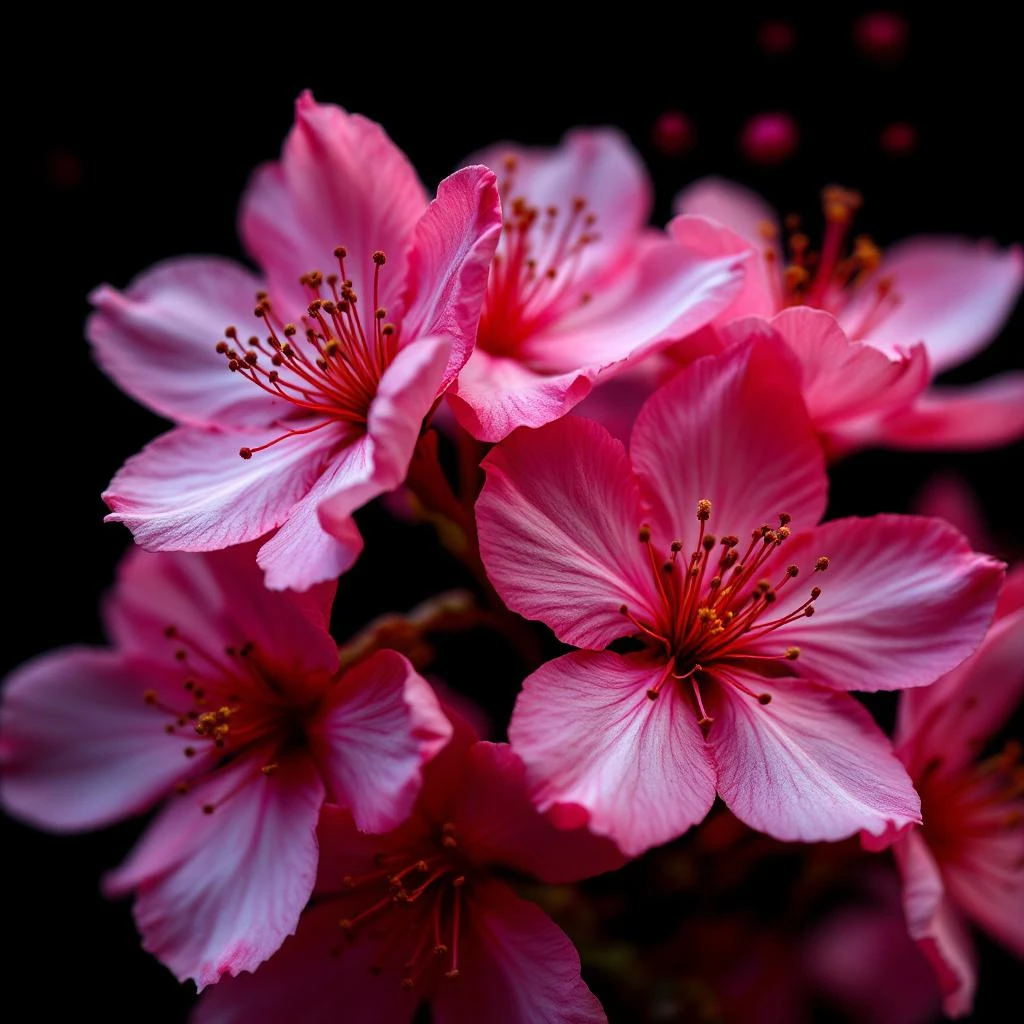
Red blossoms deliver a bright, slightly tart floral burst, echoing the sunrise hue of fresh hibiscus petals. Their crisp acidity and subtle fruit nuance lift a perfume’s opening, while a faint green edge grounds the scent.
Heritage
Red hibiscus has traced a path from ancient riverbanks to modern perfume labs. Egyptian tomb murals depict the flower in ceremonial garlands as early as 1500 BCE, where priests burned its petals to scent incense for the afterlife. Greek writers praised its crimson hue, noting that traders carried dried blossoms along the Silk Road to Persia. In medieval Arab markets, the flower appeared in scented oils used to perfume textiles for royalty. The 19th‑century French perfume houses first recorded a hibiscus absolute in a chypre composition, noting its ability to brighten heavy accords. By the 1970s, synthetic analogues of hibiscus acid entered the market, but natural extracts regained favor as consumers sought authentic, traceable ingredients. Today, boutique perfumers cite red blossoms as a signature of “sun‑lit” collections, linking the note to a lineage that spans millennia of cultural reverence for the scarlet bloom.
At a Glance
1
Feature this note
Egypt
Primary source region
Ingredient Details
Supercritical CO2 extraction
Flower petals
Did You Know
"The red hibiscus flower yields an absolute that contains up to 12 % hibiscus acid, a compound that gives the note its characteristic tangy edge and is rare among floral extracts."