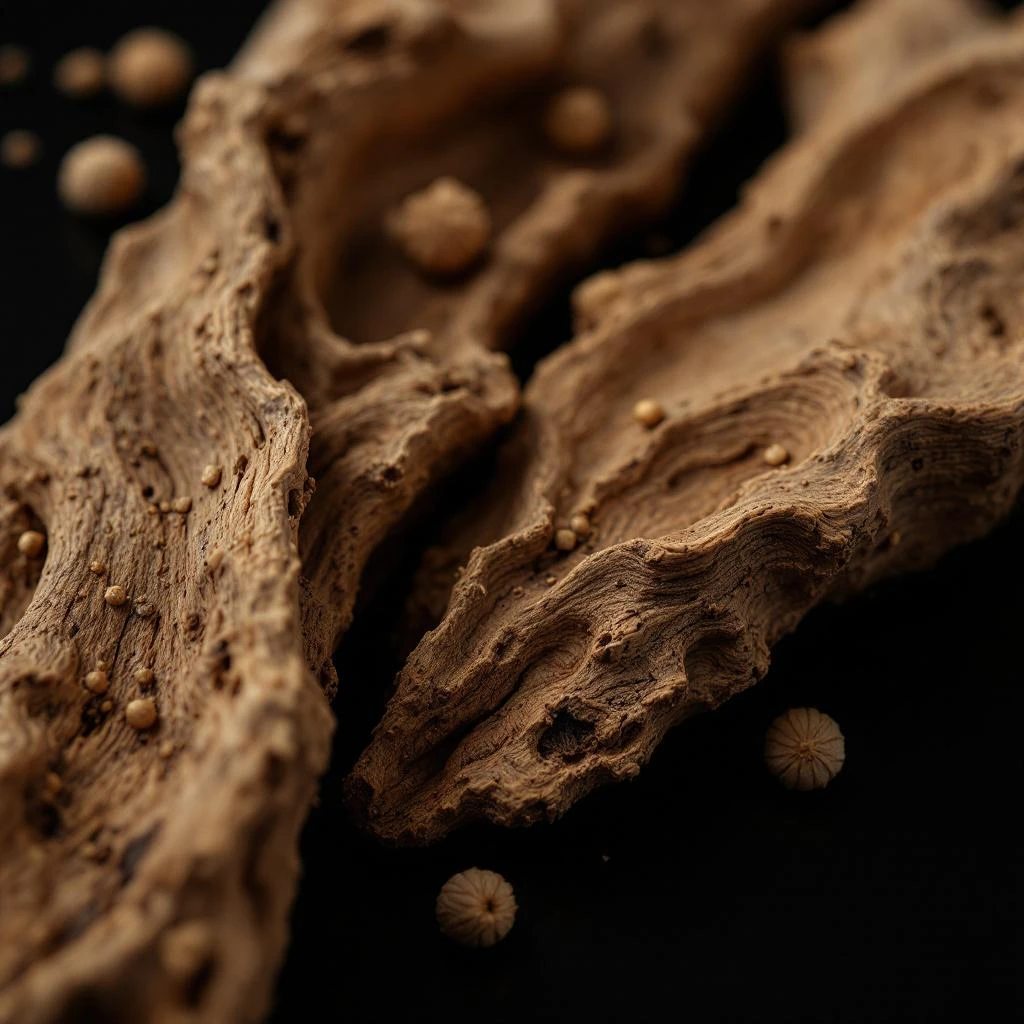

Character
The Story of Oriental woods
Precious aromatic woods from Asia that form the backbone of oriental perfumery. These resins and heartwoods deliver warmth, depth, and a distinctive sensuality that has captivated fragrance lovers for centuries.
Heritage
Oriental woods have anchored perfumery since ancient civilizations first discovered their power. Egyptian tomb paintings from 1500 BCE depict priests burning agarwood in religious ceremonies, while Mesopotamian texts reference aromatic woods in ritual contexts. The Silk Road carried these precious materials westward, where Arab perfumers in Damascus and Baghdad refined extraction techniques still used today. By the medieval period, oud had become synonymous with wealth and status across the Islamic world, perfuming palaces and mosques from Cordoba to Delhi. European traders later encountered these materials during colonial expansion, sparking a fascination that drives demand today. What makes this history remarkable is that these woods were not cultivated but hunted, their rarity dependent on natural infection and the passage of time.
At a Glance
1
Feature this note
India
Primary source region
Ingredient Details
Steam distillation
Dried infected heartwood
Did You Know
"A single kilogram of pure oud oil can cost more than a luxury car, reflecting its rarity and the years required for the wood to develop its aromatic properties."