Character
The Story of Moroccan saffron
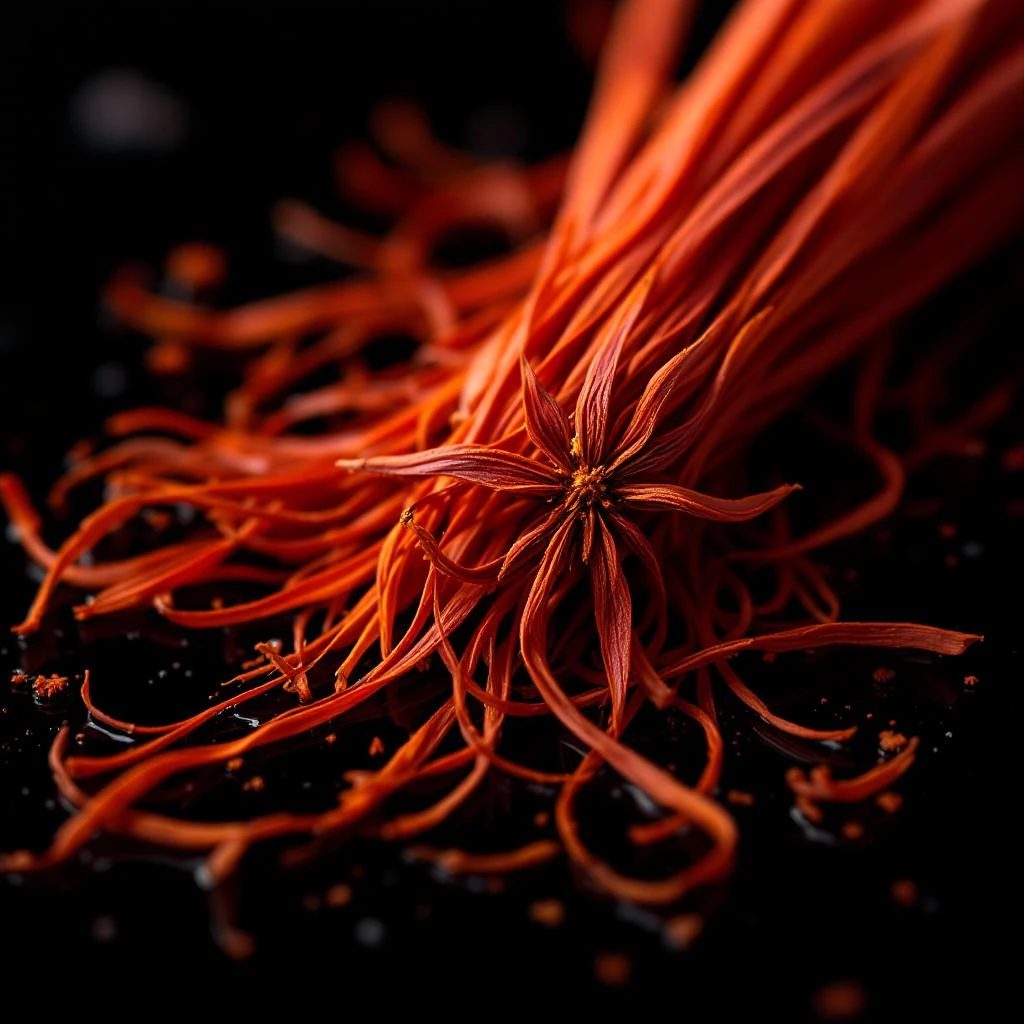
Moroccan saffron captures the sun-drenched hillsides of the Atlas region. Its crimson stigmas deliver a warm, metallic-honeyed intensity with leathery depth, lending perfumes an immediate, intimate richness that few ingredients can replicate.
Heritage
Moroccan saffron traces its lineage to Crocus sativus, a sterile plant descended from wild crocus relatives in the eastern Mediterranean. Ancient Egyptians incorporated saffron into religious offerings and mascaras; Greek hetaerae courtesans and physicians used it in scented waters and ointments. Romans scattered saffron across public floors to perfume entire halls during feasts. The spice reached Europe via Spain during the 7th-century conquests, and by the 16th century, English saffron from the town of Saffron Walden commanded the highest prices in the world. Arab scholars in Fes, Meknes, and Marrakech later perfected distillation alembics, advancing extraction techniques that modern perfumery still draws from. Moroccan growers developed their own cultivation traditions, planting corms at depths suited to local soil and climate, producing a saffron with distinctive regional character prized by contemporary perfumers.
At a Glance
1
Feature this note
Morocco
Primary source region
Ingredient Details
Supercritical CO2 extraction and ethanol tincture
Dried crimson stigmas and styles
Did You Know
"It takes 170,000 hand-picked flowers to produce just 1 kilogram of dried saffron threads, each stigma harvested before dawn."