Character
The Story of Moroccan Jasmine
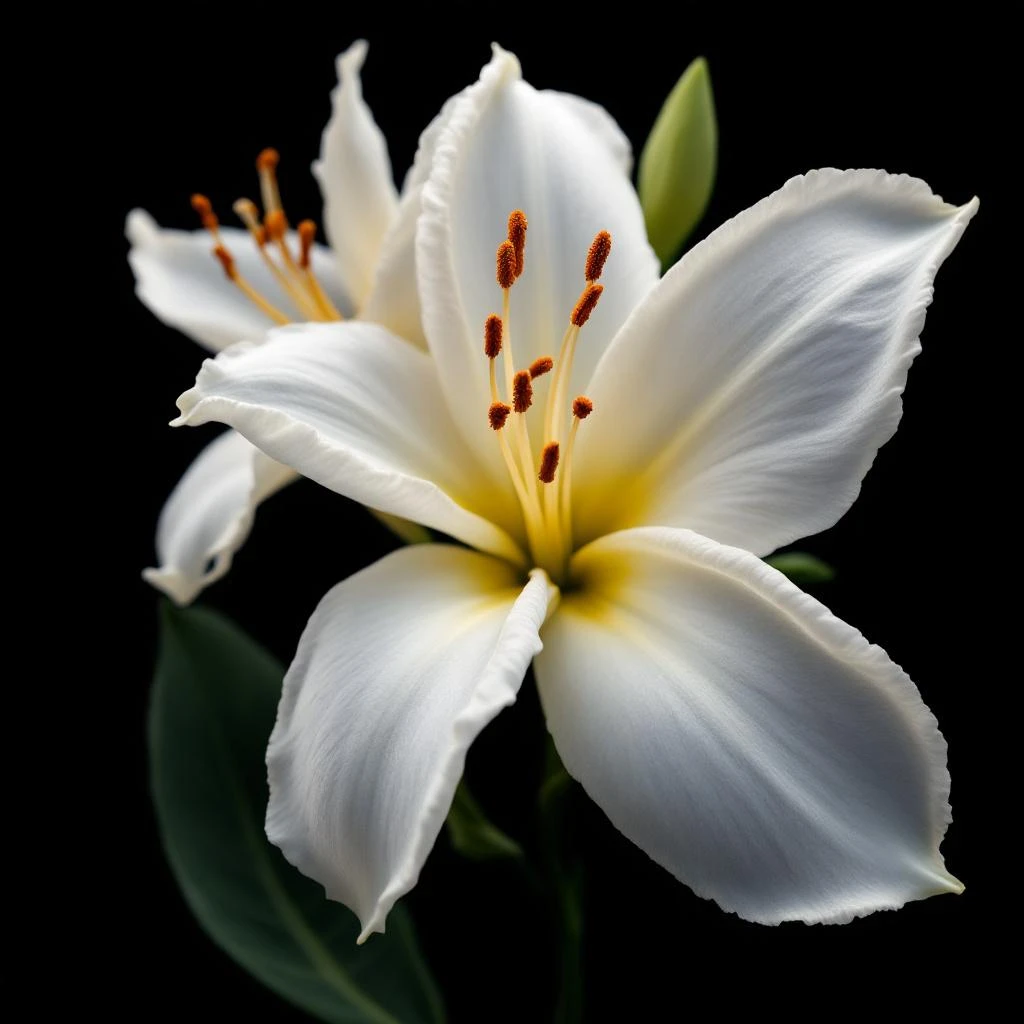
Moroccan Jasmine captures the sun-warmed soul of North Africa. Hand-harvested at dawn when its petals hold peak fragrance, this luminous bloom delivers both ethereal sweetness and surprising sensual depth.
Heritage
Jasmine Grandiflorum originated in Himalayan regions but found ideal growing conditions in Morocco's warm climate. During the early 20th century, French investment established jasmine cultivation around Rabat and Casablanca, with concrete often transported to Grasse for processing into absolutes. The flower traces back to ancient Asian and Middle Eastern civilizations, where it served sacred rituals, cosmetics, and medicine. Arab traders introduced jasmine to Spain in the 16th century, and it spread from there to Grasse, France, where perfumers made it a cornerstone of classical perfumery. By the 19th century, jasmine had become one of the most noble ingredients in the perfumer's palette, appearing in grand floral and chypre compositions. Today, Morocco remains a leading global producer alongside France, Italy, and India, with jasmine embedded in local culture and the international fragrance industry.
At a Glance
1
Feature this note
Morocco
Primary source region
Ingredient Details
Solvent extraction
Flower petals
Did You Know
"It takes roughly 8 million jasmine flowers to produce just one kilogram of absolute, making it one of perfumery's most prized and expensive ingredients."