Character
The Story of Juniper berry
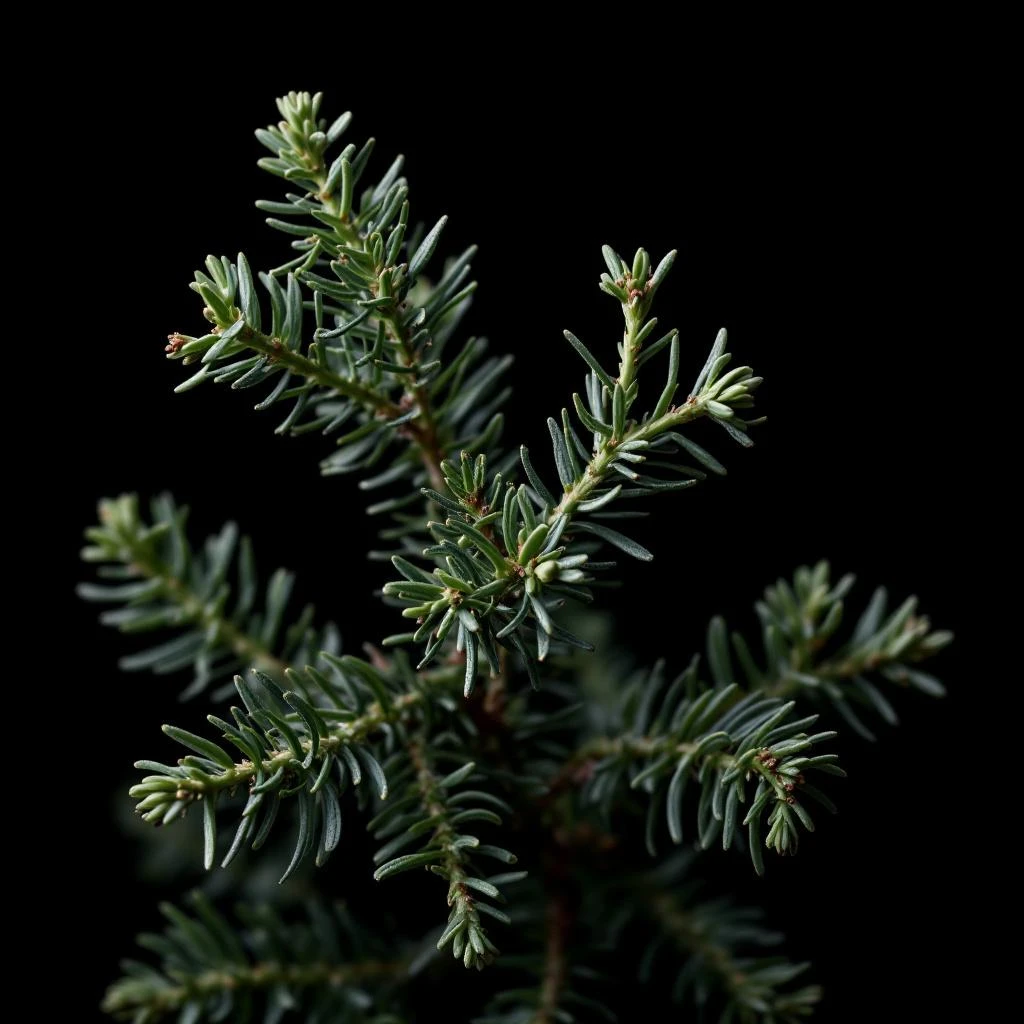
Despite their name, juniper berries are actually tiny blue-black seed cones from Juniperus communis, a hardy conifer of the Cupressaceae family. Steam-distilled for their essential oil, these pseudo-berries deliver a distinctive pine-forward, peppery-resinous aroma that has shaped perfumery for centuries.
Heritage
The earliest surviving written reference to juniper-infused spirits appears in Jacob van Maerlant's Der Naturen Bloeme, a Flemish encyclopaedia published around 1266-1270, which describes adding juniper to distilled wine. Nearly three centuries later, in 1552, Philippus Hermanni documented an explicit genever aqua vitae formula in Antwerp. The juniper berry's perfumery debut in fine fragrance came in 1882. Medieval herbalist Nicholas Culpeper recommended juniper for numerous ailments, a tradition extending to contemporary phytotherapy. The plant carries deep symbolic weight across European folklore: its branches were burned for protection against demons, country hares used juniper bushes to confuse hunting dogs, and thrushes sheltered their offspring there for its snake-repellent properties. Legend holds that the Virgin Mary hid beneath a juniper bush while fleeing Herod's soldiers. Today, this storied legacy lends juniper berry a timeless mystique in fragrance composition.
At a Glance
1
Feature this note
Bulgaria
Primary source region
Ingredient Details
Steam distillation
Ripe seed cones (galbuli)
Did You Know
"Medieval Europeans hung juniper above doorways as protection against plague and evil spirits."