
Character
The Story of Jasminum Auriculatum
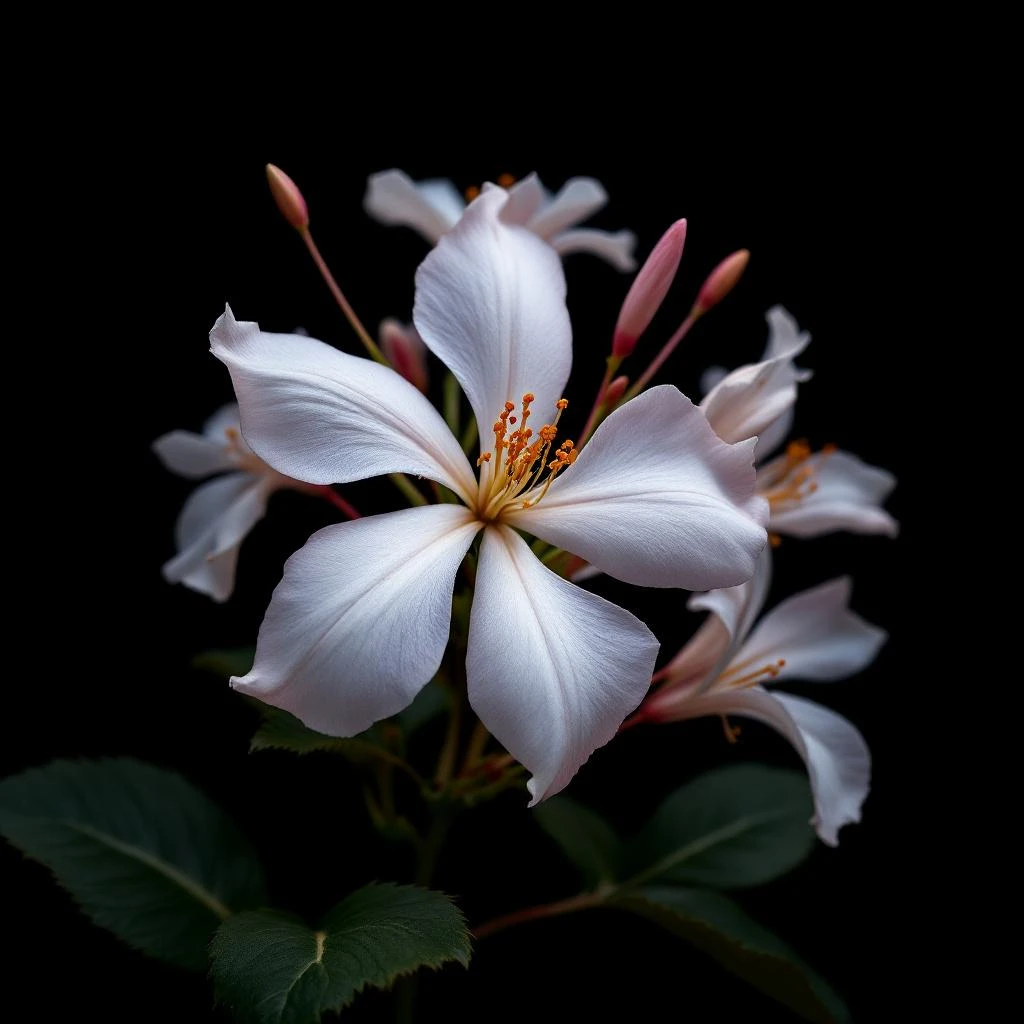
Jasminum auriculatum is a shrubby jasmine species native to South Asia, cultivated across India and Thailand for its intensely fragrant flowers. The absolute extracted from its blooms carries a distinctly warm, fruity-floral character that sets it apart from its more famous cousin, Jasminum officinale.
Heritage
The genus name Jasminum derives from the Arabic 'yasemin,' reflecting centuries of cultural exchange between the Arab world and the Indian subcontinent where this species thrives. Ayurvedic texts document J. auriculatum use across multiple therapeutic applications, from wound healing to fever reduction, with the plant embedded in ritual and religious practice throughout South Asia. Colonial-era trade routes carried Indian jasmine absolutes to European perfumers in Grasse, France, where they became foundational materials in fine fragrance. Today, smallholder farmers across Karnataka, Tamil Nadu, and Andhra Pradesh cultivate the shrub specifically for perfume production, maintaining a supply chain that stretches back generations.
At a Glance
3
Feature this note
India
Primary source region
Ingredient Details
Solvent extraction
Flower petals
Did You Know
"In Ayurveda, the roots of J. auriculatum have long served as a remedy for kidney and bladder ailments, a use now supported by emerging pharmacological research."