Character
The Story of Jasmine lactones
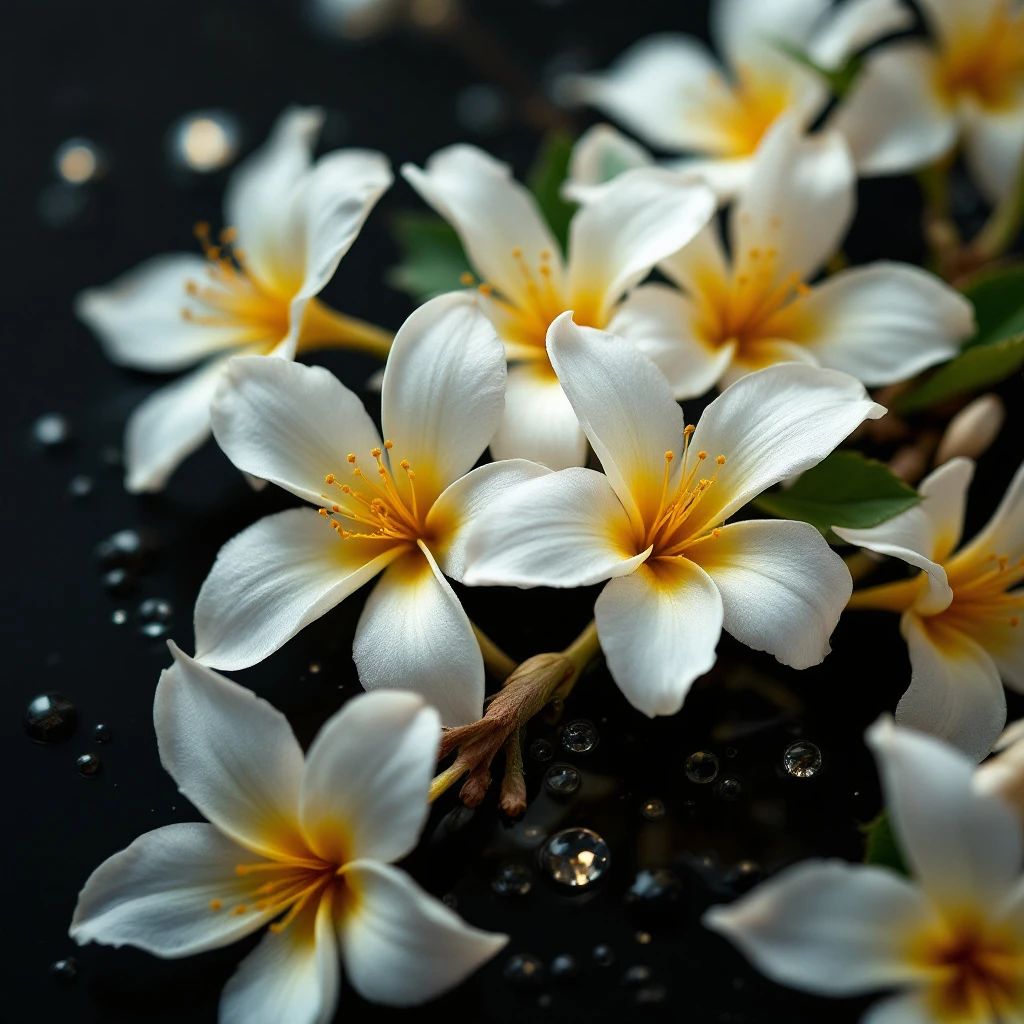
Jasmine lactones are the creamy, warm molecules that give jasmine its signature sensual character. These naturally occurring compounds appear across jasmine species and serve as prized isolates in natural perfumery, adding depth and animalic warmth to compositions.
Heritage
Since ancient times, jasmine served as the foundation of aphrodisiac oils and sacred perfumes across the Middle East and South Asia. The night-blooming characteristic of jasmine intensified its mystical reputation—when flowers open after sunset, their lactone-rich scent permeates the air with heady intensity. Grasse, France, began cultivating jasmine for perfumery in the 1850s, establishing protocols for harvest timing that maximized lactone content. Egyptian jasmine cultivation grew to dominate global production, eventually supplying 70-80% of the world's jasmine absolute. Ancient perfumers used enfleurage to capture these lactones in fatty media, creating pomades prized for their sensual warmth. The chemical classification of lactones in natural perfumes emerged through 20th-century aroma chemistry research.
At a Glance
1
Feature this note
Egypt
Primary source region
Ingredient Details
Solvent extraction and supercritical CO2
Flower petals
Did You Know
"It takes 8,000 jasmine blossoms to yield a single gram of absolute, where these lactones concentrate most densely."