    Ingredient Profile

    Italian Jasmine fragrance note

    Italian Jasmine: the legendary Jasminum grandiflorum cultivated in the Mediterranean. Prized for its warm, intensely floral profile with sub…More

    Italy

    1

    Fragrances

    Fragrances featuring Italian Jasmine

    Character

    The Story of Italian Jasmine

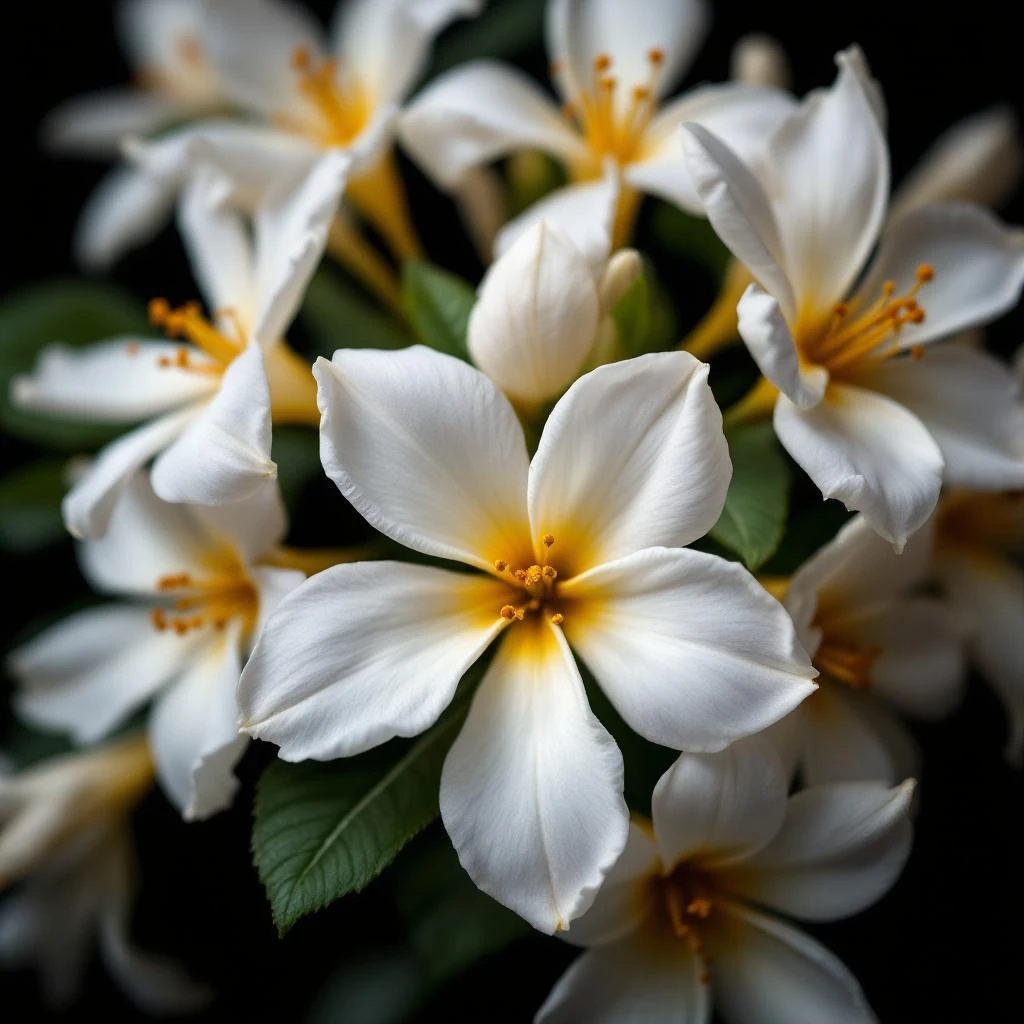
    Italian Jasmine: the legendary Jasminum grandiflorum cultivated in the Mediterranean. Prized for its warm, intensely floral profile with subtle animalic undertones. The cornerstone of classical perfumery, harvested by hand at dawn and transformed into one of the world's most coveted absolutes.

    Heritage

    Jasmine originated in Asia and was first cultivated in Persia around 2,000 years ago. Arab traders introduced the flower to Spain in the 16th century, and from there cultivation spread to Grasse, France, which became the heart of European perfumery. By the 19th century, jasmine held its place among the most noble materials in the perfumer's palette. The discovery of methyl jasmonate in October 1957, followed by the synthesis of hedione, was transformative: for the first time, perfumers could build realistic jasmine accords using a single molecule. Hedione eventually appeared in double-digit percentages across countless fragrances, proving how this ancient flower shaped the modern industry.

    At a Glance

    Fragrances

    1

    Feature this note

    Origin

    Italy

    Primary source region

    Ingredient Details

    Extraction

    Solvent extraction

    Used Parts

    Flower petals

    Did You Know

    "It takes roughly 1,000,000 hand-picked jasmine flowers to produce just 1 kg of absolute."

    Production

    How Italian Jasmine Is Made

    Jasmine flowers must be harvested entirely by hand during peak months of July and August, picked before sunrise when oil concentration peaks. Immediately after picking, fresh petals undergo solvent extraction, most commonly using hexane, to produce jasmine concrete: a waxy, fragrant substance. The concrete is then washed with alcohol to pull away the fragrant compounds, yielding jasmine absolute after the alcohol evaporates. This process captures the full spectrum of jasmine's complexity, from bright top notes to rich, sensual base notes. Natural jasmine absolute contains benzyl acetate (34%) as the dominant ester, along with linalool (8%), benzyl benzoate (24%), benzyl alcohol (5%), indole (2.5%), and cis-jasmone (3%), with methyl jasmonate comprising just 0.8% of the total mass. Methyl jasmonate proved pivotal: isolated by German scientists Albert Hesse and Friedrich Muller in October 1957, its simpler saturated derivative hedione would reshape the fragrance industry entirely. Modern CO2 extracts also offer an alternative that many find closer to the living plant in scent profile.

    Provenance

    Italy

    Italy41.9°N, 12.6°E

    About Italian Jasmine