Character
The Story of Italian Blood Orange Orpur
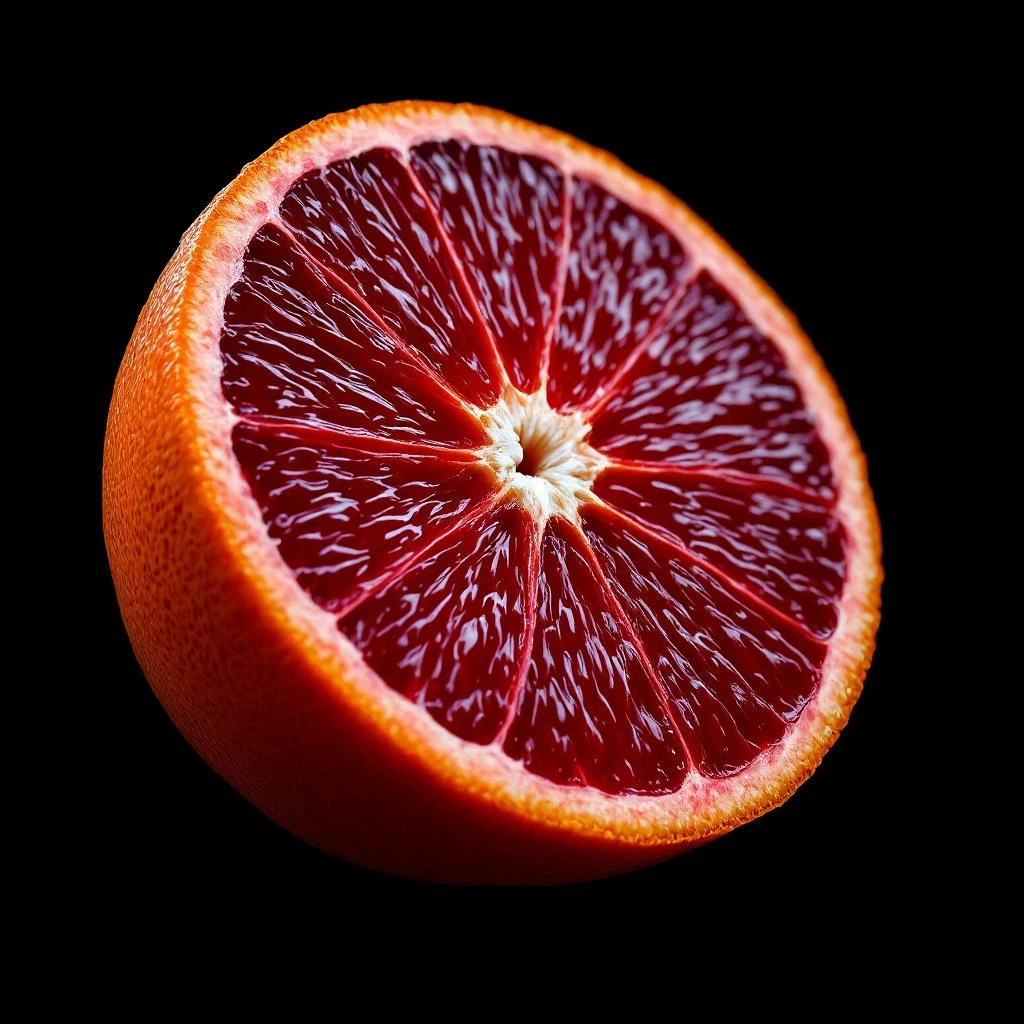
Unlike common oranges, the blood orange reveals a crimson flesh stained by anthocyanin pigments. Italian blood orange Orpur® captures this sun-drenched fruit at its most vibrant, delivering a juicy tang with a distinctive berry undertone.
Heritage
The sweet orange (Citrus sinensis) traces its origins to southern China, where it was first domesticated around 4,000 years ago. European acquaintance with the species came in the 11th century through trade routes, and Italian merchants subsequently introduced orange cultivation to the Mediterranean basin in the mid-15th century. The blood orange mutation emerged in Sicily, where the unique microclimate—marked by warm daytime temperatures and cool nights—triggered anthocyanin production in the fruit flesh. These pigments, normally associated with autumn leaves and grapes, gave the fruit its striking crimson interior and distinctive berry-sweet undertone. Unlike other citrus, blood orange's color and flavor develop most intensely during winter months, making it a seasonal treasure of Mediterranean groves. Givaudan's Orpur® program now safeguards these regional characteristics through sustainable sourcing partnerships with Sicilian farmers, ensuring the fruit's unique terroir-driven qualities reach perfumers worldwide while maintaining strict environmental and social standards.
At a Glance
1
Feature this note
Italy
Primary source region
Ingredient Details
Cold-press, solvent extraction
Fruit peel
Did You Know
"Cold nights trigger anthocyanin production in Sicilian groves, turning the flesh deep crimson—a quirk nature reserves only for blood oranges."