
Character
The Story of Indian Spices
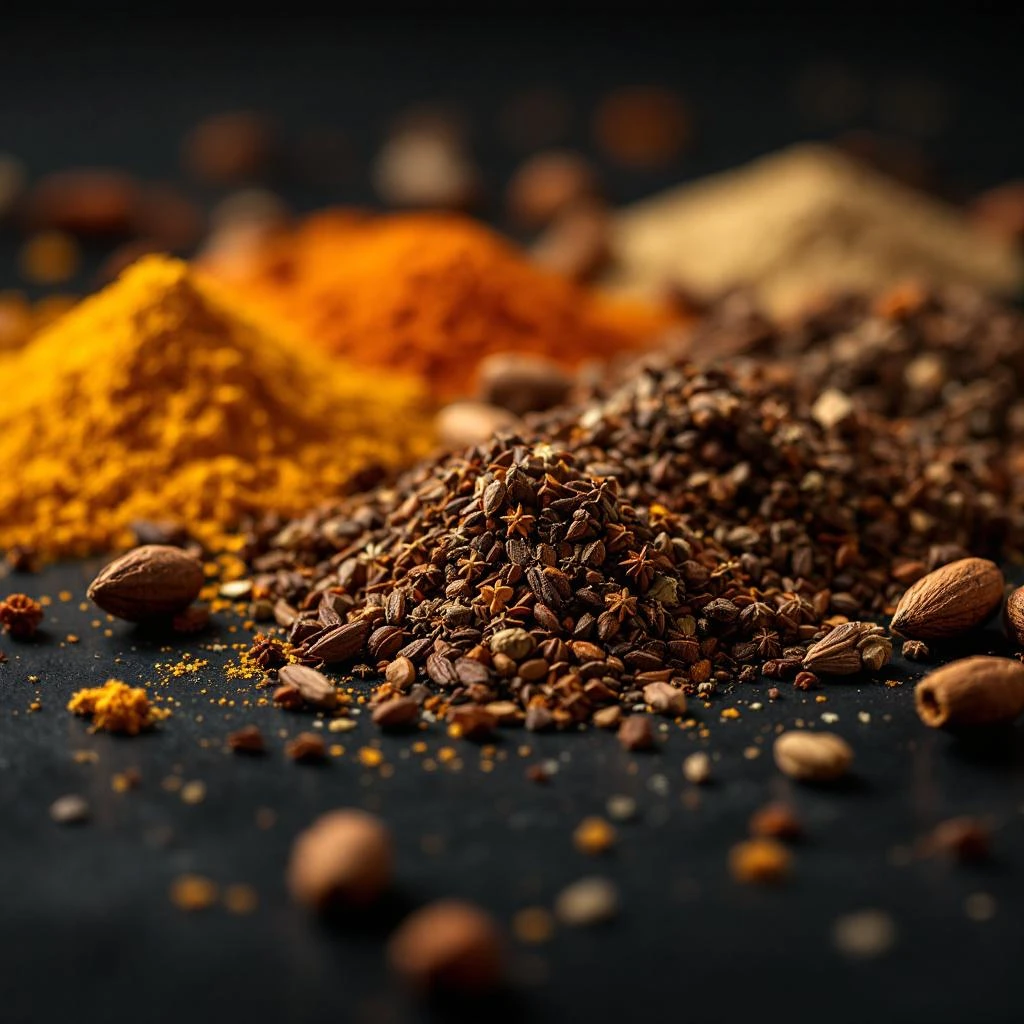
Indian Spices bring a warm, peppery pulse to fragrance, echoing the subcontinent’s bustling markets and ancient spice routes with bright, resinous notes that awaken the senses.
Heritage
Spice aromas have scented human culture for millennia. Ancient Greeks mixed ground cinnamon and clove into scented oils for temples, while Romans exported Indian pepper to perfume workshops across the empire. Persian traders carried cardamom routes through the Indus, introducing the spice to Arab distillers who refined it into attar. In India, the city of Kannauj earned the title “Perfume Capital” as early as the 7th century, where artisans distilled spice essences using copper stills powered by wood fire. Mughal courts commissioned lavish fragrance blends that paired sandalwood with a chorus of Indian spices, creating scents reserved for royalty. By the 19th century, colonial trade opened Indian spice oils to European factories, and the rise of CO₂ extraction in the 1990s allowed modern perfumers to capture the bright, resinous heart of these botanicals with unprecedented purity. Today, the spice note bridges historic craft and contemporary science, echoing the subcontinent’s centuries‑long dialogue with scent.
At a Glance
1
Feature this note
India
Primary source region
Ingredient Details
Steam distillation
Dried seed pods, bark, fruit peel, and root
Did You Know
"India produces over 70 % of the world’s cardamom, and its essential oil supplies the perfume industry with a single drop that can contain up to 150 µg of volatile compounds."