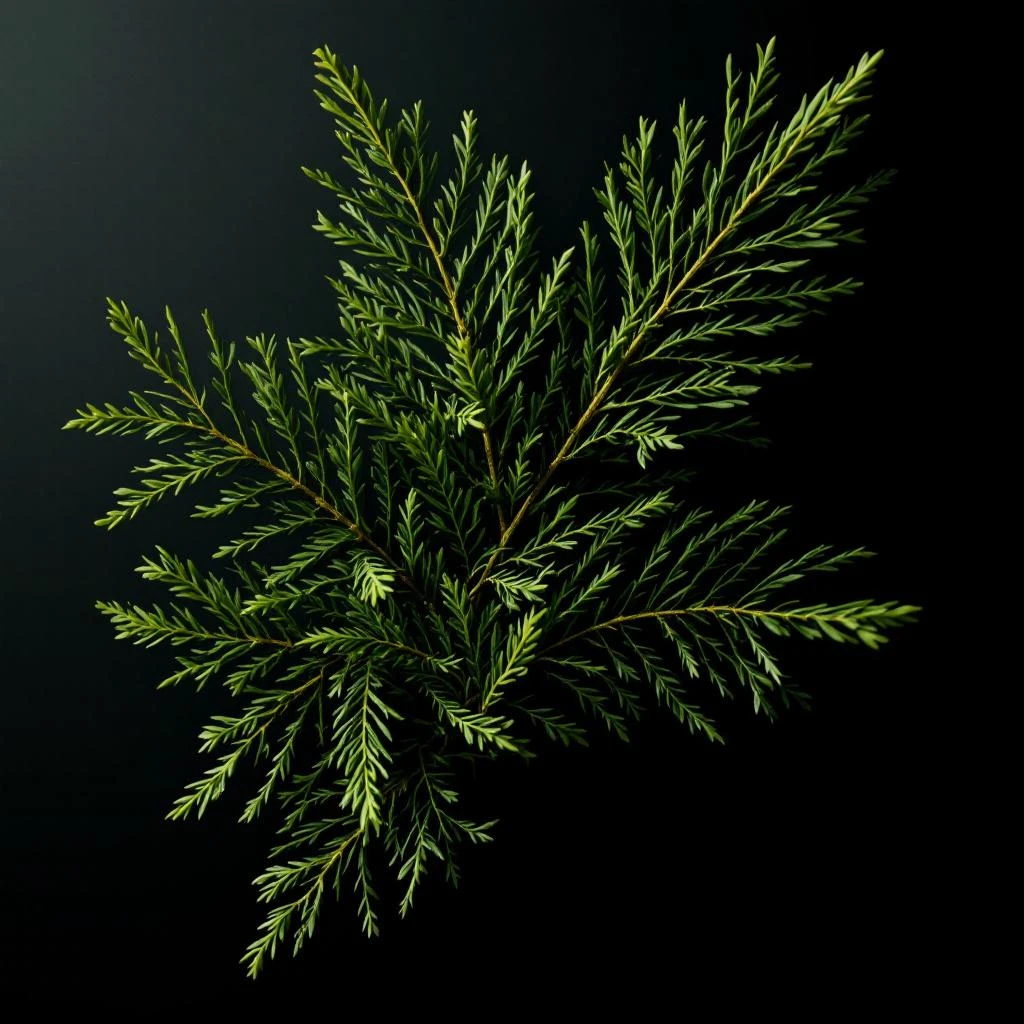

Character
The Story of Green Cedar
Green cedar bridges raw forest power and refined elegance. One of perfumery's most iconic woody notes, it anchors compositions with its distinctive green, resinous character and fixative strength.
Heritage
Cedar ranks among the oldest aromatic materials in human history. Mesopotamian and Egyptian civilizations prized it alongside frankincense and myrrh, using cedar oil in religious rituals, embalming, and perfumery. Ancient Phoenicians built trading networks around cedar timber, and the wood's natural resistance to rot made it construction-grade material for temples and ships. The word itself descends from the Greek kedros. In modern perfumery, cedarwood oil became a backbone of masculine fragrance compositions during the 20th century, prized for its ability to lend structure and staying power to otherwise fleeting top notes. Its fixative strength made it indispensable in bar soaps and grooming products, a role it continues to play today.
At a Glance
1
Feature this note
United States
Primary source region
Ingredient Details
Steam distillation
Wood chips, sawdust, carpentry scraps
Did You Know
"The same cedar species smells completely different depending on where it grows. Virginia cedar runs warm and amber-like, while Atlas cedar from Morocco reads sharper and pencil-like."