    Ingredient Profile

    French Saffron fragrance note

    French saffron offers a bright, leathery spice that lifts a perfume with warm amber notes and a whisper of dried hay, anchoring compositions…More

    France

    1

    Fragrances

    Fragrances featuring French Saffron

    Character

    The Story of French Saffron

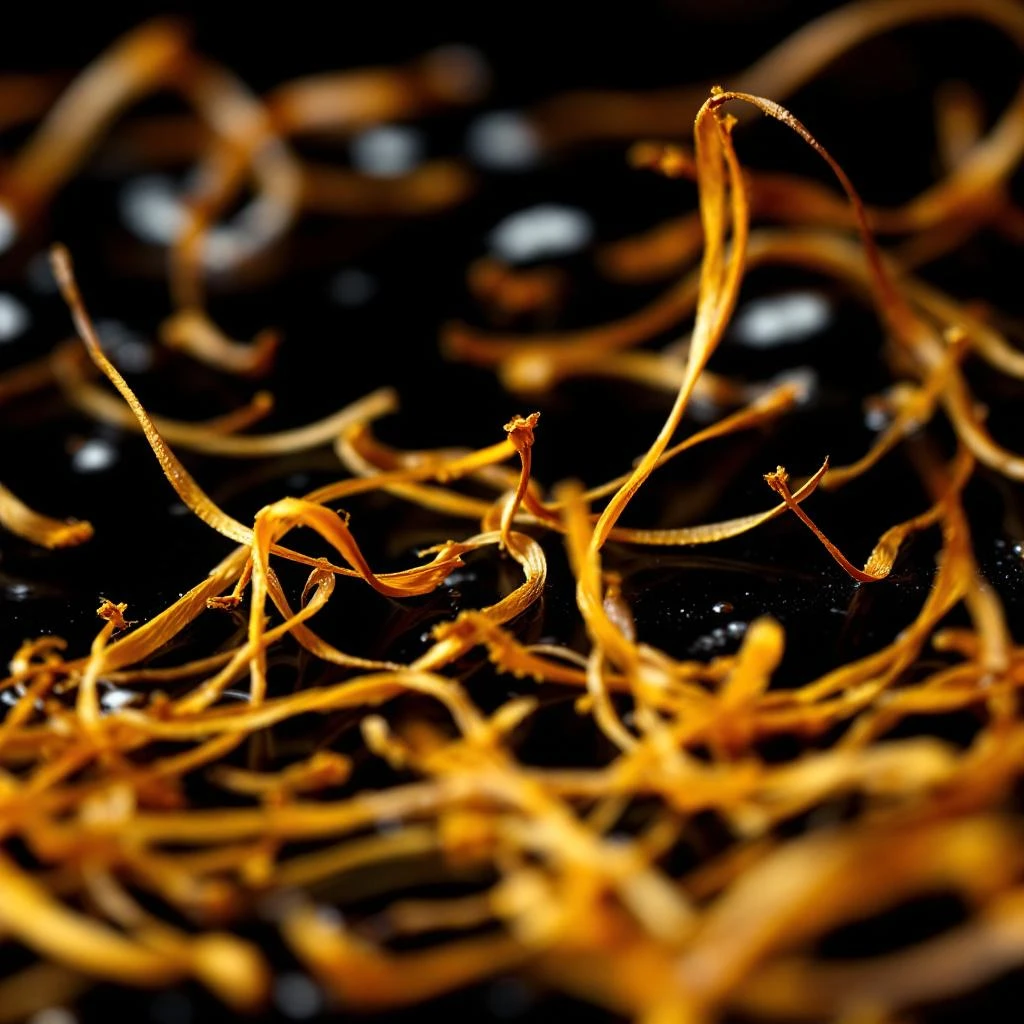
    French saffron offers a bright, leathery spice that lifts a perfume with warm amber notes and a whisper of dried hay, anchoring compositions with rare, radiant depth.

    Heritage

    The scent of saffron traces back to the first millennium BCE, when ancient Egyptians infused the spice into ceremonial oils and perfumed their tombs. Greek poets praised its golden hue, and Roman aristocrats used saffron‑infused balms to scent their bodies. Persian courts prized saffron as a royal fragrance, mixing it with rose and amber to create complex blends. By the medieval period, trade routes carried the spice across the Mediterranean, reaching the burgeoning perfume workshops of Grasse, France. In the 17th century, Grasse artisans experimented with saffron absolutes, noting its ability to anchor floral bouquets. The French Revolution briefly halted its use, but the 19th century saw a revival as luxury houses incorporated saffron into niche creations. Today, French saffron remains a symbol of refinement, linking modern compositions to a lineage that spans Egypt, Greece, Persia and the historic streets of Grasse.

    At a Glance

    Fragrances

    1

    Feature this note

    Origin

    France

    Primary source region

    Ingredient Details

    Extraction

    Solvent extraction (CO₂)

    Used Parts

    Dried stigmas

    Did You Know

    "A single kilogram of French saffron yields only about 150,000 stigmas, enough to scent roughly 10 liters of perfume."

    Production

    How French Saffron Is Made

    French saffron begins as a crocus sativus bulb planted in the limestone soils of Provence. In late summer, each plant produces a single violet flower that opens for only a few days. Harvesters walk the fields at first light, hand‑picking the blossoms and separating the three crimson stigmas with tweezers. The stigmas are spread on fine mesh and dried in a ventilated room at 30 °C for 48 hours, preserving their volatile oils. Once dried, the stigmas are stored in airtight tins away from sunlight. To create a perfume ingredient, producers apply supercritical CO₂ extraction, which draws out the aromatic compounds without exposing them to high heat. The resulting saffron absolute appears as a viscous amber liquid, rich in crocin, picrocrocin and safranal, the three molecules that define its leathery, warm character. Small batches are blended with carrier oils or alcohol before being sent to perfumers.

    Provenance

    France

    France43.9°N, 6.1°E

    About French Saffron