Character
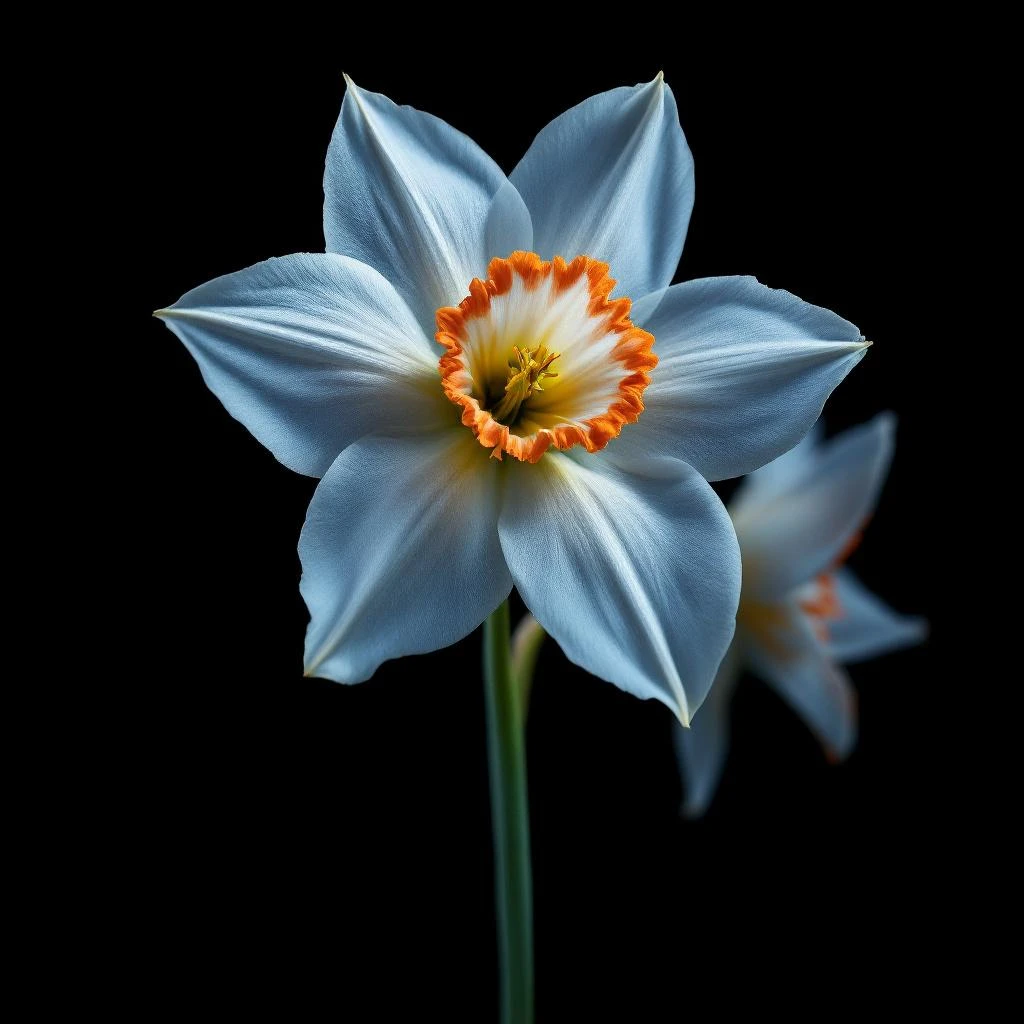
The Story of French narcissus absolute
French narcissus absolute captures spring in its most primal form—green, waxy, and hauntingly animalic. Sourced from Auvergnat fields where flowers are harvested at dawn and processed within hours, this rare absolute delivers an unmistakable richness that no synthetic has ever replicated.
Heritage
Narcissus has been associated with beauty and transformation since ancient times, taking its name from the Greek myth of a youth so enamored with his own reflection that he became a flower. The plant's exact origin remains uncertain, though most botanists trace it to Persia, from where it traveled eastward along the Silk Road to China and southward into the Mediterranean basin. French cultivation began in the southern highlands, where the cool climate and volcanic soil of Auvergne proved ideal for producing intensely scented blooms.
By the early twentieth century, Auvergnat Narcissus tazetta had become a cornerstone of French perfumery. Local harvesting networks developed around small family farms, with women traditionally leading the dawn picking rituals that captured the flowers at their most aromatic. Grasse-based maisons relied on these rural networks for their most demanding formulas, using the absolute to introduce a green, almost vegetative floralcy that no other ingredient quite matches.
The absolute's character— simultaneously fresh, waxy, and faintly animalic— made it a natural partner for rose and jasmine, adding depth and an almost ghostly quality to high-end compositions. Today, Auvergne and the neighboring Lozère region remain the primary harvesting basins for French narcissus, maintaining a centuries-old tradition that no synthetic analogue has managed to faithfully reproduce.
At a Glance
3
Feature this note
France
Primary source region
Ingredient Details
Solvent extraction
Fresh flowers
Did You Know
"It takes 1,000 kilograms of hand-picked flowers to yield just 2 kilograms of absolute, making it one of perfumery's most concentrated ingredients."
Pyramid Presence